What to Check
Most houses on this side of Needham went up between 1938 and 1985, with the bulk from the 1960s and 70s, so a lot of openers in this town are either original-era replacements or units installed decades ago on the same circuit. Start with the obvious: is the opener plugged into a dedicated outlet, or sharing a circuit with a freezer or shop lights in the garage? That matters here because winter power cuts are common, and a shared circuit trips faster under cold-weather load.
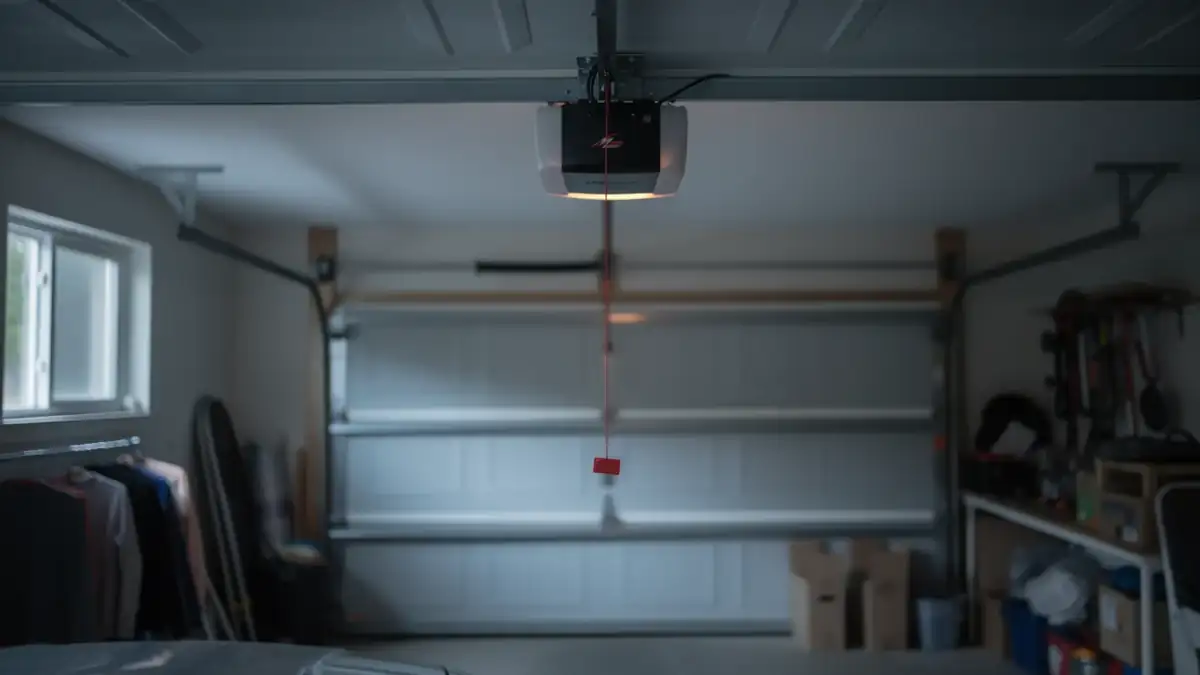
Next, find the manual release cord. On houses built before the 1980s, the release mechanism is often the original style, and the cord can be stiff or missing entirely if a prior owner trimmed it during a renovation. Pull it once now, in good weather, so you know it works before you need it in the dark.
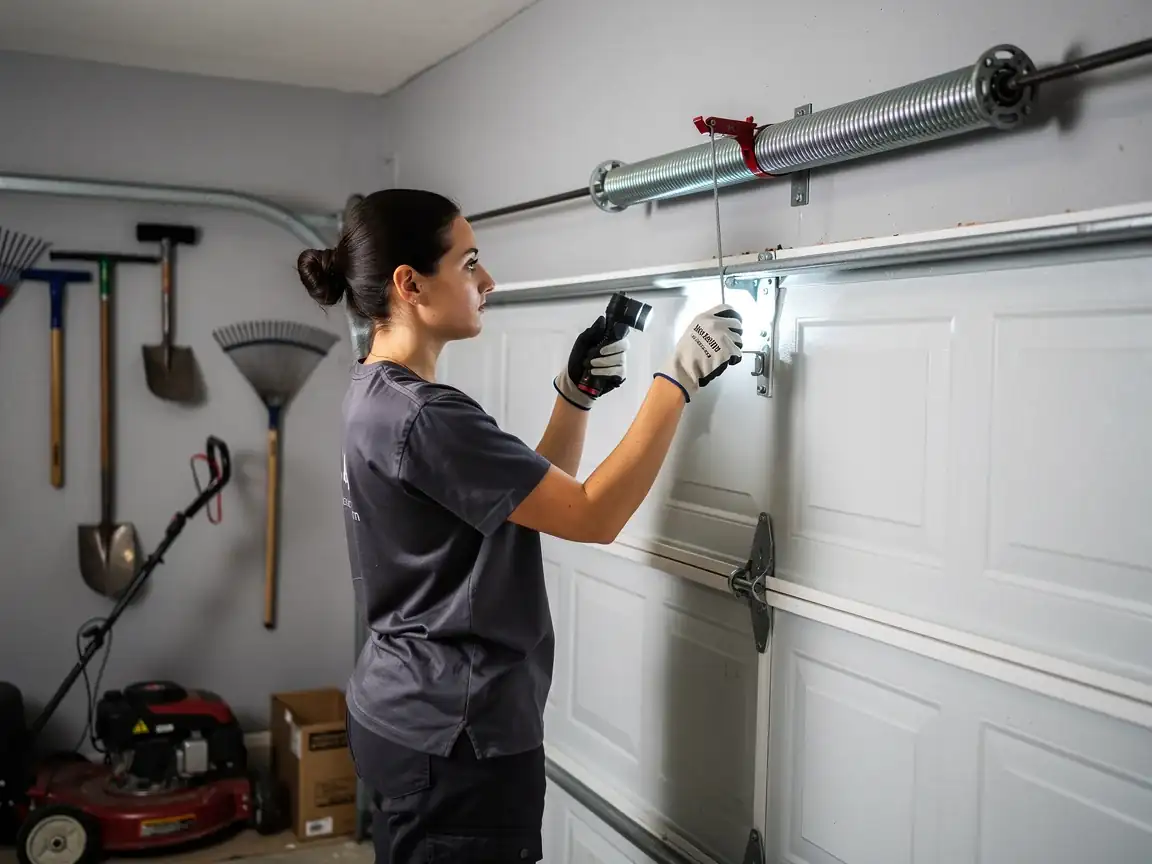
Check whether your opener has battery backup. Many units installed in older Needham homes predate battery backup as a standard feature, so if yours doesn't have it, that's worth knowing before the next outage rather than during one. We don't recommend retrofitting backup onto every opener - on some older units the cost isn't worth it compared to replacing the unit outright.
When to Get Help
Call before you force anything. If the opener hums but the door won't move during a power blip or right after one comes back, the issue is sometimes a reset the circuit board needs, not a mechanical failure - but on openers from the 1980s or earlier, repeated power cycling can also be what finally kills a worn capacitor. If you're not sure which it is, that's a judgment call worth a second set of eyes rather than a guess.
Get help right away if the manual release won't disengage during an outage and you need the car out. Forcing it on an older release mechanism can bend the trolley or snap the cord, turning a five-minute problem into a parts wait.
If your opener is original to a 1960s or 70s Needham build and has never been serviced, that's also a reasonable time to call even without an outage - not because it's broken, but because the household income and housing stock in this area mean a lot of these units are overdue, not failing yet.
What the Weather Here Does to It
Needham sits in a cold, severe climate band, and that matters more for openers than people expect
Cold doesn't just stiffen springs - it slows the opener's logic board response time and can make photo-eye sensors read false on a near-freezing morning, which is why some owners find their door reverses for no visible reason in January but not in October.
Power cuts tend to cluster with the same cold-weather events that stress the rest of the house
Ice loading on lines, high wind during a cold front. An opener with no battery backup simply stops working the moment the power does, and on a 1960s-era house in this area, that's often paired with a garage that has no secondary exterior door, meaning the car is the only way in or out until power or the manual release gets you there.
We don't control the grid
And we're not going to pretend a surge protector fixes every cold-weather opener fault. What helps is making sure the release and backup situation are sorted before the cold snap, not during it.
The Problem
The real issue in Needham is a mismatch: houses built mostly between 1938 and 1985 carry openers that were installed, or last replaced, on a different set of assumptions than today's power grid and today's weather pattern. A median build year of 1968 means a lot of garages were wired for an opener that didn't need to survive frequent winter outages, because battery backup wasn't common and outages weren't as disruptive to daily life as they are now with cars, phones, and schedules depending on that door opening.
The fix isn't universal. Some of these openers are fine with a battery backup added. Others are old enough, or worn enough, that putting money into backup hardware on a unit that's going to fail mechanically within a year or two doesn't make sense. We'll tell you honestly which situation you're in rather than sell a backup unit onto a dying opener.