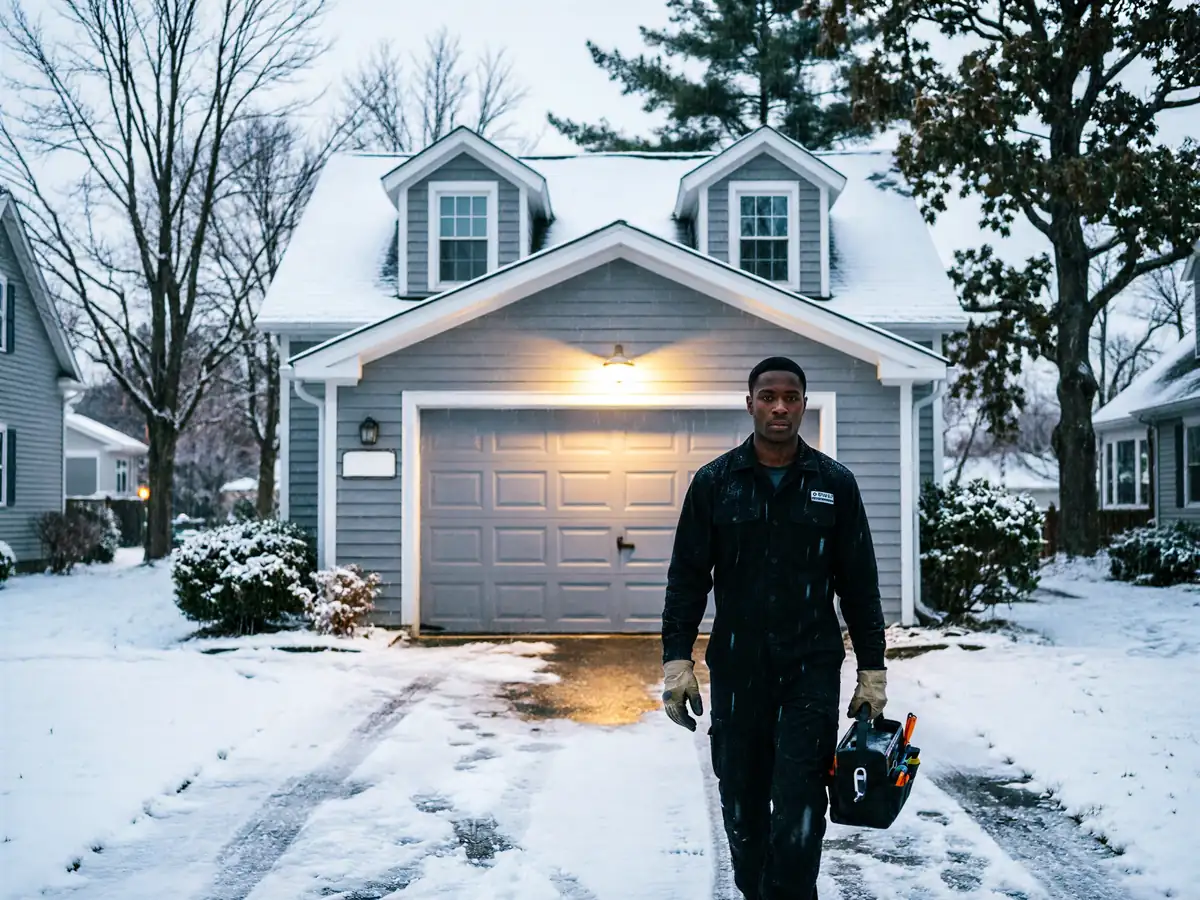
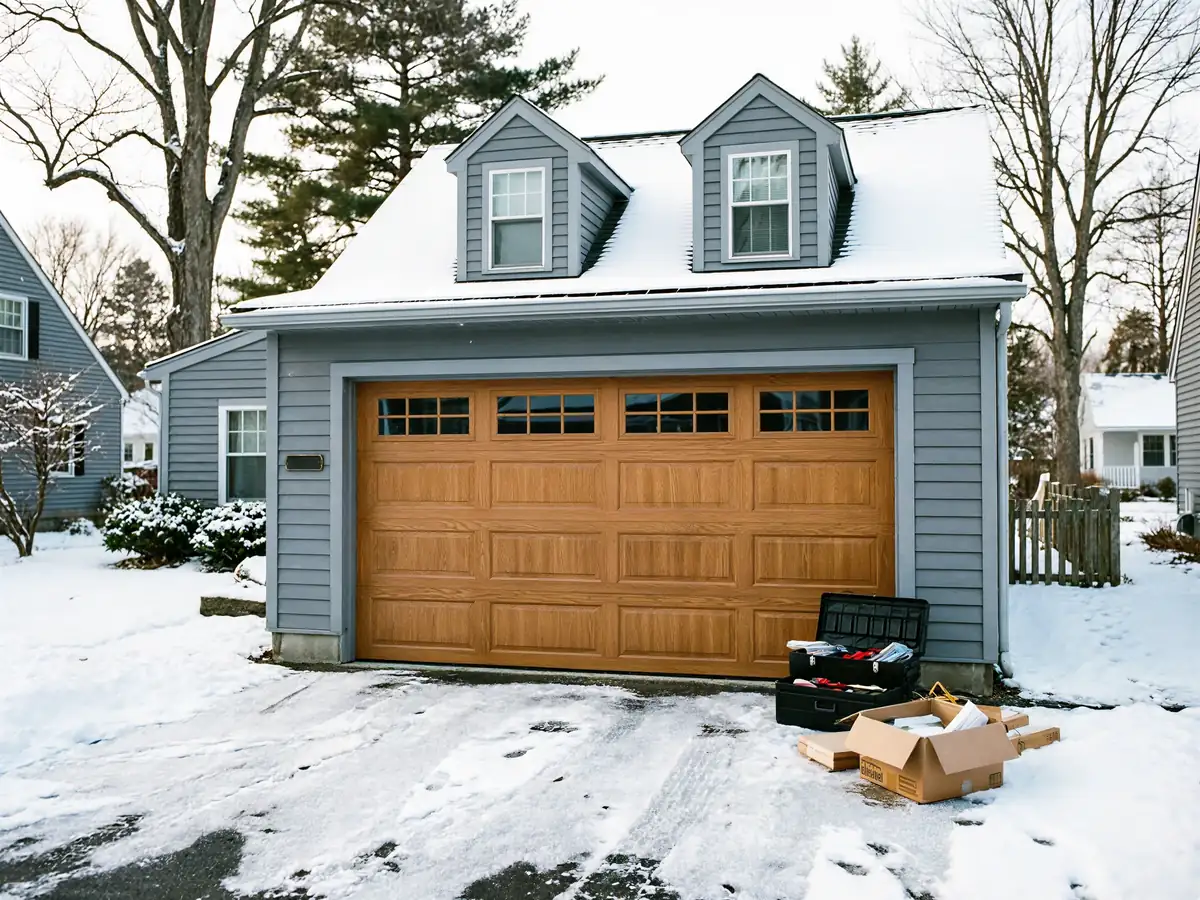
Why This Fails Locally
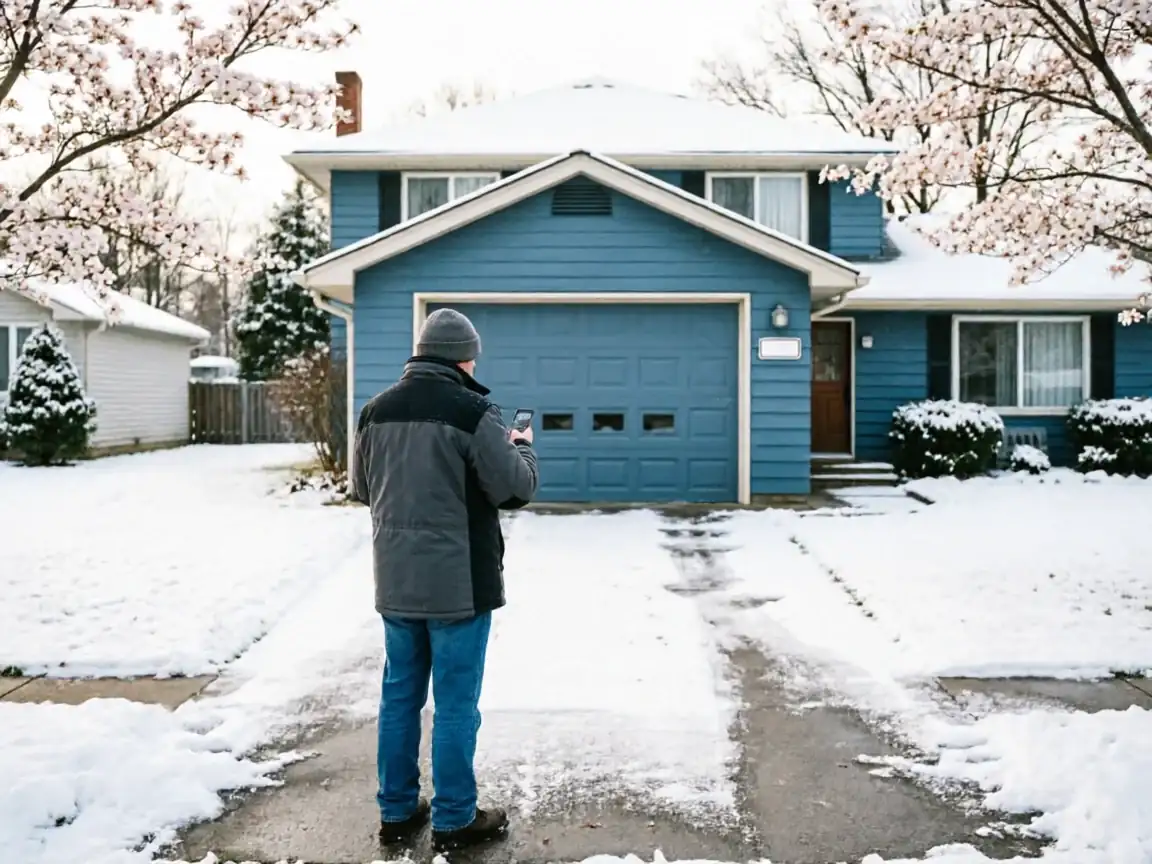
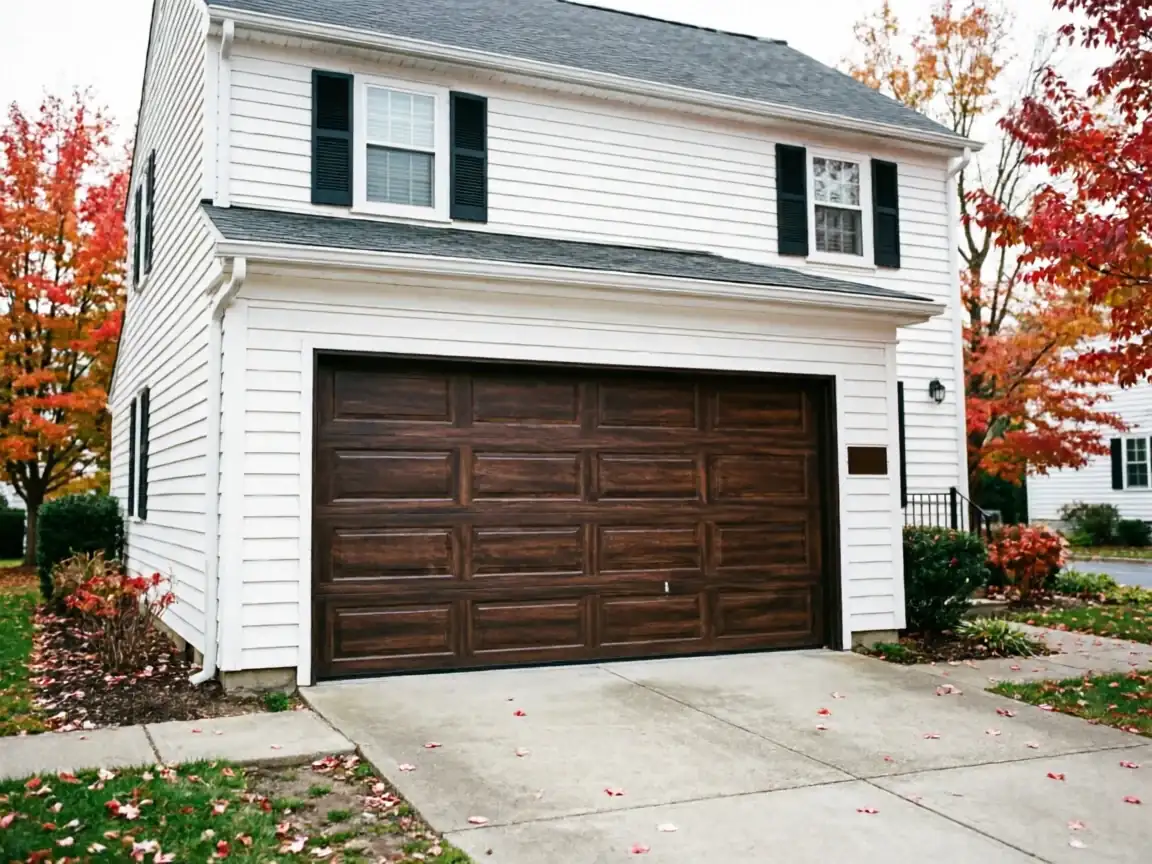
Most houses in Needham went up between 1938 and 1985, with the median build year sitting around 1968, which means a lot of original garage doors are still hung on hardware nobody manufactures anymore. That's not a knock on the houses - it's just the era. Single-layer steel or wood doors, side-mounted torsion springs, openers rated for a lighter door than what's actually hanging on the track.
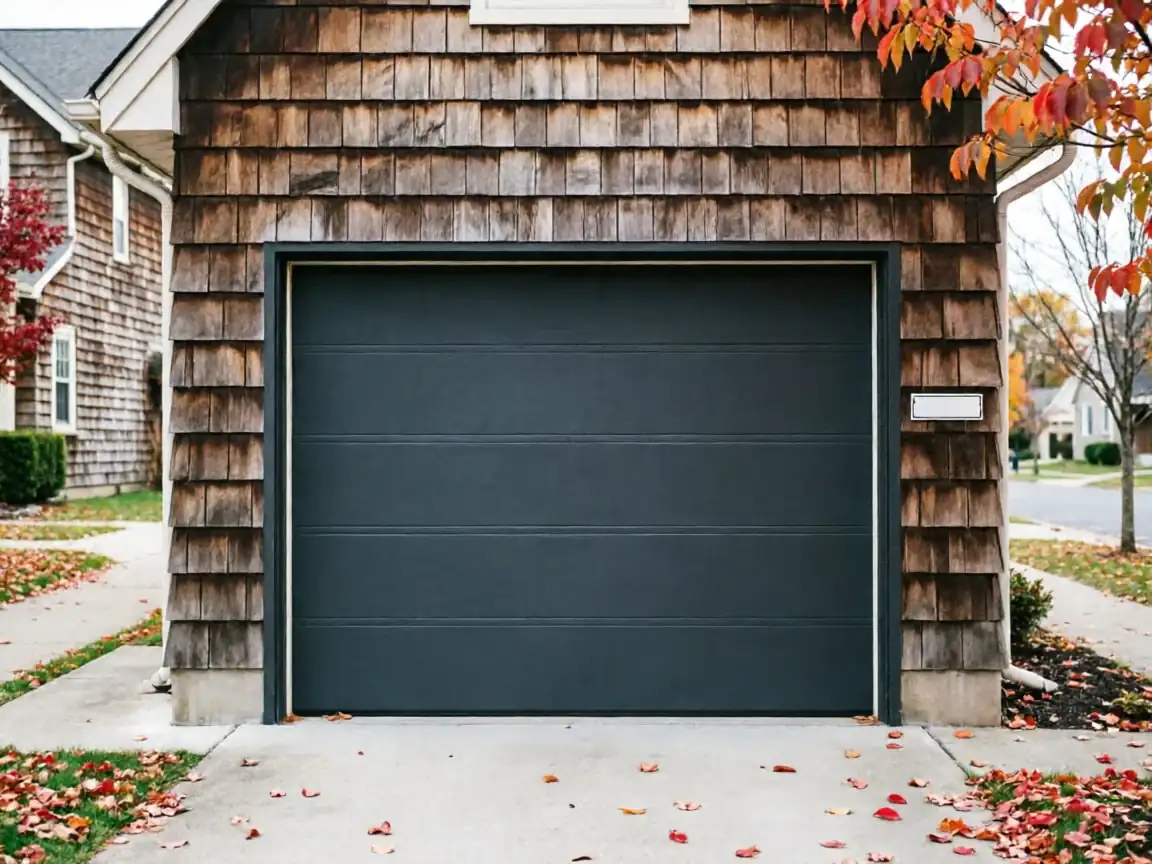
Needham sits in a severe cold climate band, and a door built for a milder zone will warp, bind, or let its seals crack within a few winters here. Cold makes steel contract, grease stiffen, and old weatherstripping shrink away from the frame, so a door that worked fine in October starts binding or refusing to seal by January.
Within a few miles you've got Wellesley, Dedham, and Westwood, all built out in roughly the same postwar wave, so this isn't a one-house problem - it's a neighborhood-wide pattern across this part of the service area. If your neighbor's door is sticking on cold mornings, yours probably will too, sooner or later.
Doing It Yourself
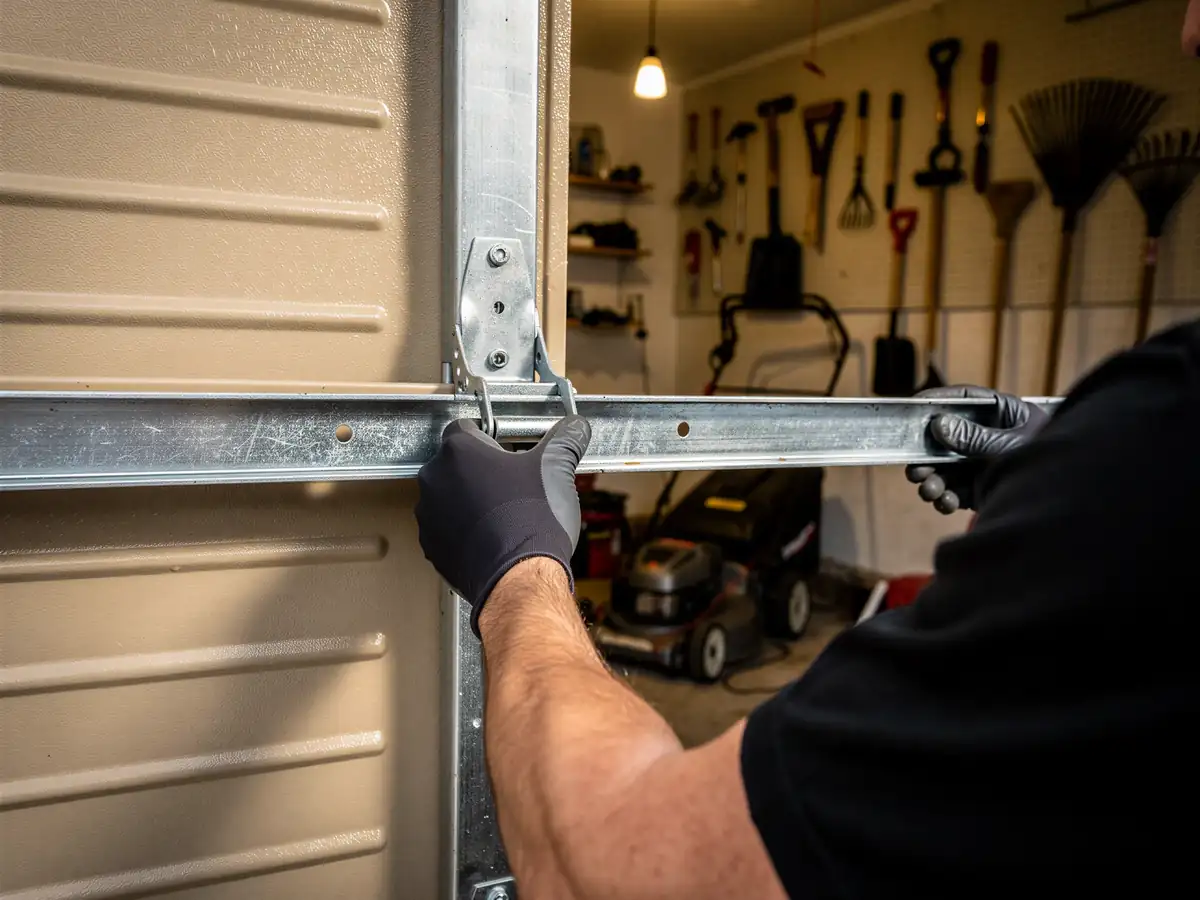
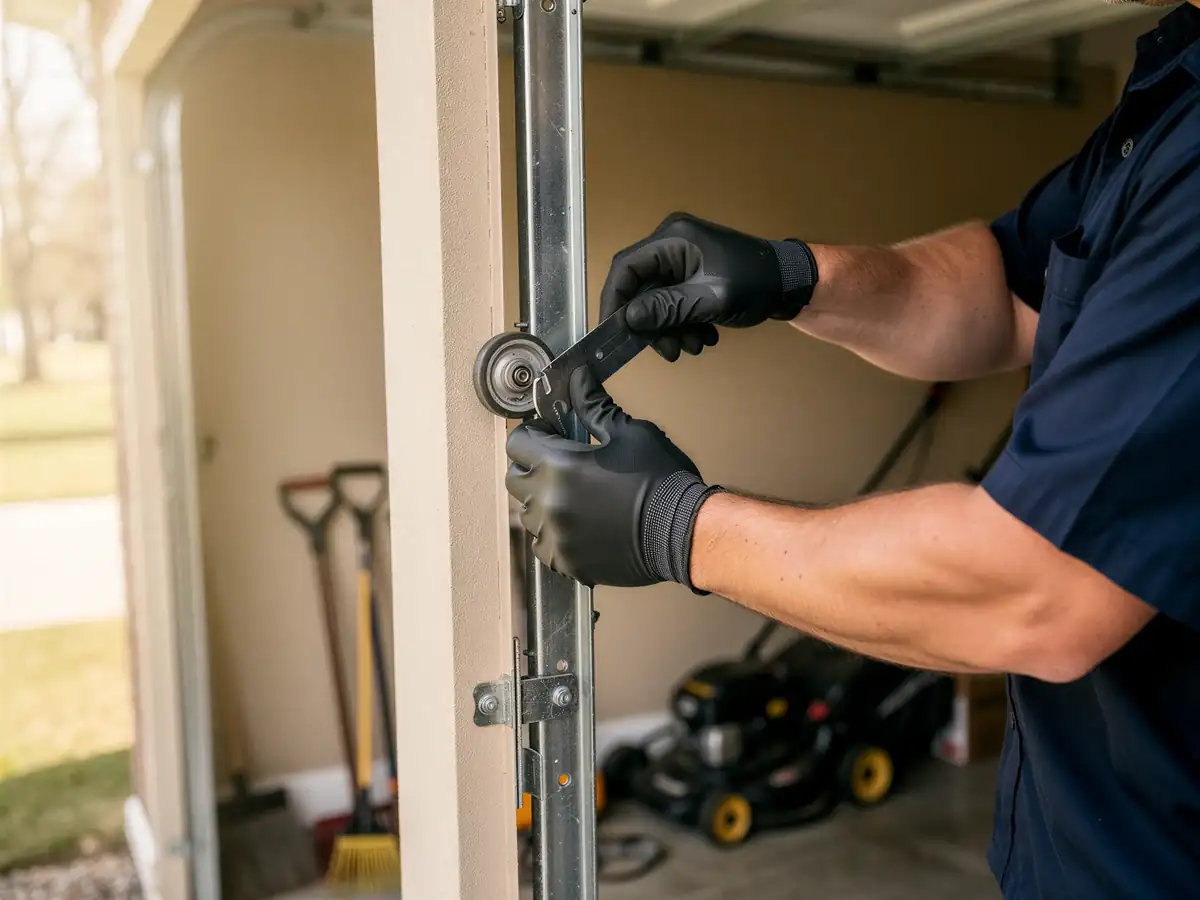
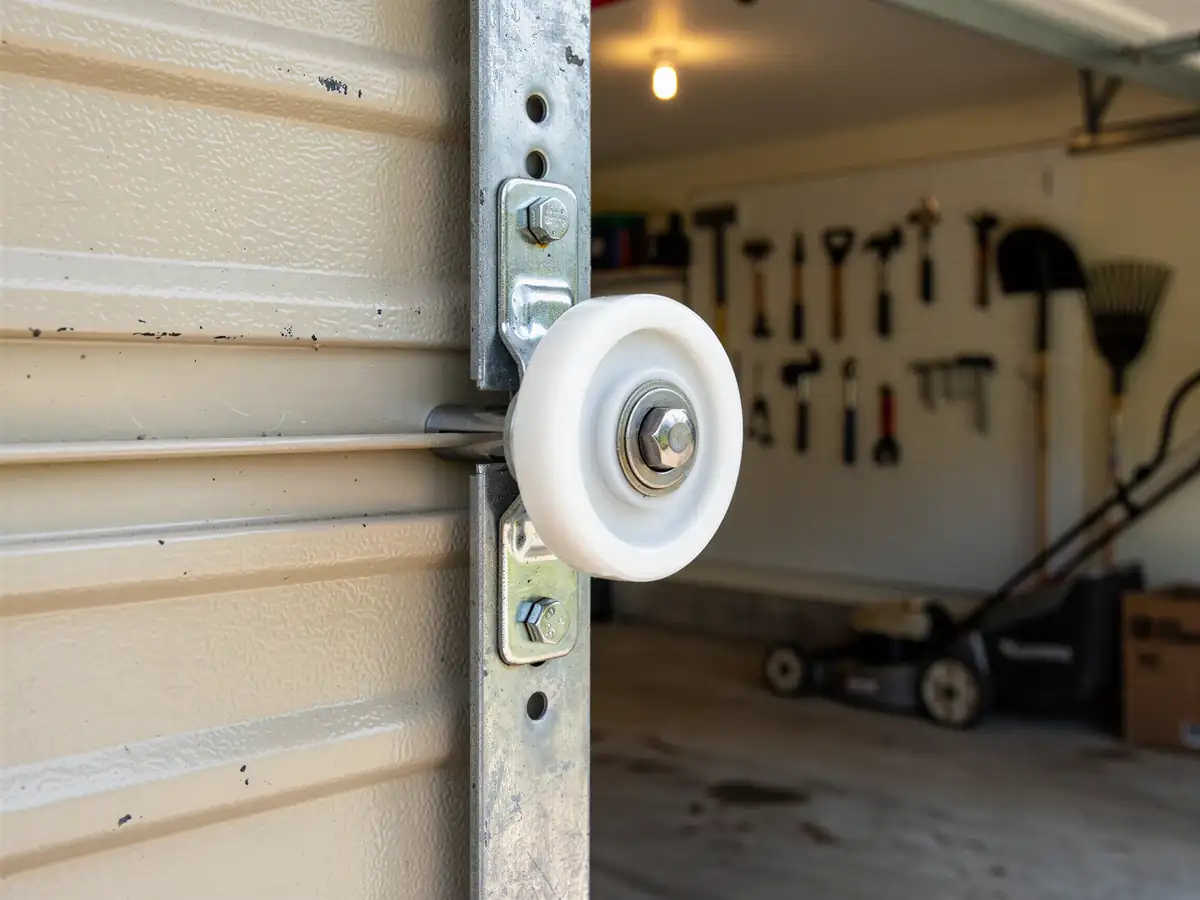
A lot of the symptoms on an older Needham door - noise, slow travel, a panel that looks slightly off square - look like something you could fix with a Saturday and a can of lubricant. Some of it is. Hinges, rollers, and track alignment are fair game for a careful homeowner with the door unplugged and the opener disengaged.
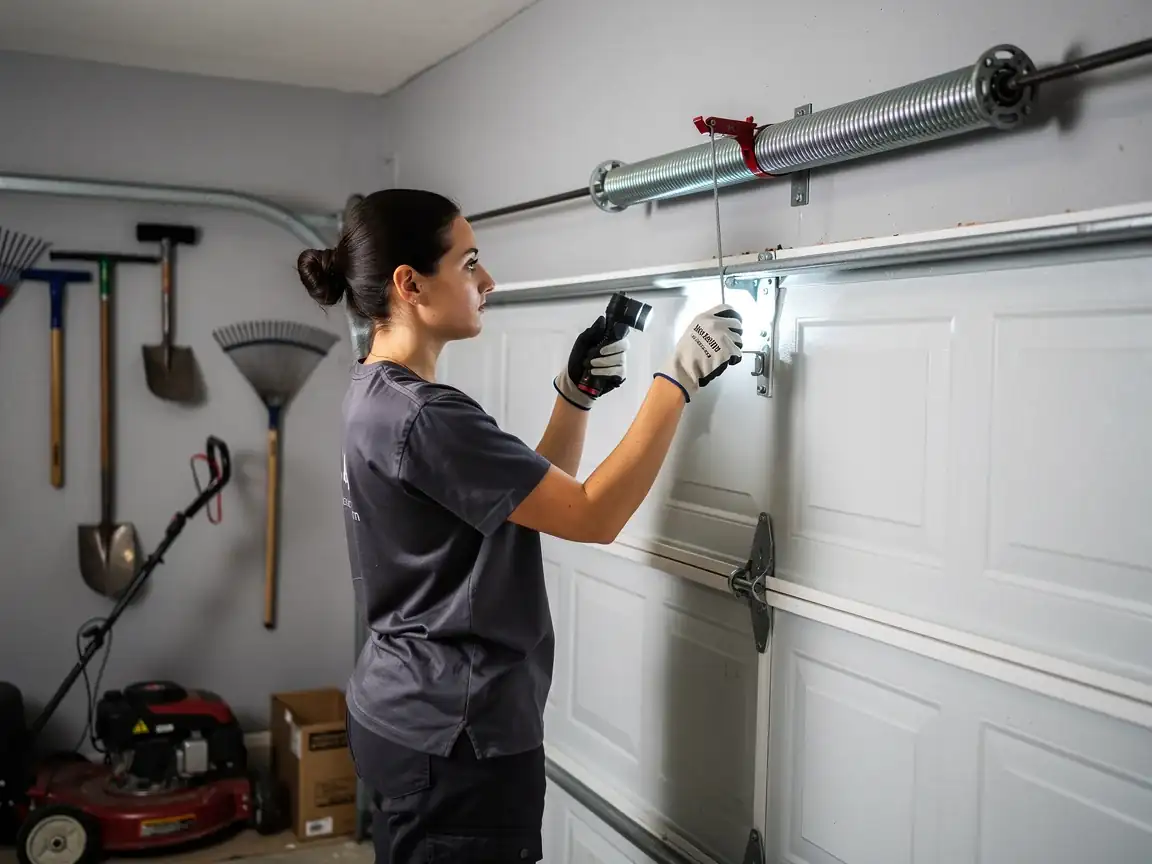
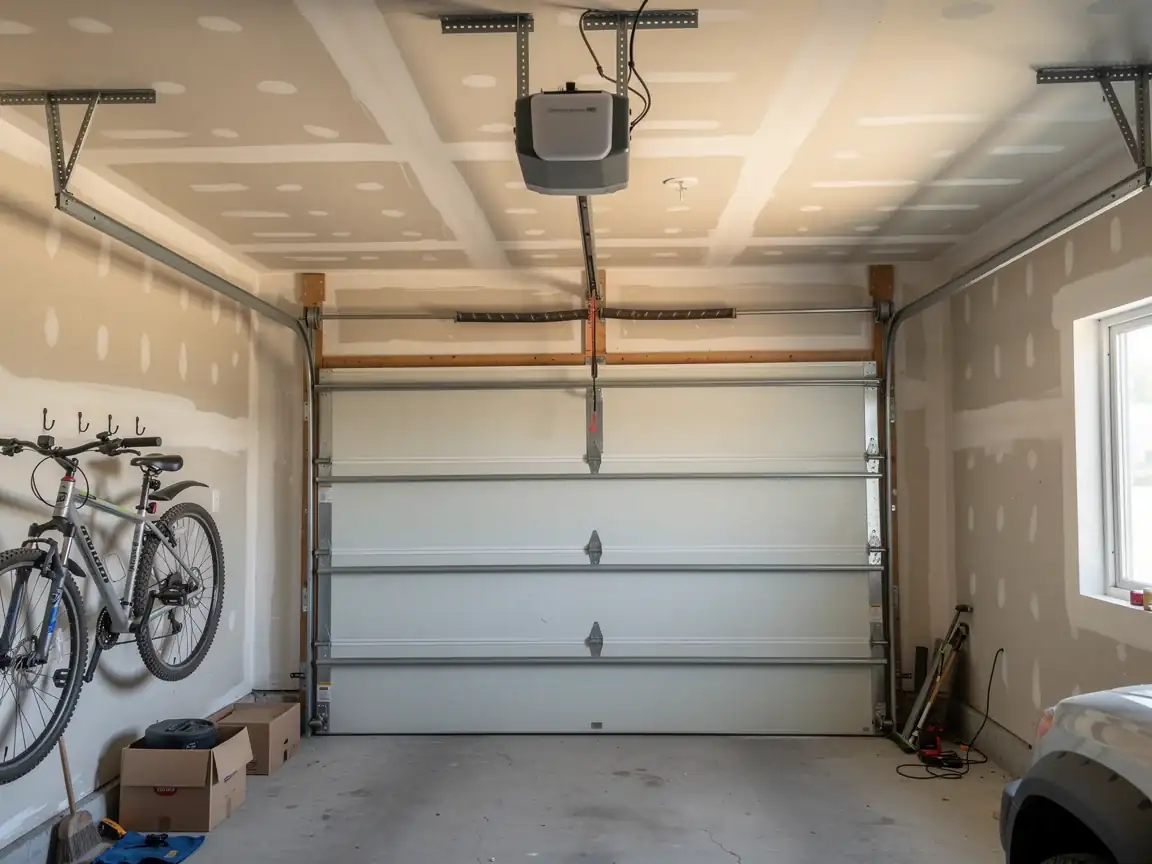
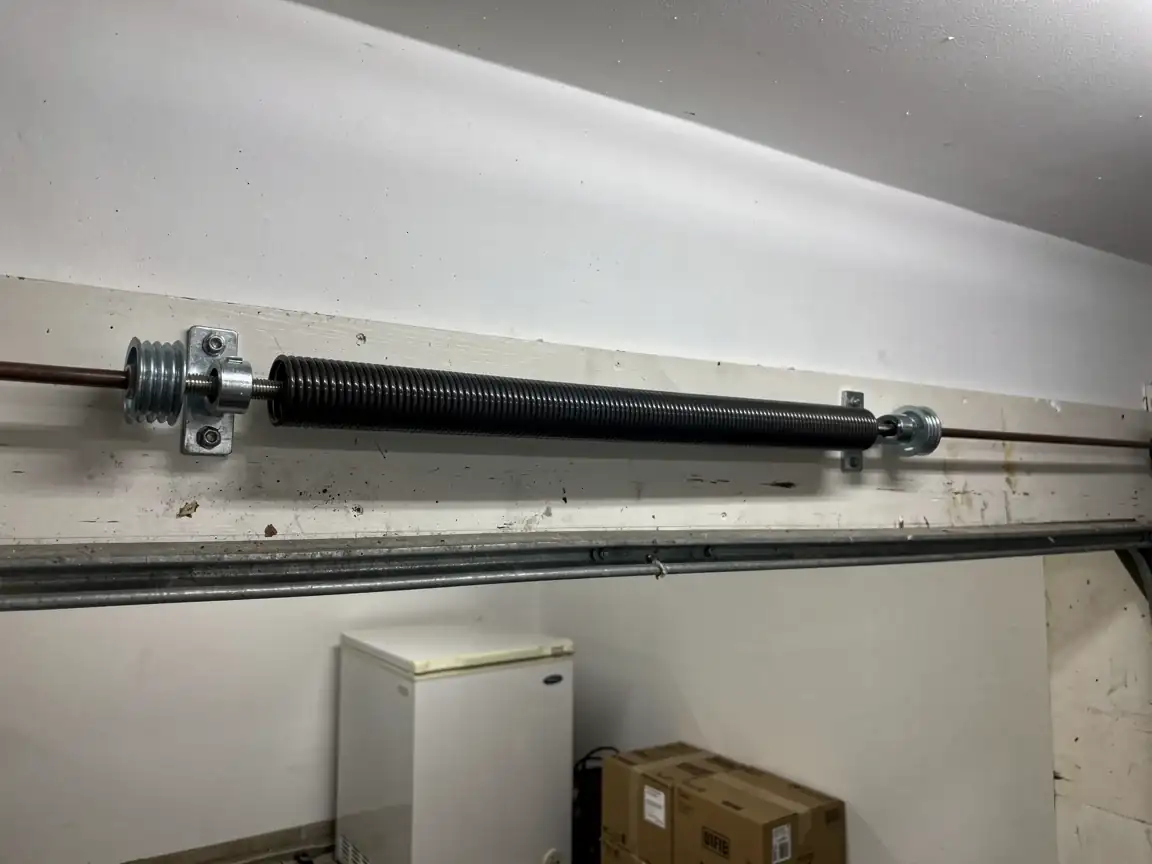
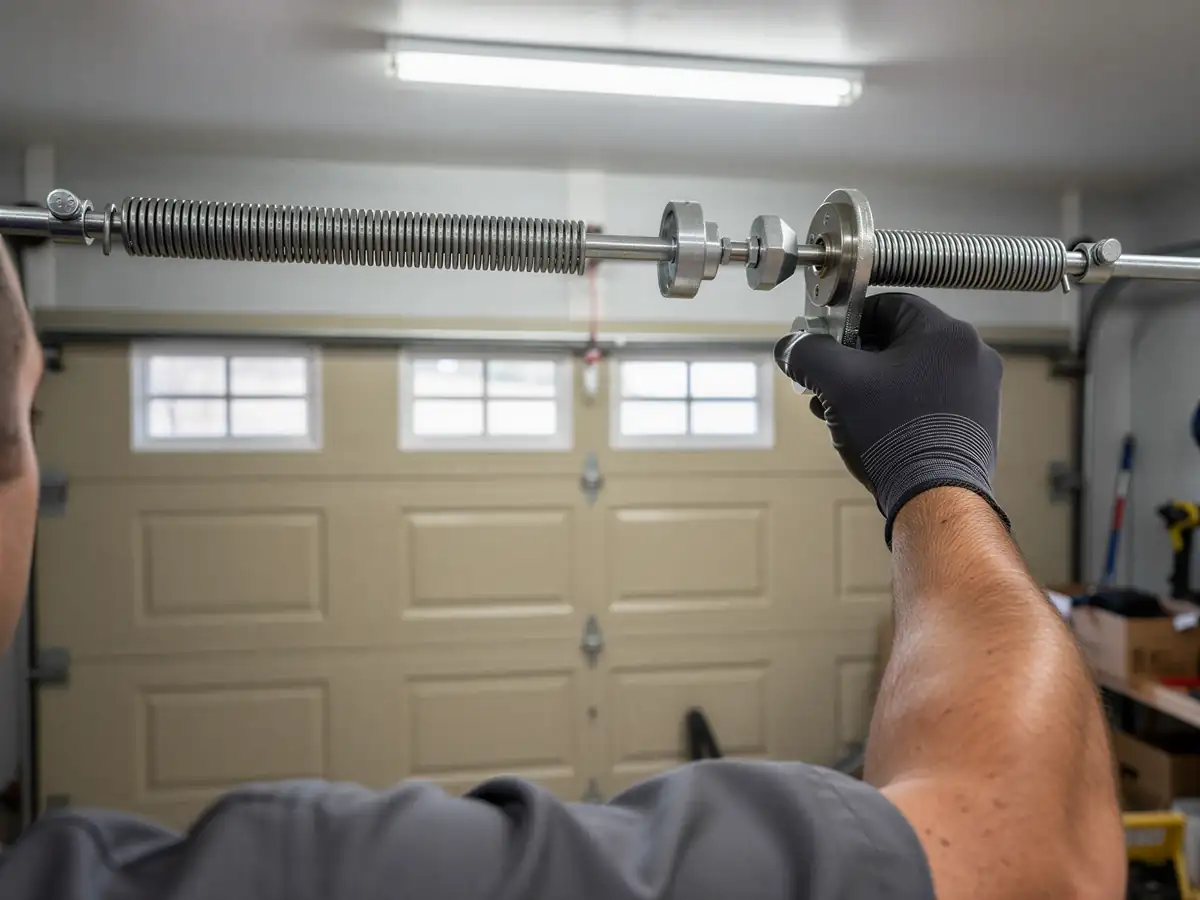
Torsion springs are not. A spring under tension on a door built decades ago can be wound tighter than modern equivalents and the winding cones may not match anything sold today, so a standard spring-winding kit can slip or fail in a way that isn't obvious until it's already happened. We won't talk anyone through that over the phone, and we don't recommend trying it without the right bars and clamps.
The honest limit here: if the door is original to a house built in that 1938-1985 window, the track spacing, spring size, and drum configuration are often non-standard by today's parts catalogs. That's less a DIY project and more a case for pulling the whole assembly and starting with current hardware sized to the opening you actually have.
How It Shows Up
On a lot of these older Needham doors, the first sign isn't a dramatic failure
It's the door getting slow and heavy-sounding as the weather turns. Steel panels that have been painted over a few times start binding in tracks that were never quite plumb to begin with, and the opener strains to compensate, which shortens its life too.
You'll also see sagging at the bottom corners on wood-panel doors from this era
Gaps along the sides that let cold air and moisture into the garage, and torsion springs that have lost tension gradually over years of temperature swings rather than snapping outright. A door that used to close flush now stops an inch short, or reverses on its own partway down.
In the coldest stretches, locks and latches on original hardware can freeze or stick
And openers built for lighter doors start drawing more current just to get the door moving, which is often the first thing a homeowner actually notices - a motor that sounds tired.
How We Fix It
With median household income in this service area at $154,011, most owners here can afford a full replacement instead of nursing a 1960s door along, but plenty still choose to repair first, and that's a reasonable call if the track and frame are sound. We look at the actual opening and hardware before recommending either path - we're not going to sell a full install when a spring and a tune-up solve it.
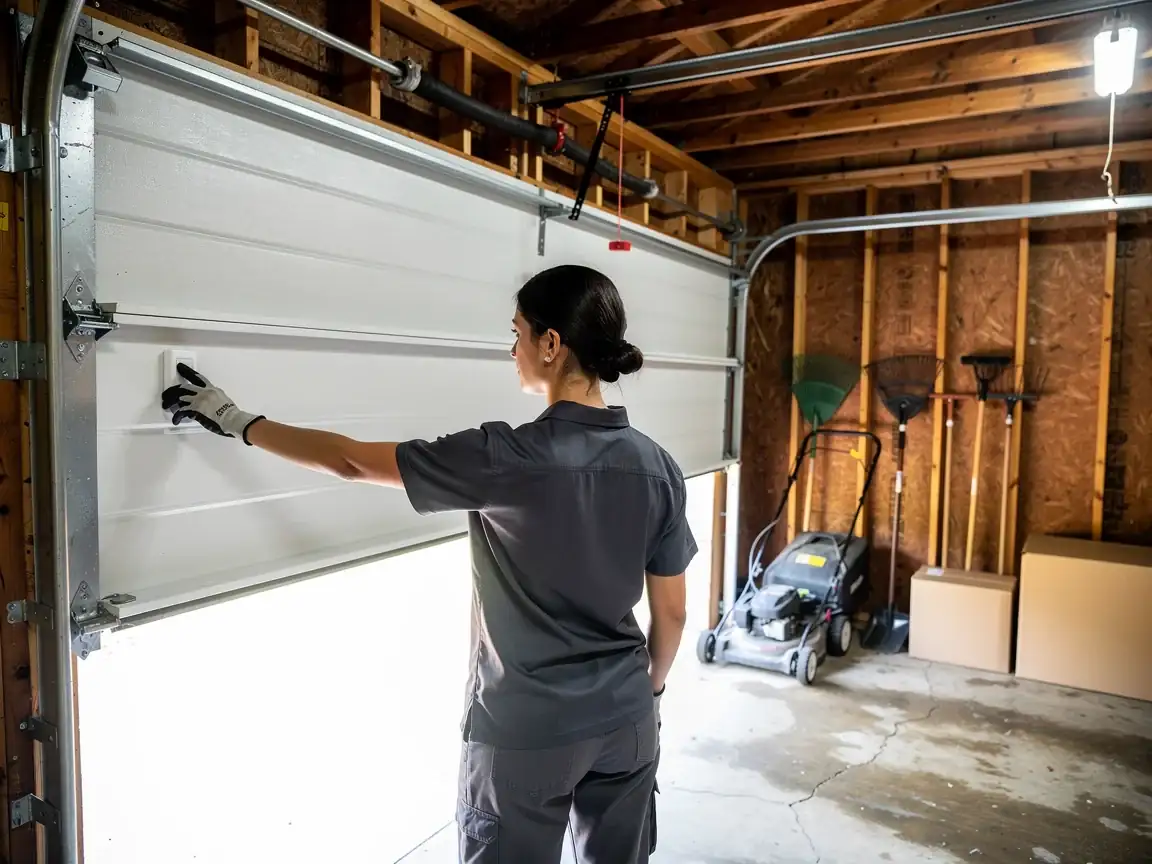
Across the 166,696 owner-occupied houses in this area, the ones built before 1985 are the ones calling us about doors that won't seal against the cold, and the fix for those is usually a door rated for this climate band from the start - insulated panels, weatherstripping sized for real New England winters, and a torsion spring system matched to the door's actual weight rather than whatever was standard decades ago.
When we install new, we size the opener and springs to the door we're putting in, not the one that was there before, so the hardware isn't working against itself the way original equipment sometimes was.