What to Check
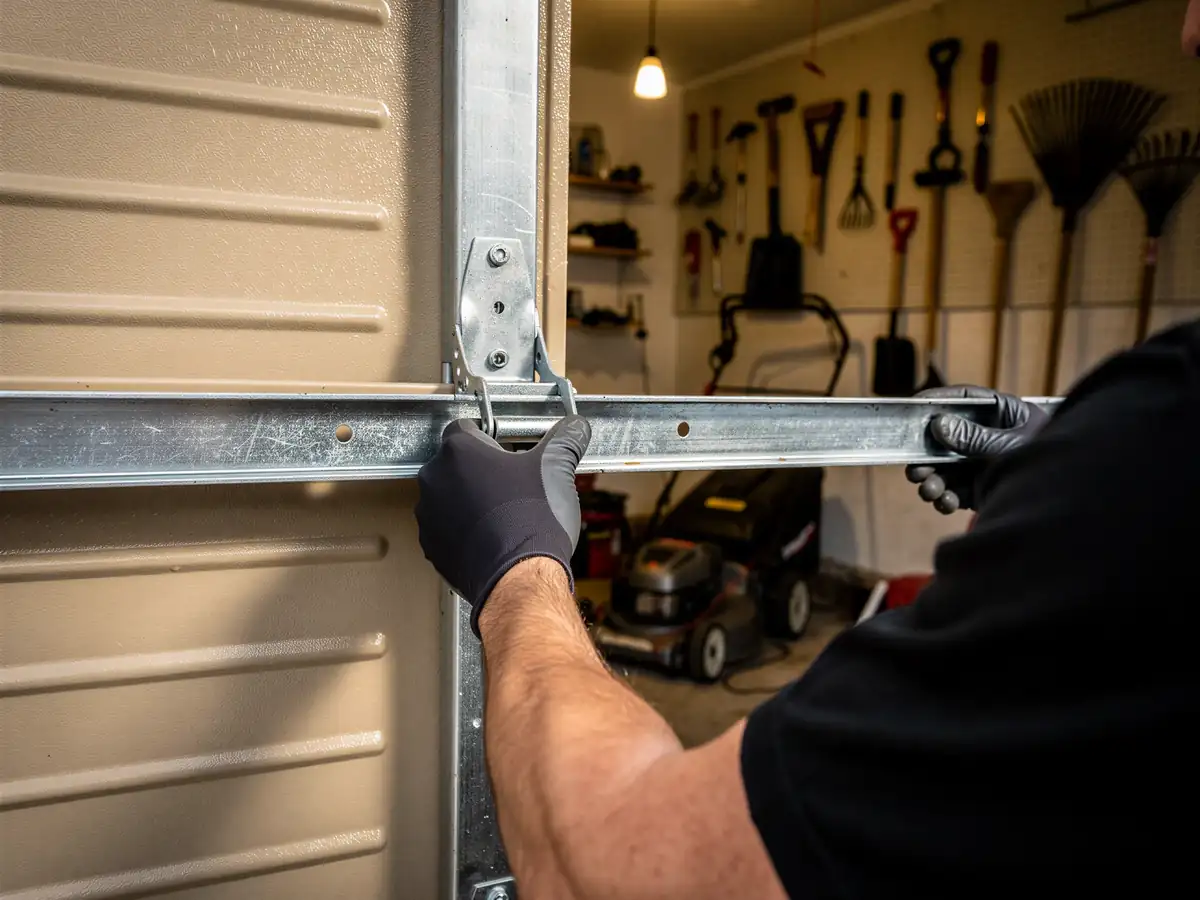
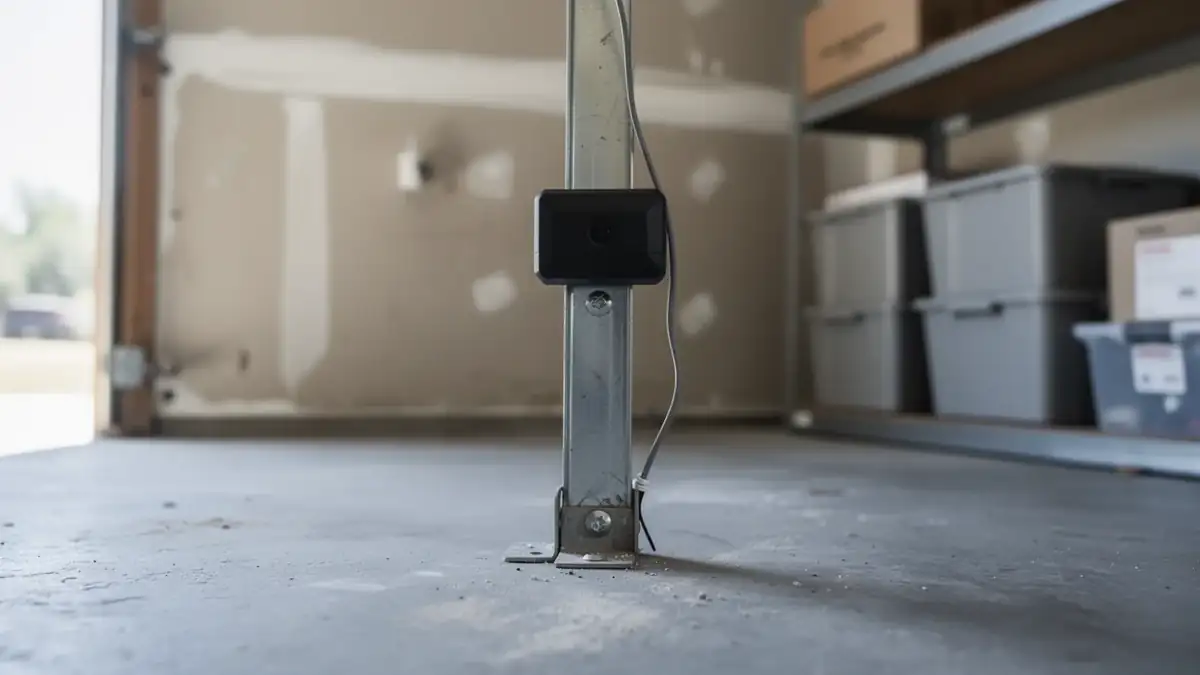
Start at the brackets, not the sensors themselves. In a lot of Needham garages, the photo-eye brackets were added after the fact - the housing stock here runs 1938 to 1985 with a median build year around 1968, and a door from that era didn't come with safety sensors at all. UL 325 didn't require them until the 1990s, so what you're looking at is almost always a retrofit bracket screwed into trim that was framed decades before anyone thought about it.
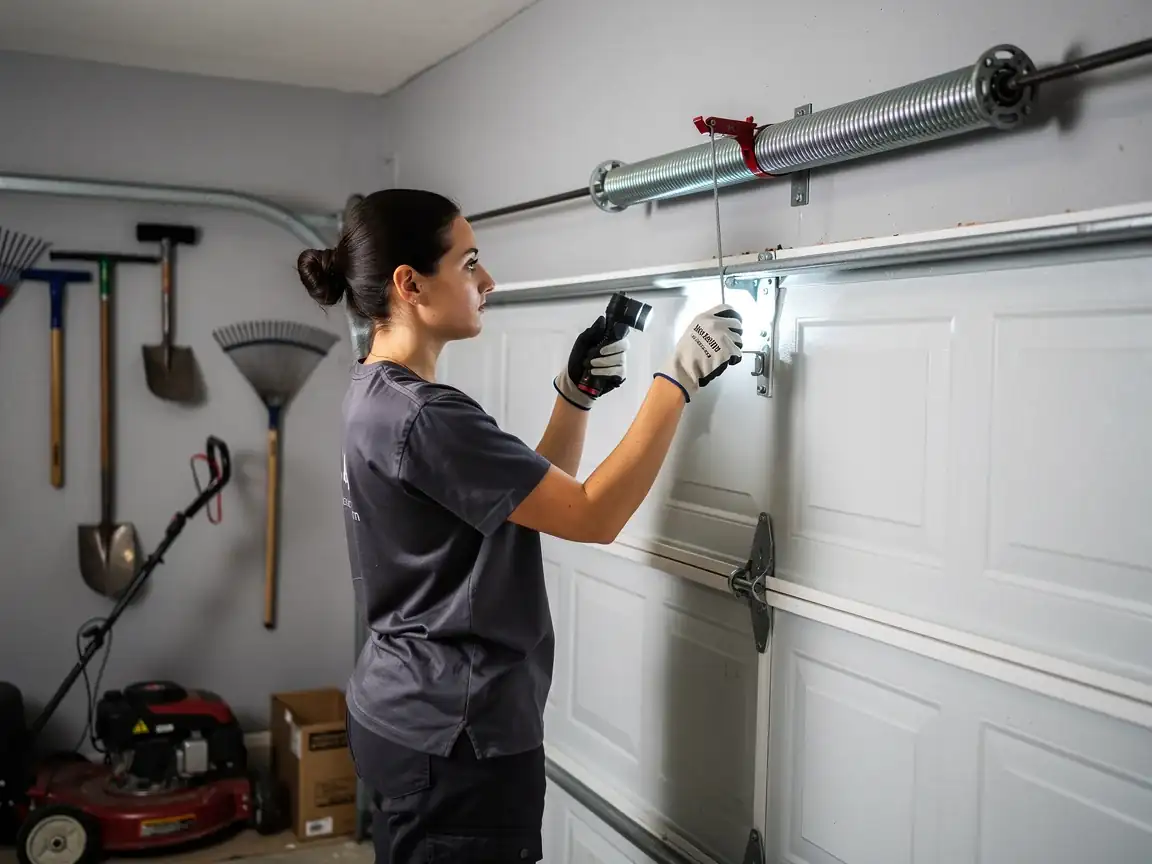
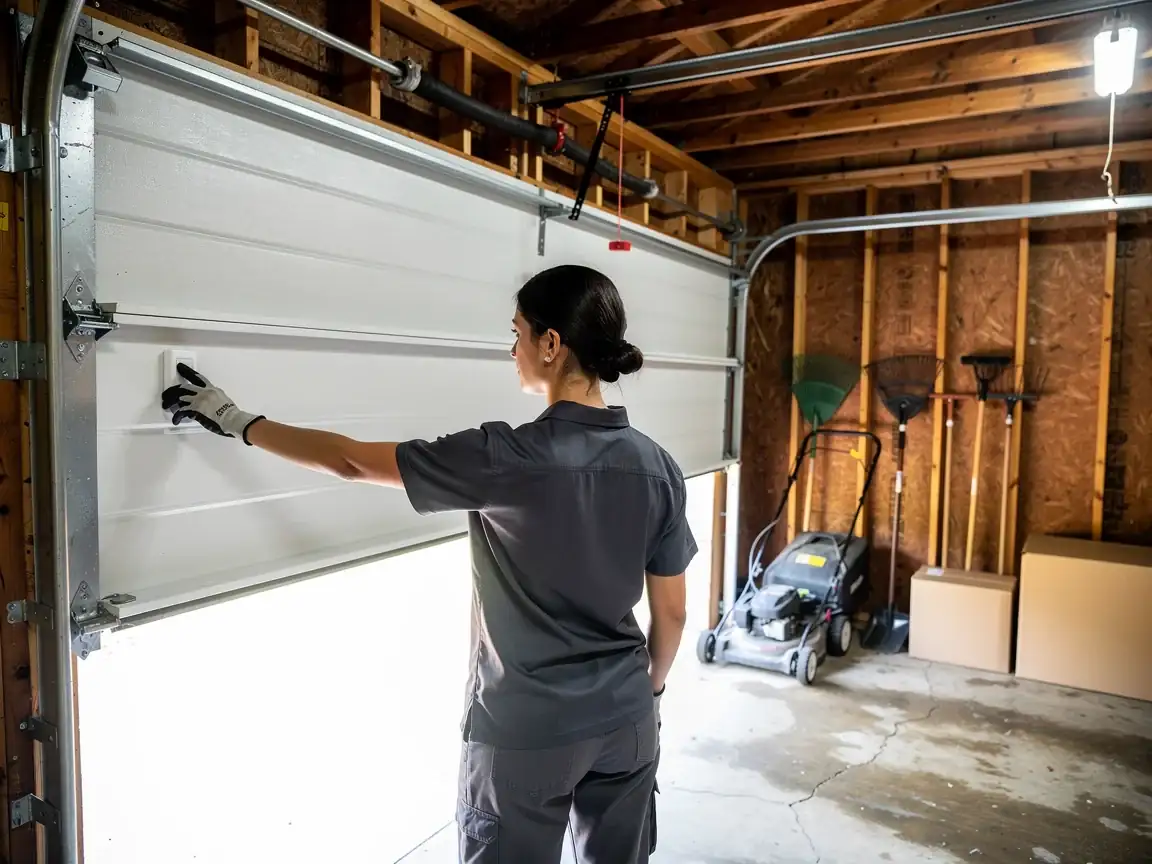
Check that both eyes sit at the same height, roughly 4 to 6 inches off the slab. Run a hand along the bracket itself - if it rocks or the screws spin loose in the wood, that's your drift source, not a bad sensor. Wipe the lenses; sawdust and cobwebs in an older unheated garage block the beam just as effectively as a misaligned bracket. Look at the wire too. Original low-voltage wire from a 1960s build is brittle insulation over copper that's been flexed by forty winters of a moving door, and a nicked wire reads the same as a misaligned eye to the opener's logic board.
If the LED on one eye is solid and the other blinks, you've isolated the side. That's the only diagnostic step worth trusting before you start touching alignment screws.
When to Get Help
Call it in if you've squared both brackets, cleaned both lenses, and the door still reverses or won't close on its own - that points past alignment into the opener's logic board or a wiring short inside the wall, and that's not a five-minute fix with a level. It's also worth a call if the bracket itself is loose in the jamb. On a lot of the original 1960s and 70s framing still standing across this stock, the jamb wood behind the bracket has dried and shrunk enough that no amount of re-screwing holds it - the fix is a new mounting block, not another screw.
We don't recommend bypassing the sensors to get the door working again, even temporarily, even though plenty of older openers still physically allow it. A door that closes without checking for an obstruction is the one safety feature in your garage that exists because people got hurt before it did. If you're not confident the beam is reliably breaking and re-making, that's a service call, not a project for a Saturday afternoon.
What the Weather Here Does to It
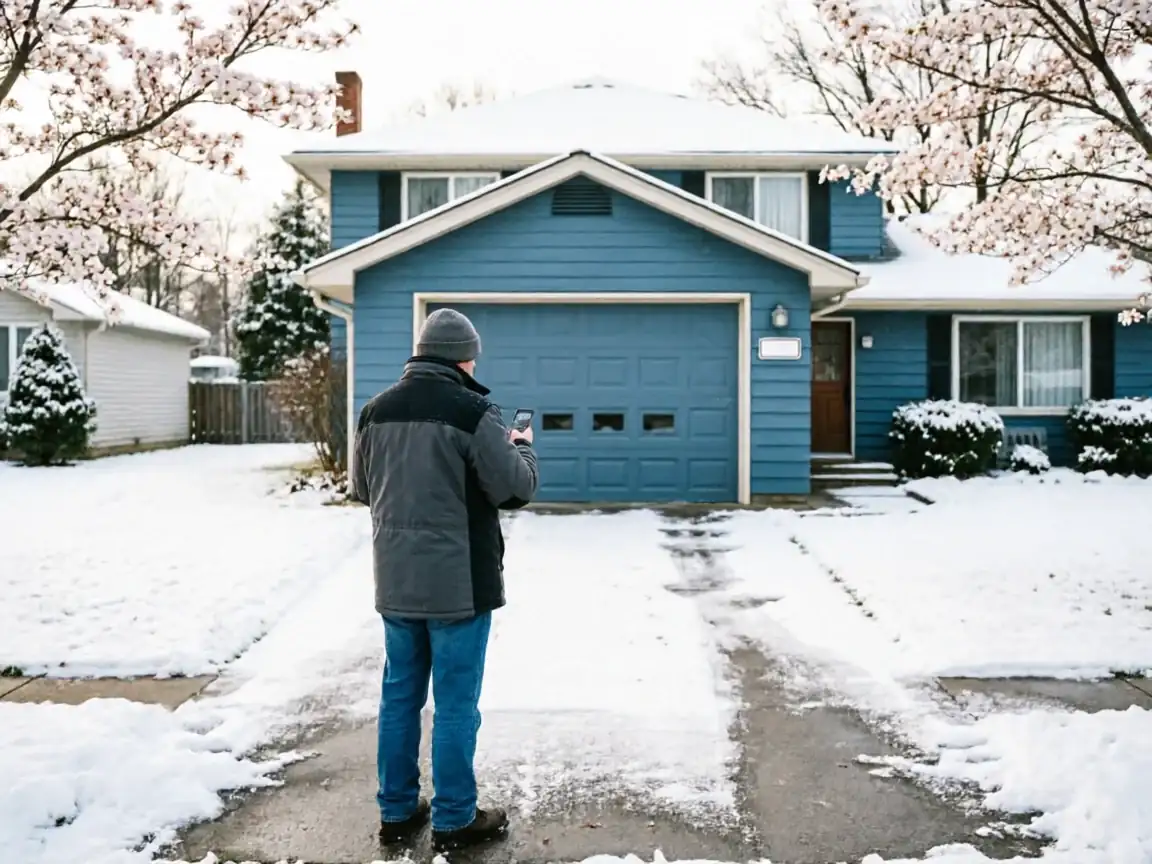
Needham sits in a climate band rated cold and severe
And that matters more to sensor brackets than most people expect. The ground under a slab-on-grade garage heaves with frost in January and settles back in April, and a bracket screwed into jamb trim at grade level moves with it - not dramatically, but enough over a season to knock a beam a half-inch off its mate, which is all it takes.
Houses built in that 1938-to-1985 window
Which is most of what's standing here, were framed before anyone insulated garage slabs against frost movement the way newer construction does. So the drift isn't a one-time installation error you fix and forget. It's closer to an annual event tied to the freeze-thaw cycle, which is why a sensor that worked fine in October can refuse to clear the beam in February.
Humidity swings do a smaller version of the same thing to the wood trim itself
Swelling and shrinking the screw holes a fraction each season until the bracket has enough play to walk out of true. None of this shows up as a dramatic failure. It shows up as a door that intermittently won't close, which is exactly the kind of problem people live with for months before calling.
The Problem
The honest version of this is that sensor drift on a lot of these older Needham garages is a symptom, not the disease. The disease is a thirty-to-eighty-year-old jamb that was never built to hold a photo-eye bracket in the first place, sitting on a slab that moves every winter in a climate rated cold and severe. You can realign the eyes every spring, and plenty of owners do, but that's maintaining a workaround rather than fixing the thing causing it.
The actual fix, when the jamb itself has gone soft or the wiring's brittle enough to be unreliable, is a new bracket mounted into solid framing with fresh low-voltage wire run clean to the opener head - not another round of loosening two screws and eyeballing the beam. We won't talk you into that job if a five-minute realignment is holding; plenty of doors go years on nothing more than an annual tweak. But if you're re-aligning the same bracket every few months, that's not bad luck, that's the wood telling you it's done holding a screw.