What to Check
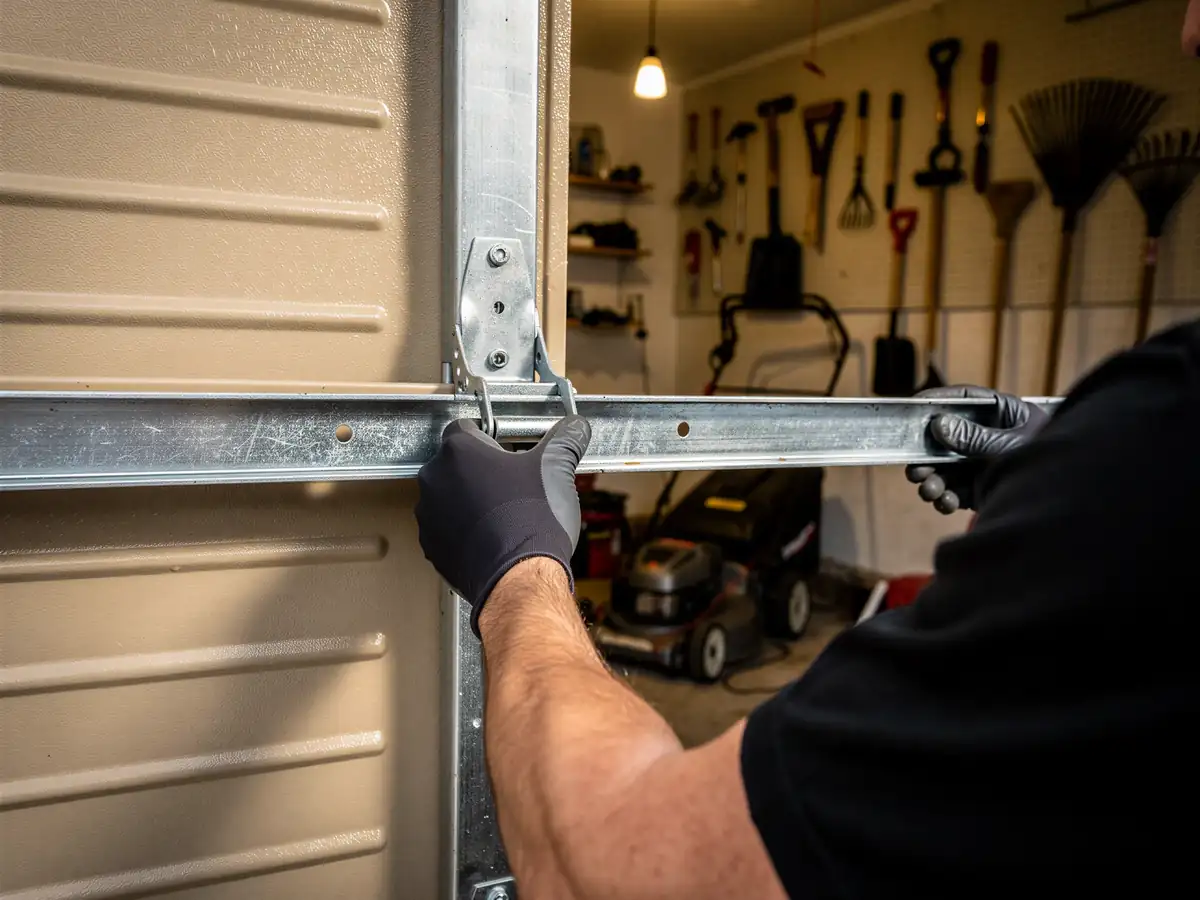
Start at the track brackets. On a 16-foot single-panel door, the kind common in homes built across Needham's 1960s and 70s construction boom, the brackets that hold the vertical track to the jamb take the full sideways push when wind hits the door face. Look for brackets pulling away from the wood, or screws that have backed out even a quarter inch. That's the first sign a door is flexing more than it should.
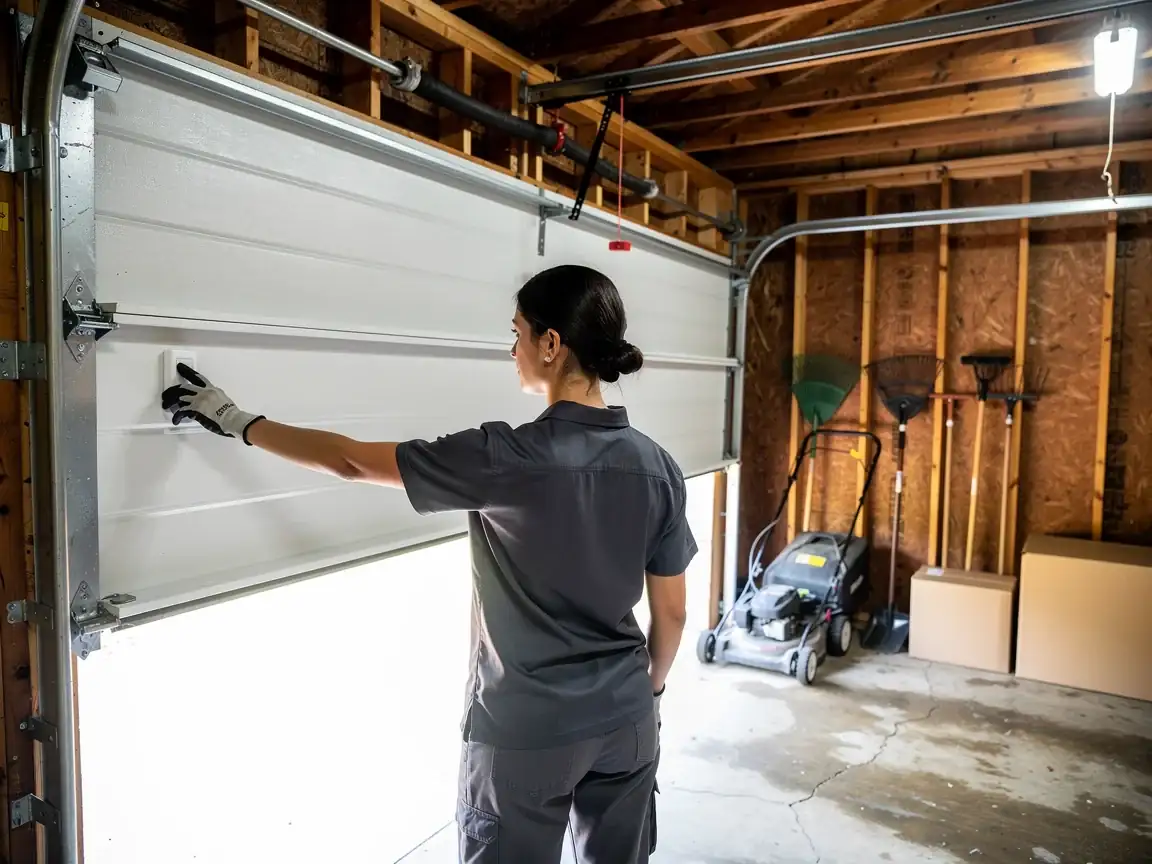
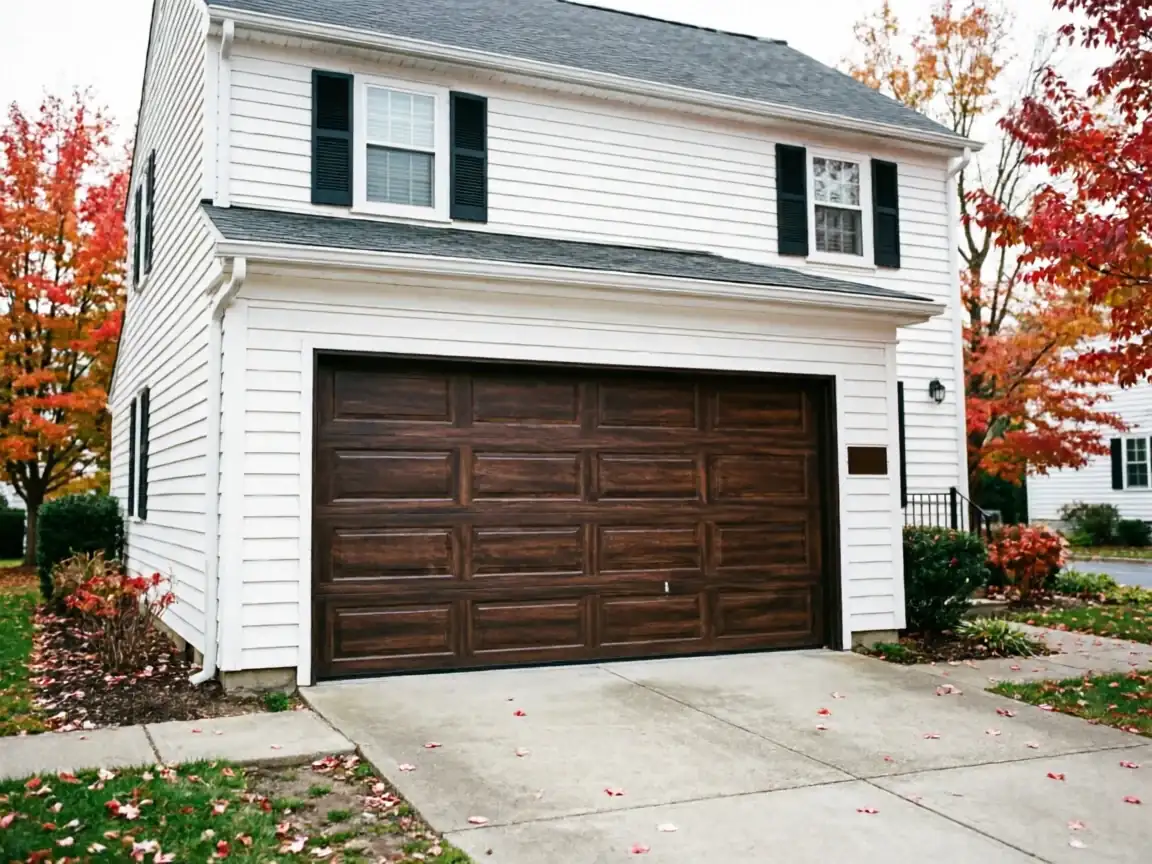
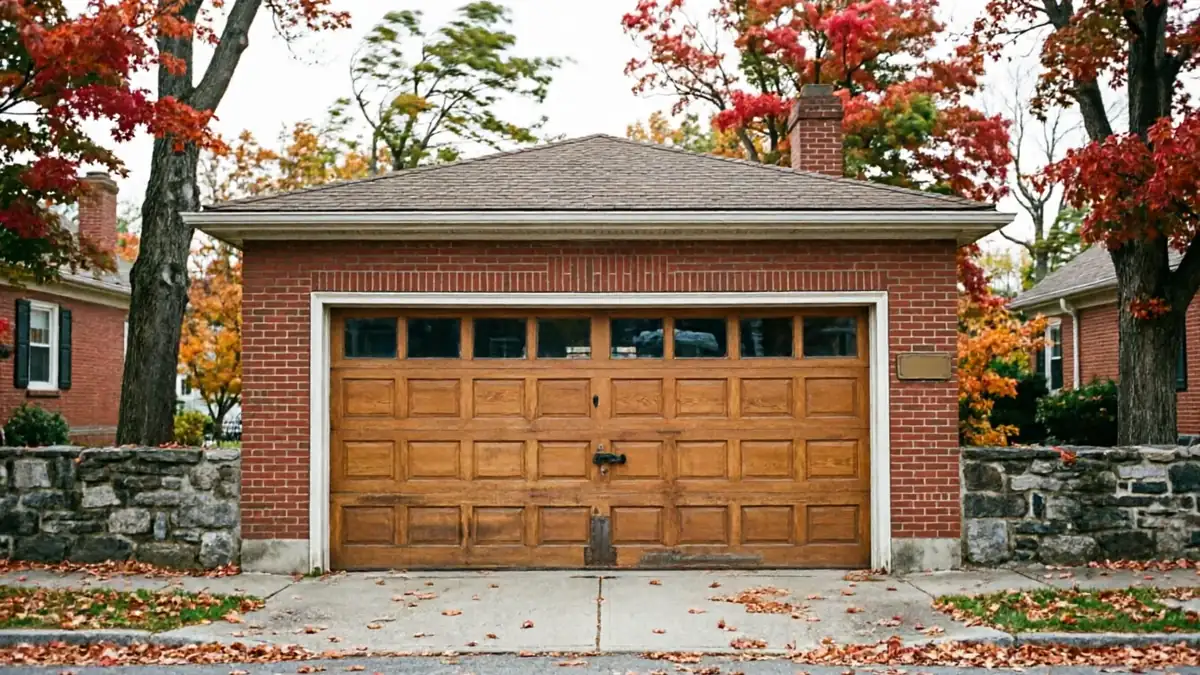
Next, check the panel itself for a bow when the door is closed. Stand to the side and sight down the face. A door built before reinforcing struts were standard - which covers a lot of the stock here, since the median build year is 1968 - may not have a horizontal strut running the width of the panel. Without one, a wide door has nothing stopping the center from flexing inward under a gust.
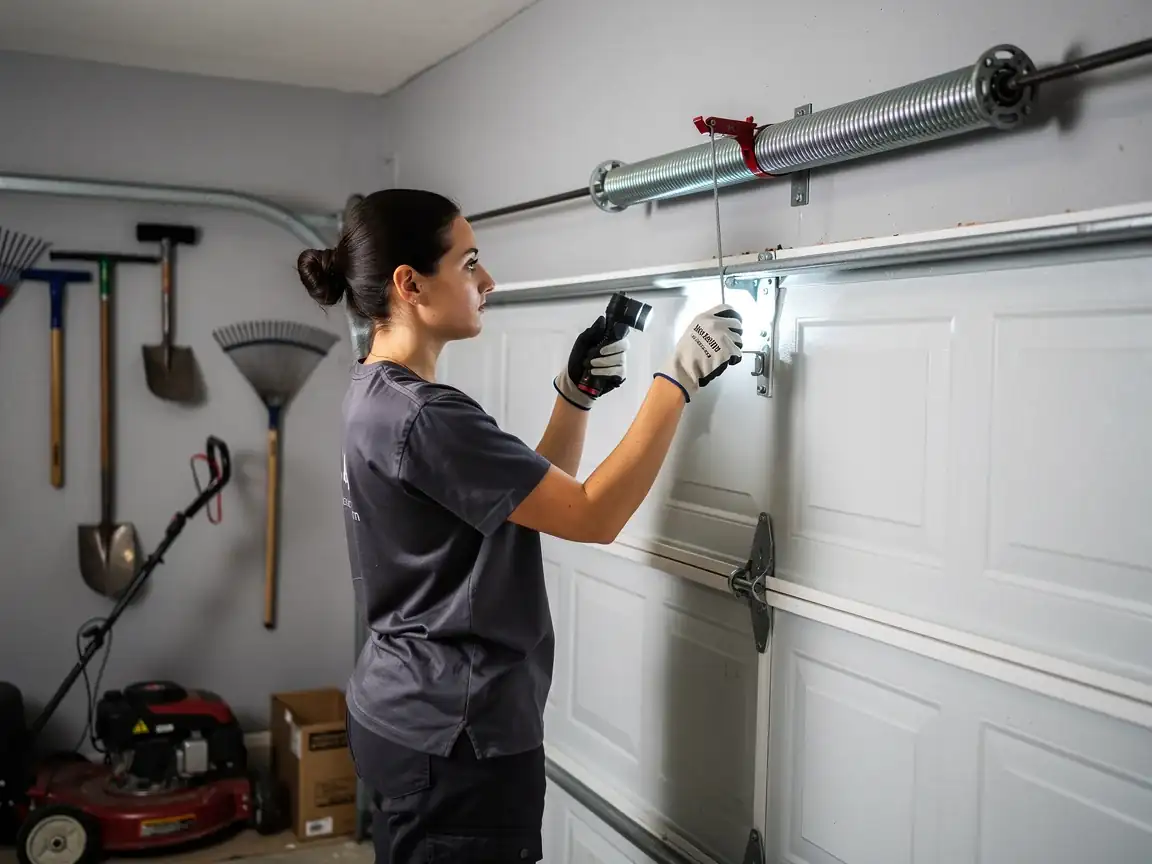
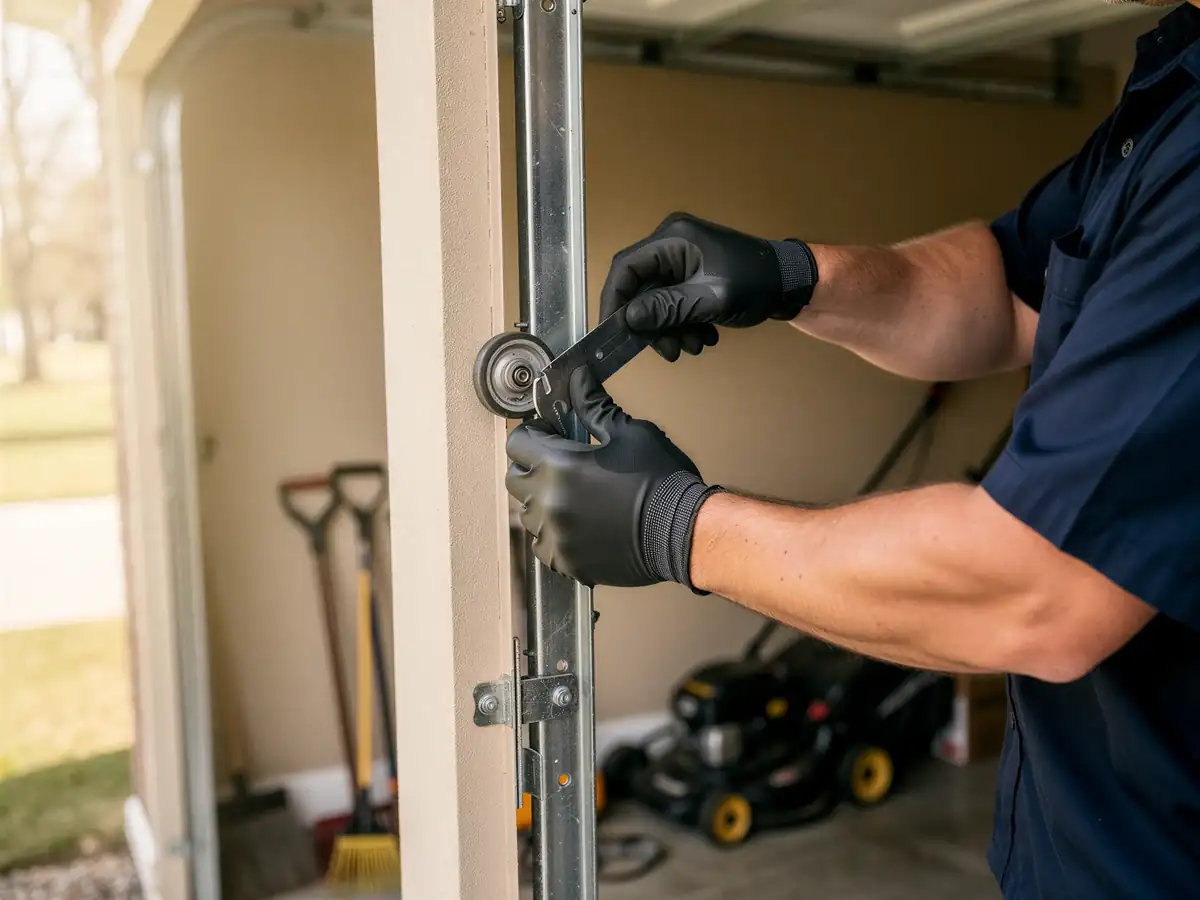
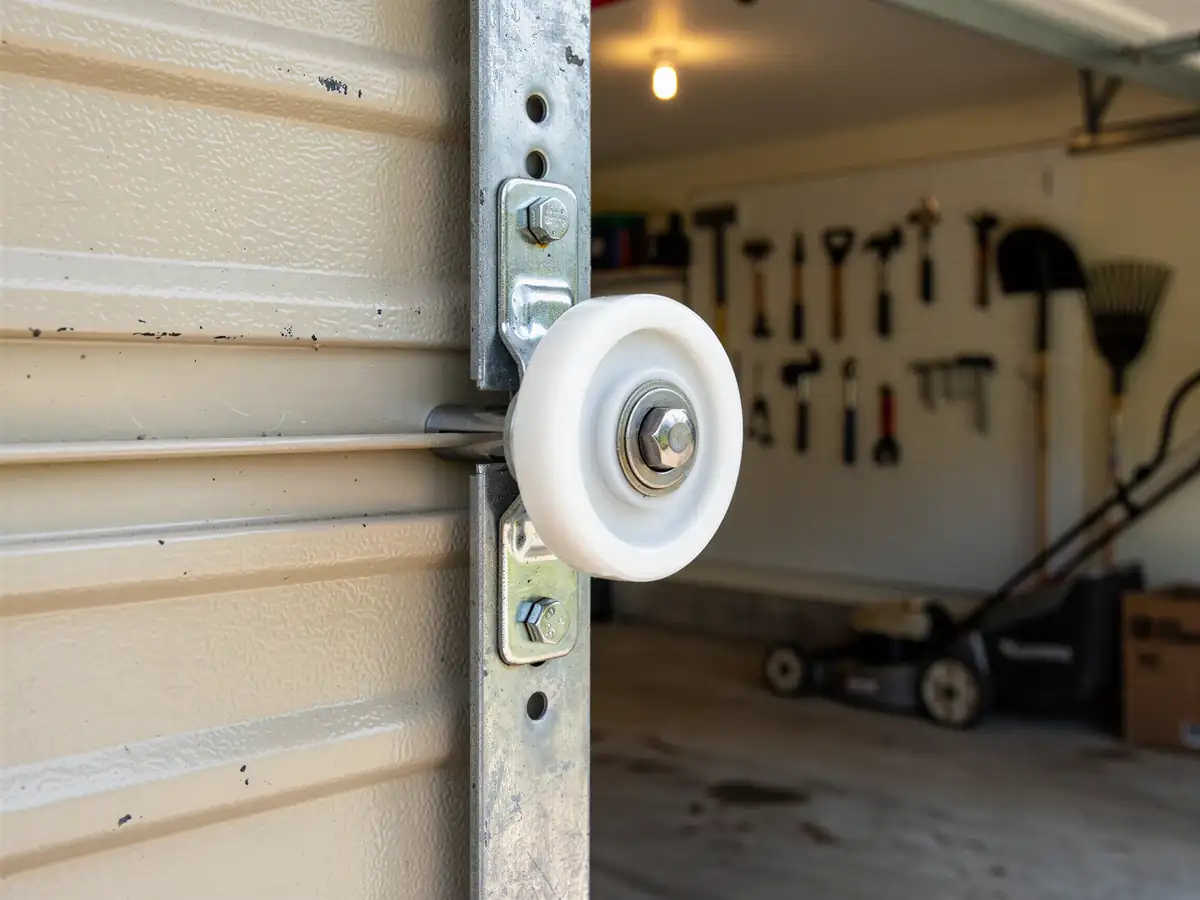
Check the rollers and hinges too, especially if the door hasn't been serviced in years. Stiff rollers mean the opener and the wind are fighting the same resistance, and that extra strain adds up at the end rollers first, where you'll see wear grooves or cracked nylon. None of this is exotic. It's just what happens to a wide panel that was never built with a strut, sitting in a house pushing fifty-plus years old.
When to Get Help
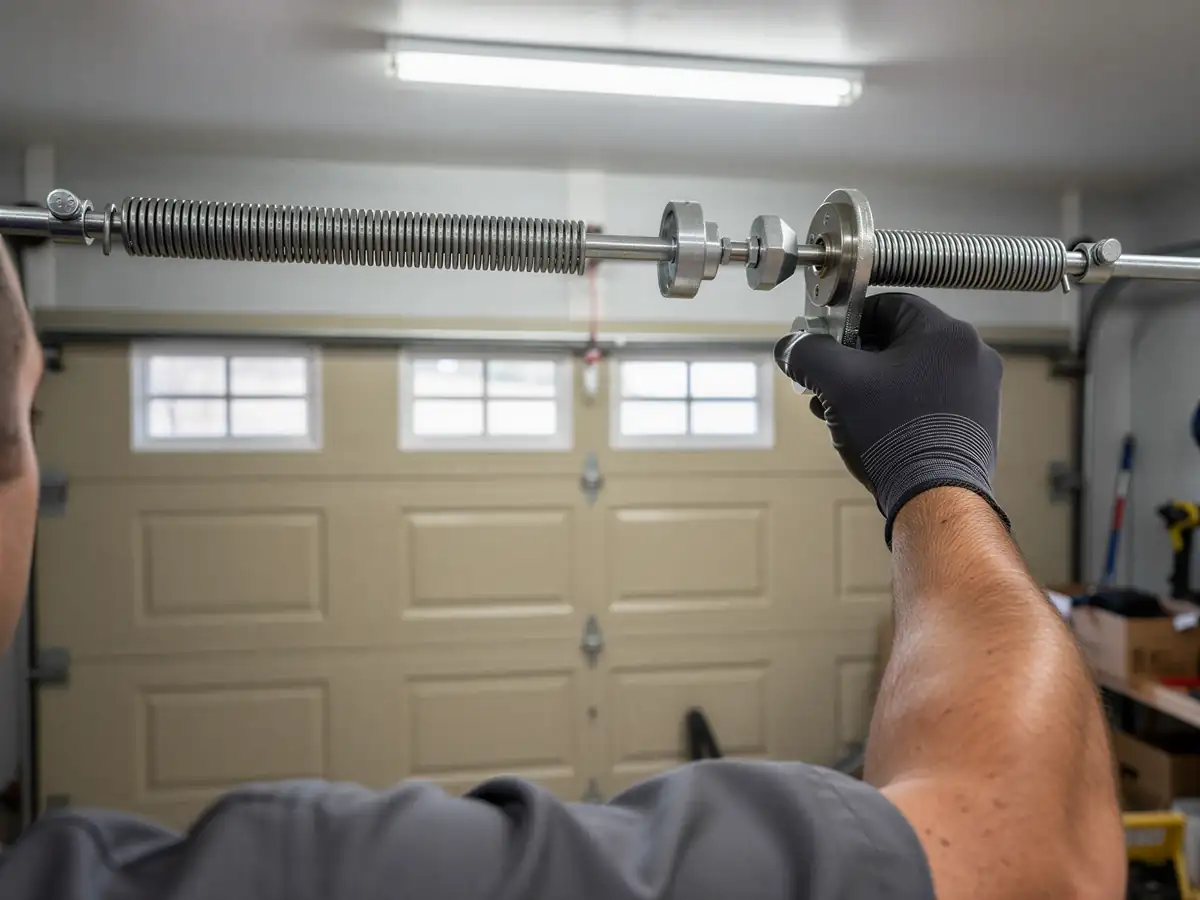
Call before the door fails, not after. If you've found a bowed panel, a bracket pulling loose, or a center section that visibly flexes when the wind picks up, that door is not going to hold on its own through another season. Waiting usually means a cracked panel or a torsion spring that lets go under the extra load, and either one turns a $200 fix into a full door.
We don't recommend trying to add a strut or reinforce a panel yourself on a door this wide. The hardware has to be matched to the track and spring tension, and getting it wrong on a single 16-foot panel is a different job than on a narrower door. If the door is original to a house built in that 1938-to-1985 window, there's also a decent chance the spring and track hardware predates parts that are still stocked, which changes whether reinforcing is worth it versus replacing the section.
One honest limit: we can't always get a strut kit or matching panel section same week. Parts for older single-panel doors sometimes take longer to source than for current double-door setups, so if your door is already bowed, don't wait on the next storm to find out how long that lead time is.
What the Weather Here Does to It
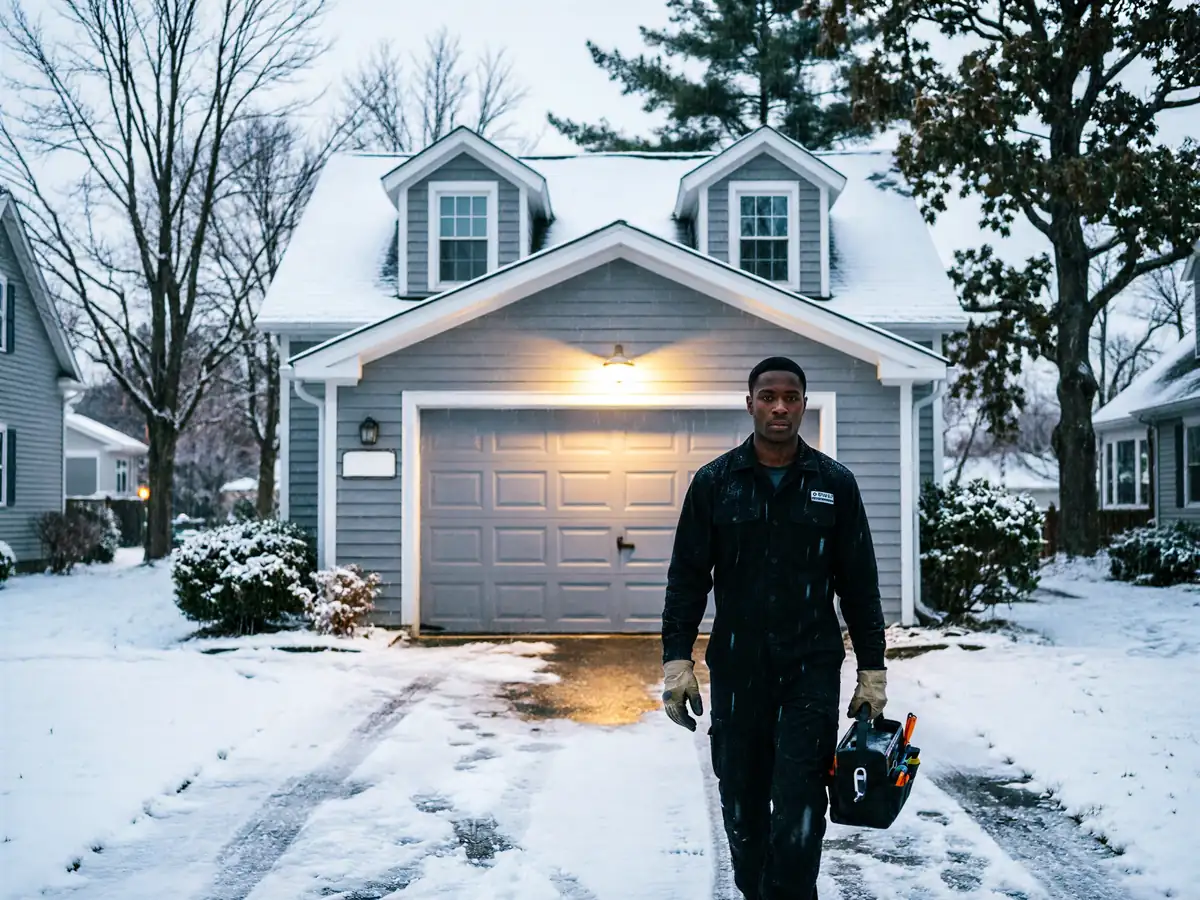
Needham sits in a climate band classed as cold and severe
And that combination matters more for a wide door than people expect. Cold stiffens the nylon rollers and tightens the torsion spring's resistance, so the door is already working harder to open and close before wind ever enters the picture. Add a gust pushing against 16 feet of panel face, and the hardware that would shrug off the load on a mild day is instead fighting cold-hardened metal and wind at the same time.
- 16 feet
This is also why age matters as much as weather
A door built in the median 1968 era of this housing stock has had decades of that cold-severe cycle working on its track alignment and spring tension. Metal fatigues. Brackets that were tight in 1968 aren't tight now. None of that shows up on a calm, 60-degree afternoon - it shows up the first time a winter system pushes wind against a door that's already lost some of its margin.
At a median household income of $154,011 across this area
Replacing a tired single-panel door with one built with a factory strut and a heavier gauge is a real option for a lot of owners here, rather than patching the same panel again each time it bows.
- $154,011 median household income
The Problem
The root issue is simple: a wide single-panel door has a lot of surface area and, if it's old enough to predate reinforcing struts, not much resisting a sideways push across the middle of that area. Needham's housing stock runs heavily into that category - built mostly between 1938 and 1985, with the bulk from the 1960s and 70s, which is exactly when builders switched from two narrow doors to one wide panel without always adding the bracing that panel needed.
Put a cold-severe climate on top of that and you get hardware that's stiffer and less forgiving right when wind load is highest. The spring is working against cold-tightened tension, the rollers are dragging more than they should, and the panel itself may have no strut running its width. Any one of those alone is manageable. Together, on a door that's been in place since the original build, they're what actually causes failure - not a single big storm, but years of a wide, unreinforced panel losing ground in a climate that doesn't let up.