Why This Fails Locally
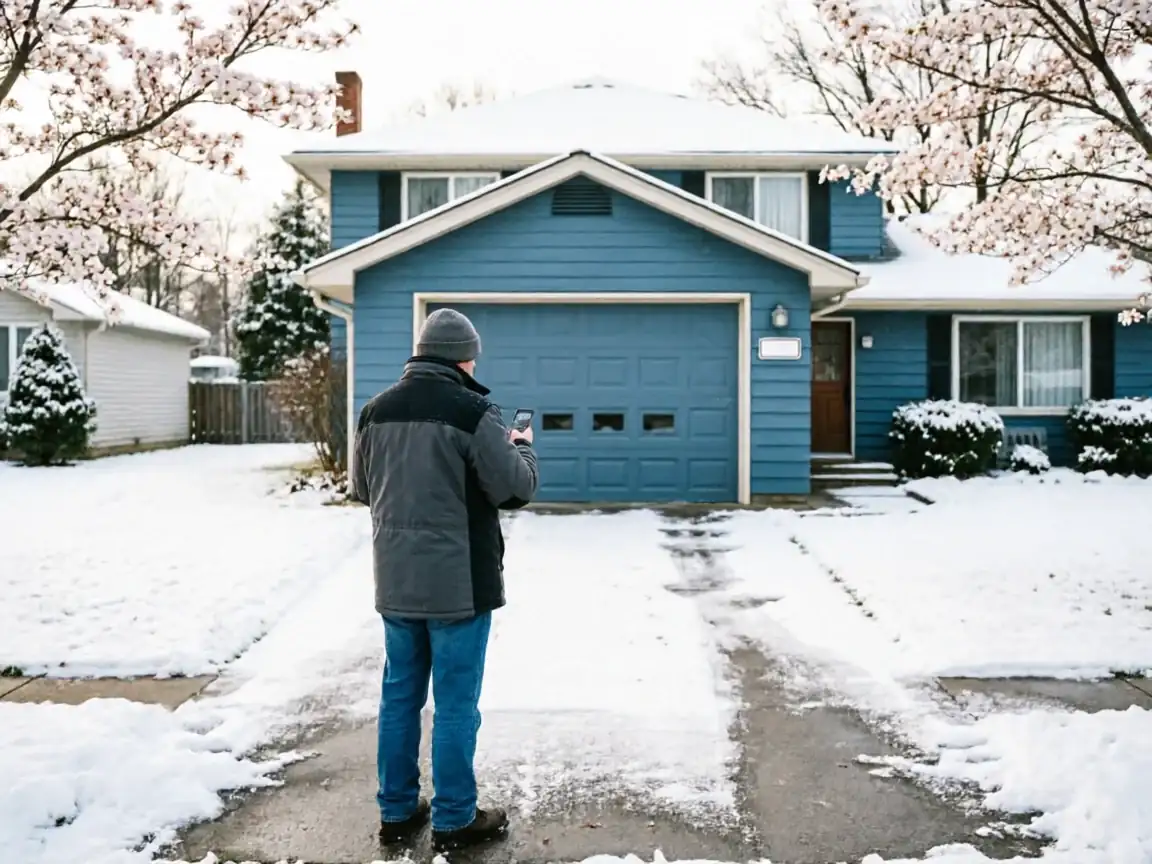
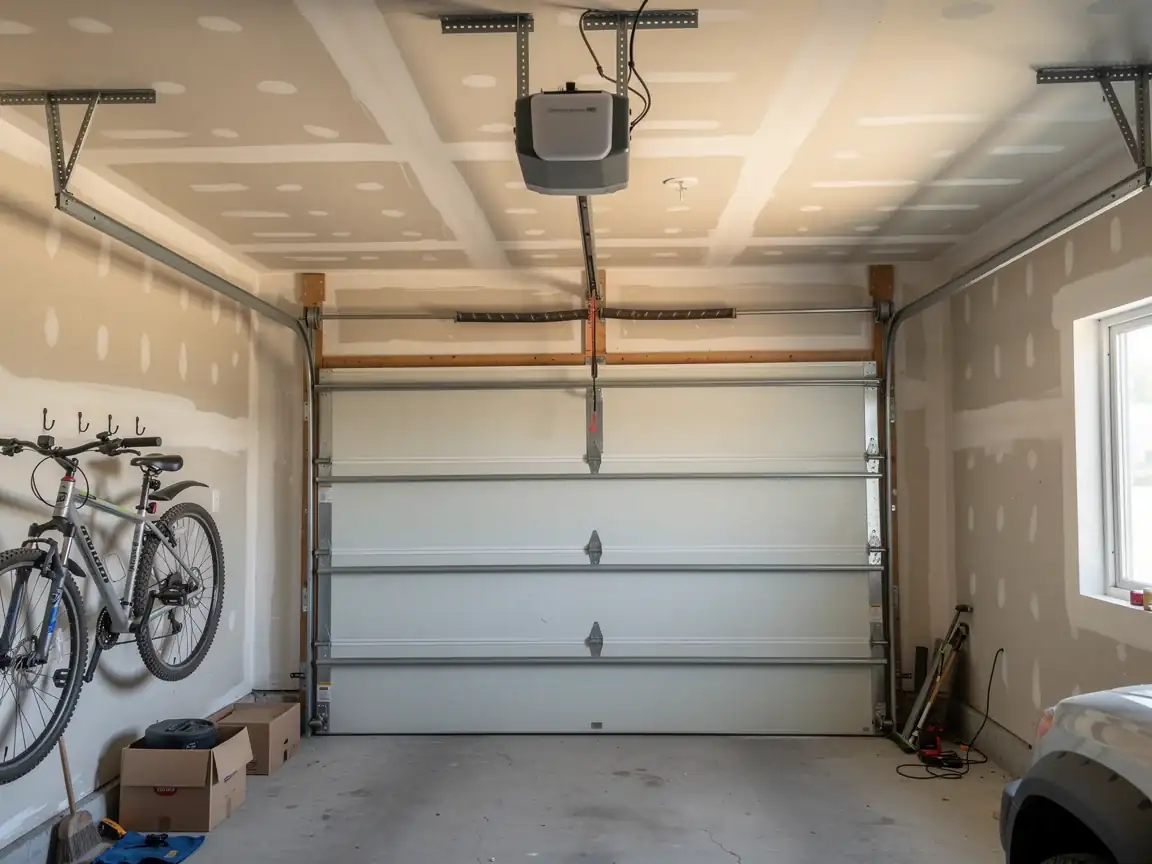
Most houses across this service area were built between 1938 and 1985, with the typical home dating to 1968. That means a lot of the original garage doors still run on the steel rollers and tracks that went in with the house - hardware that's now pushing fifty to sixty years of service. Across the 58 named areas we cover, the bulk of the stock is 1960s and 70s construction, so this isn't a one-house problem, it's a generation of doors hitting the same wall at the same time.
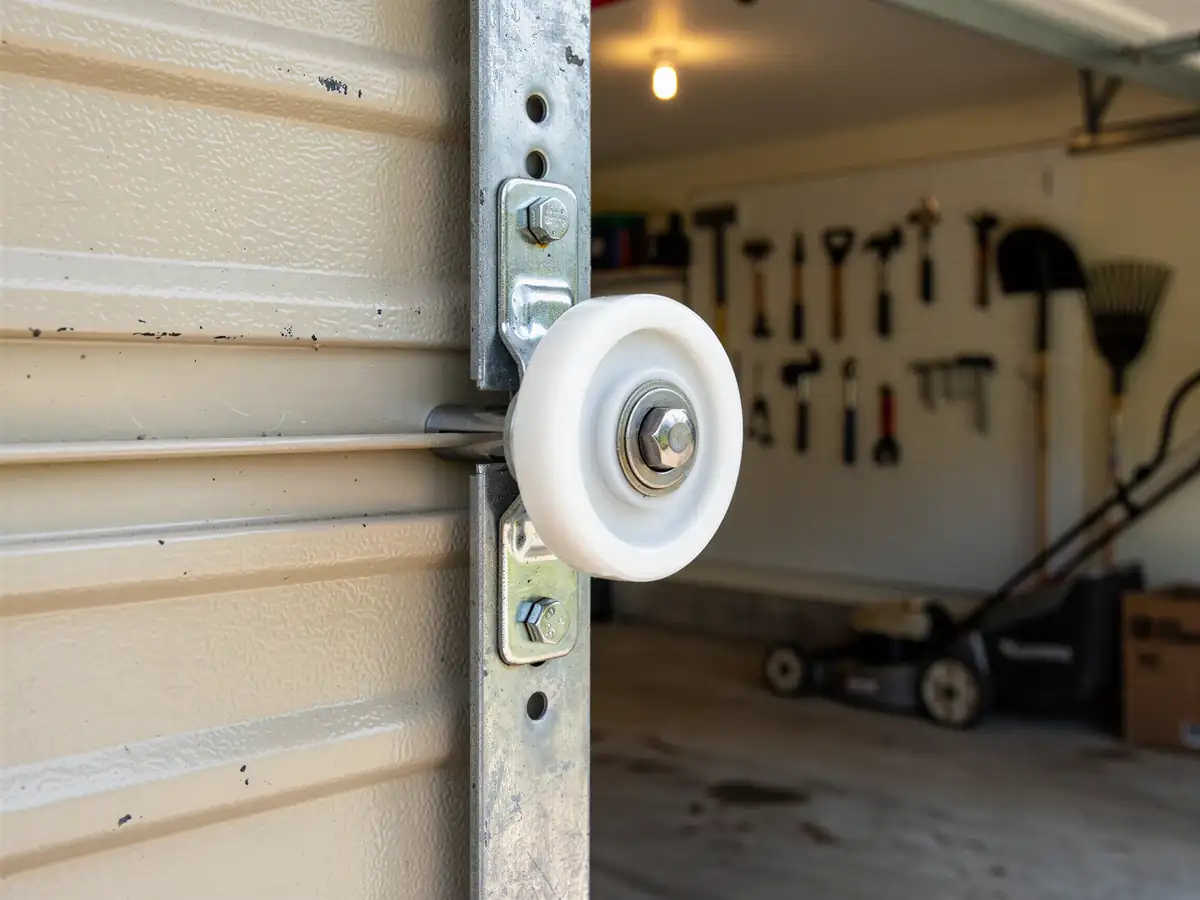
The climate makes it worse. This area sits in a cold, severe winter band, and steel rollers don't handle that kind of temperature swing well. Grease stiffens, metal contracts, and a roller that was already worn starts binding in the track instead of rolling through it. On a door that's opened and closed a few times a day for five decades, that's a lot of cycles on hardware that was never built to last the life of the house. Nylon rollers age differently - they crack and flat-spot rather than rust - but on homes this old, you're often looking at original steel, not a prior nylon upgrade.
This is a track-and-roller problem tied to age and climate, not a defect in any one door.
Doing It Yourself
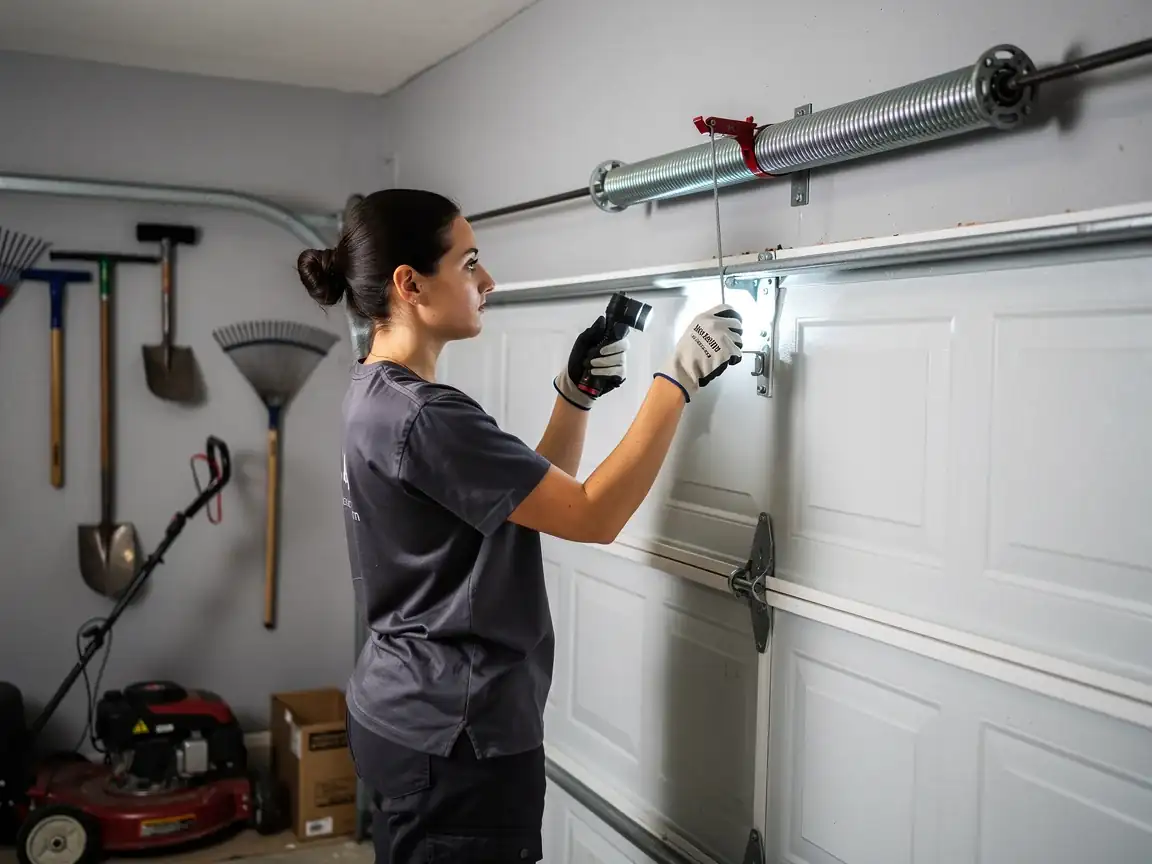
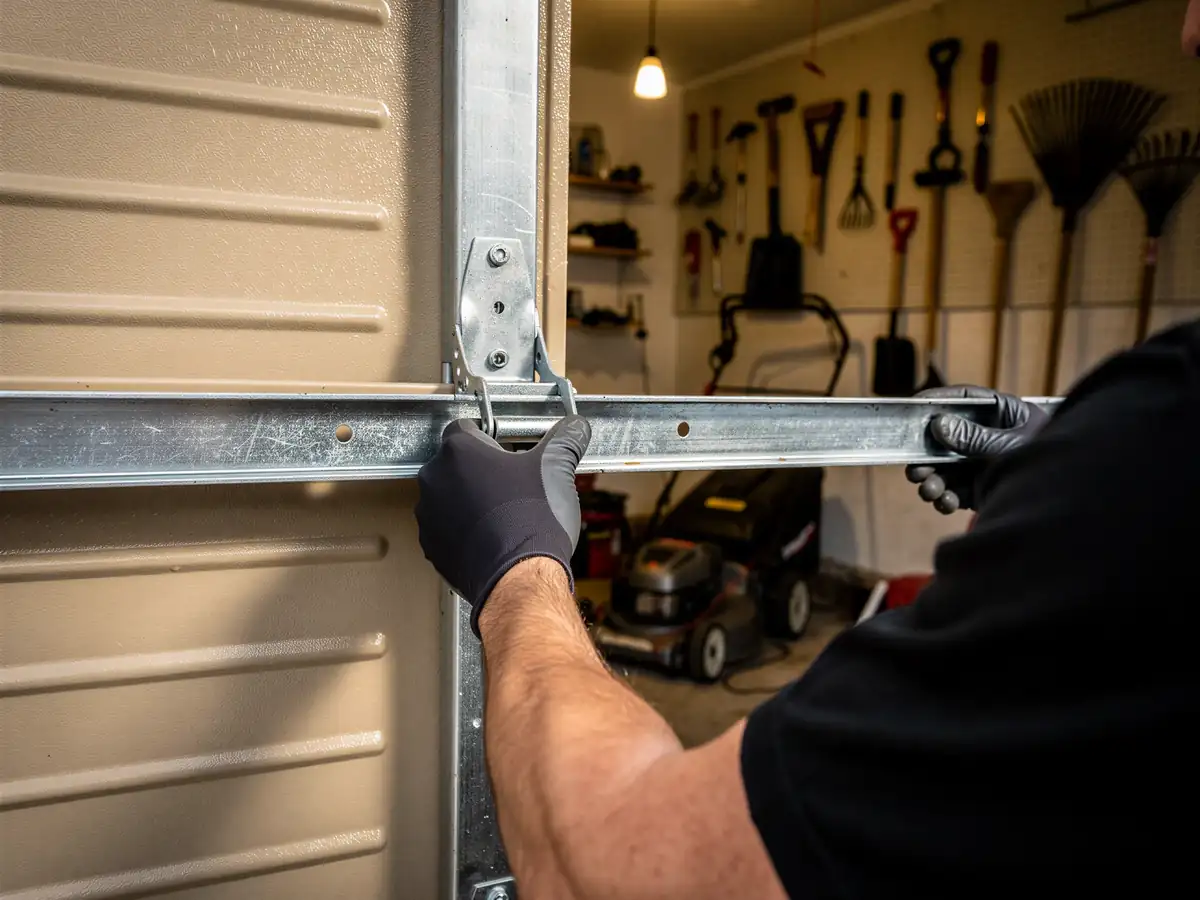
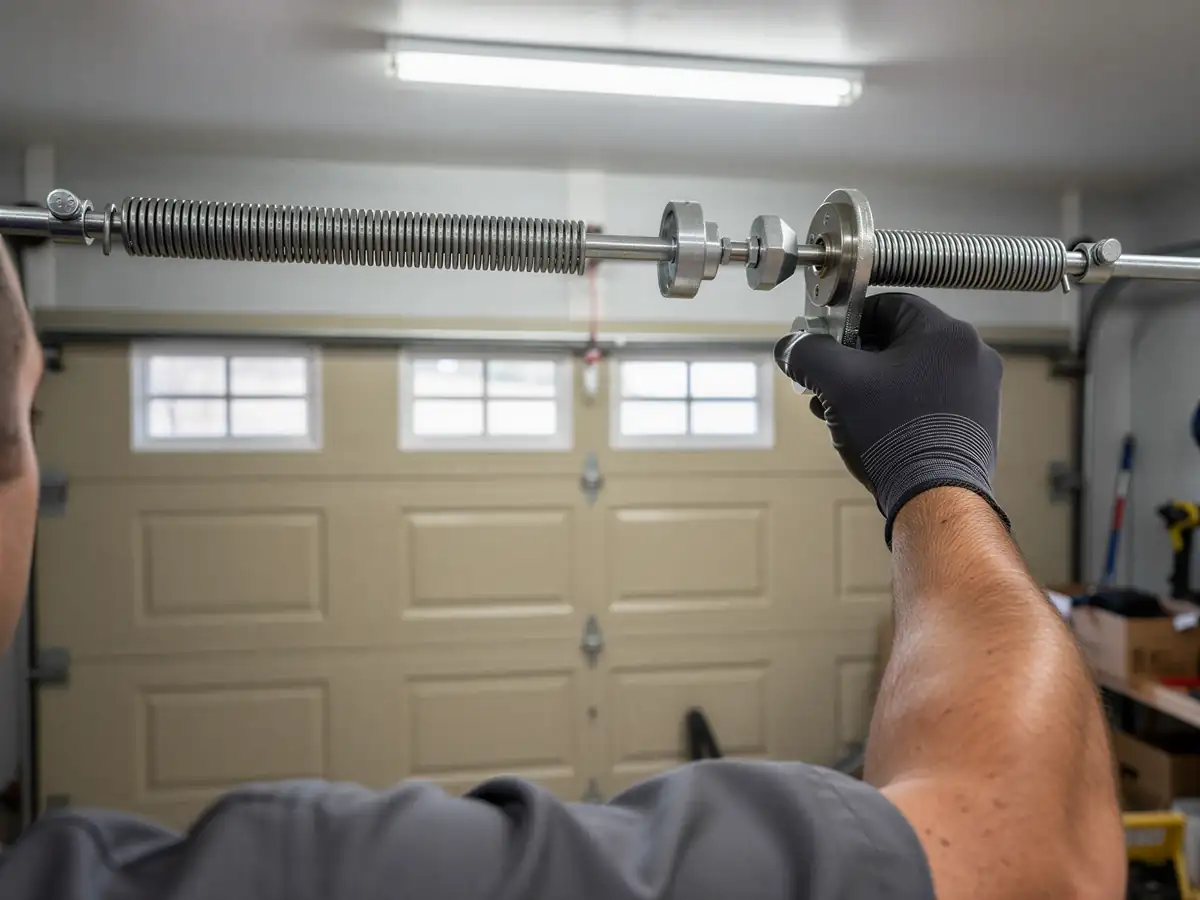
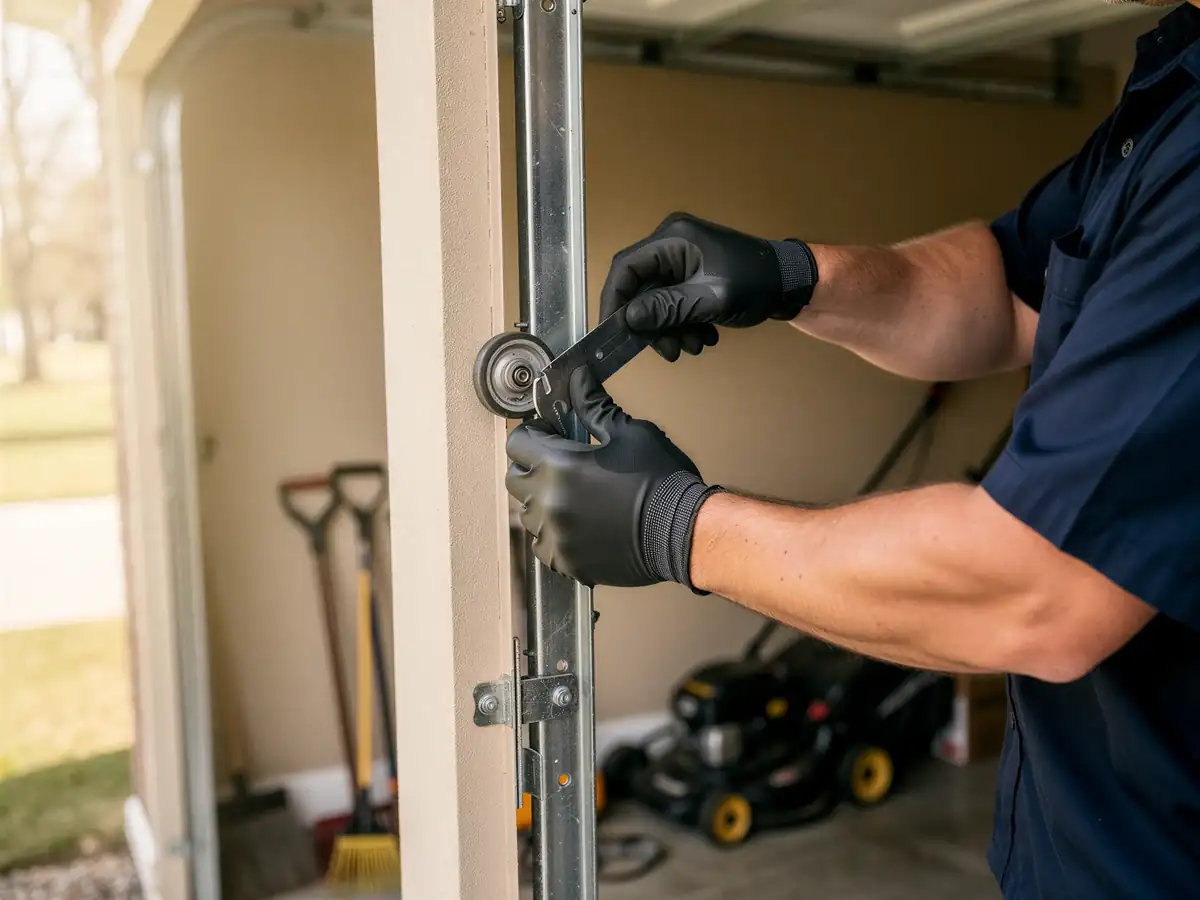
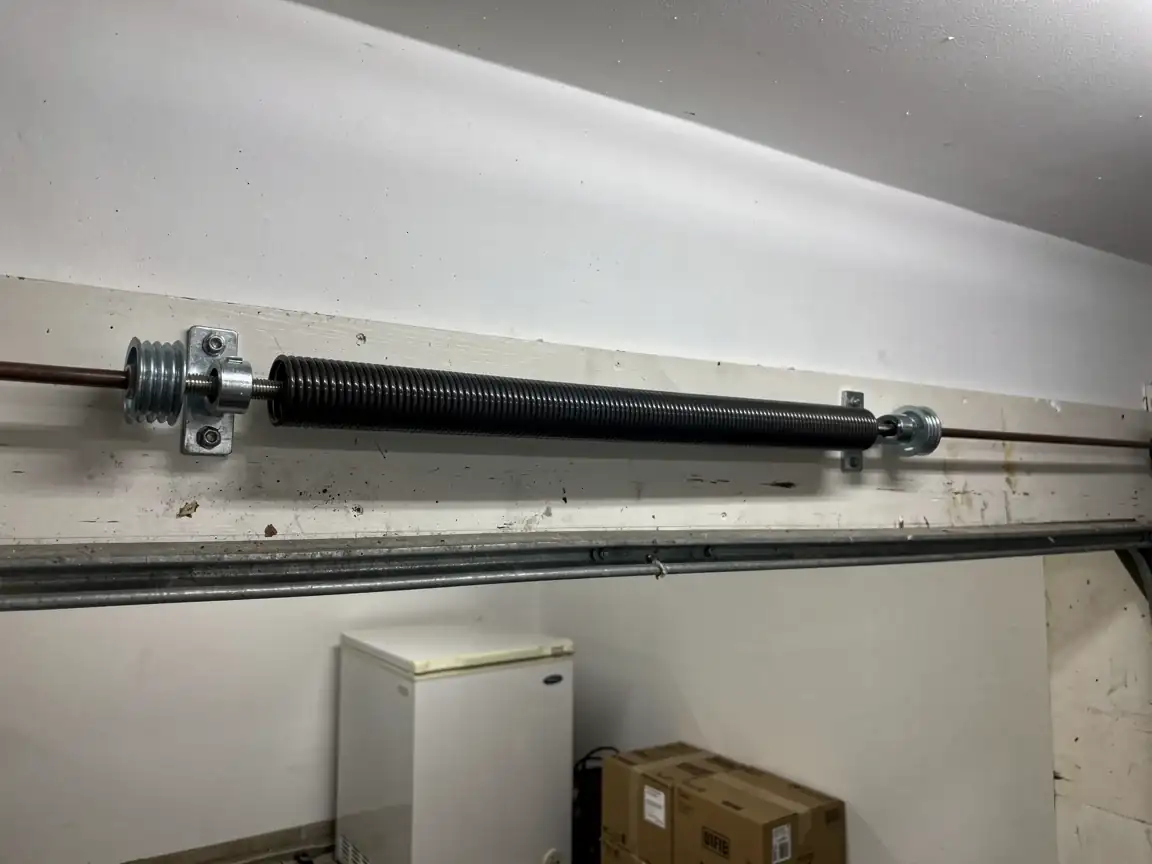
You can grease a track and you can tighten a loose hinge. Those are fair DIY jobs and worth doing before you call anyone. What's harder to do yourself is pulling a roller stem out from under a track bracket while the door is under spring tension - that's where people get hurt, and it's also where a bent track turns a $20 part into a full track replacement.
We'll say this plainly: if your rollers are original steel from a build this old, a full set replacement is usually the better call over patching one or two. Mismatched roller wear on the same track means the new ones will fight the old ones, and you'll be back at this in a year. We don't have pricing to quote here - that depends on roller type, track condition, and whether the door needs rebalancing after - but we can tell you on site whether you're looking at a roller job or something bigger.
If you're set on doing it yourself, release the tension, support the door, and don't work under it while it's up on cables alone.
How It Shows Up
On a house with original hardware from the 1960s or 70s, the first sign is usually sound
A grinding or clunking as the door travels, loudest right where the roller meets a bend in the track. Cold mornings make it worse before the grease warms up. You'll often hear it before you see anything wrong.
Next comes uneven travel
One side of the door drags or hesitates while the other side keeps moving, because the rollers aren't wearing at the same rate on both tracks - common when one side gets more sun or more cold-air exposure than the other. Eventually a roller will flat-spot or the stem will bend, and the door starts to walk sideways in the track instead of tracking straight.
If you catch it at the grinding stage, it's a roller job
If you wait until the door is binding or jumping the track, you're often into bent track and bracket work too, which is a bigger repair than the roller itself.
How We Fix It
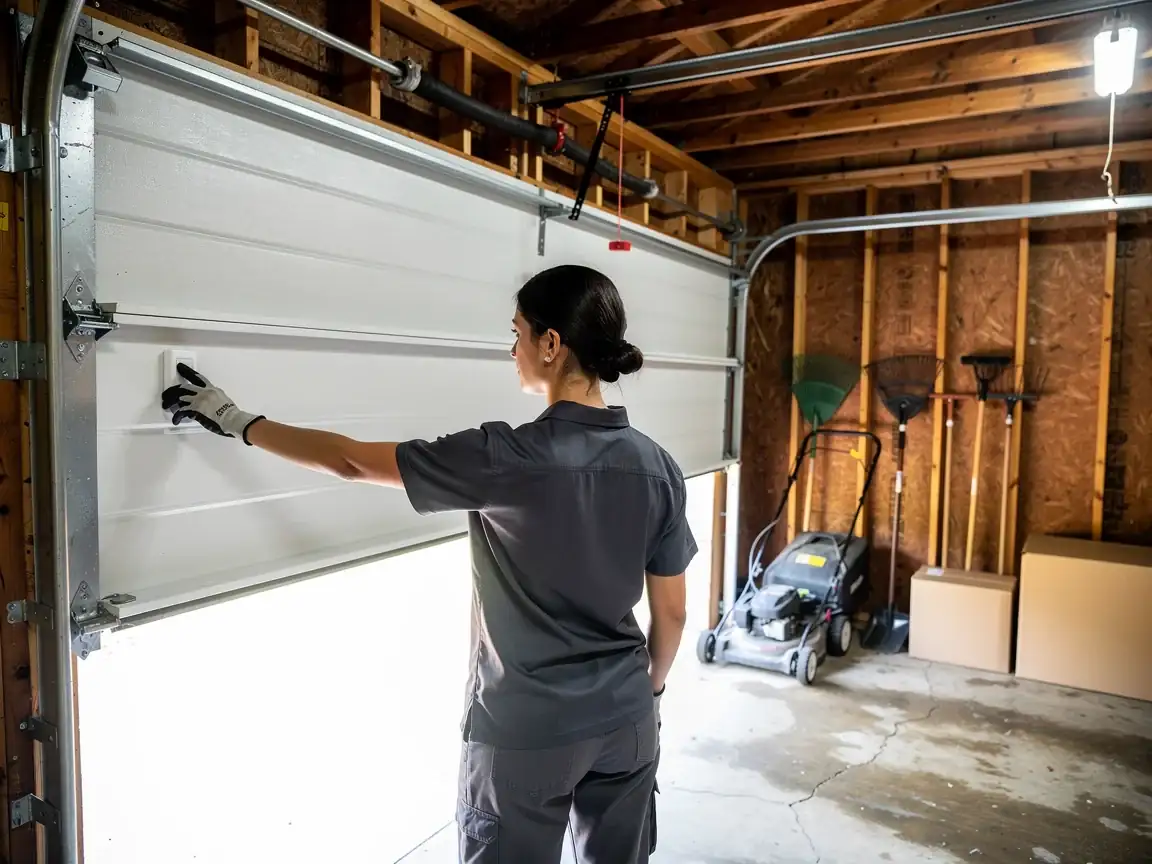
We pull the old rollers, check the track for bends or loose brackets, and replace the full set rather than mixing new rollers with fifty-year-old ones on the same track - mismatched wear just moves the problem down the road. On most jobs we're putting in nylon rollers in place of the original steel, since nylon runs quieter and handles this area's winter temperature swings better than steel on steel.
We also check the track alignment while we're in there, because a roller replacement on a bent or sagging track won't hold for long. If the track's been bowed by years of a binding roller, we'll tell you straight - sometimes a roller swap alone isn't enough, and the honest fix is track and roller together.
We don't carry every roller size on the truck for every door style out there, so on some jobs there's a short parts wait. We'll tell you that up front rather than promise a same-visit fix we can't back up.