Why This Fails Locally
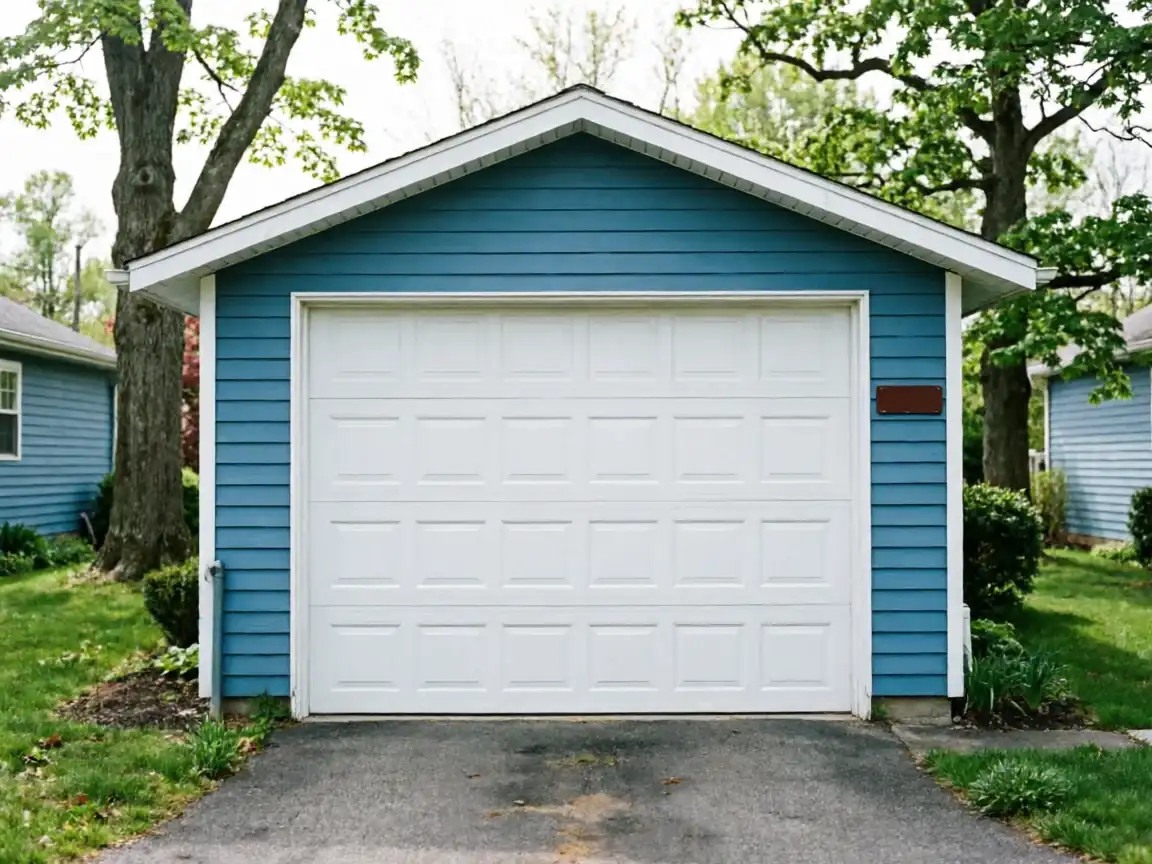
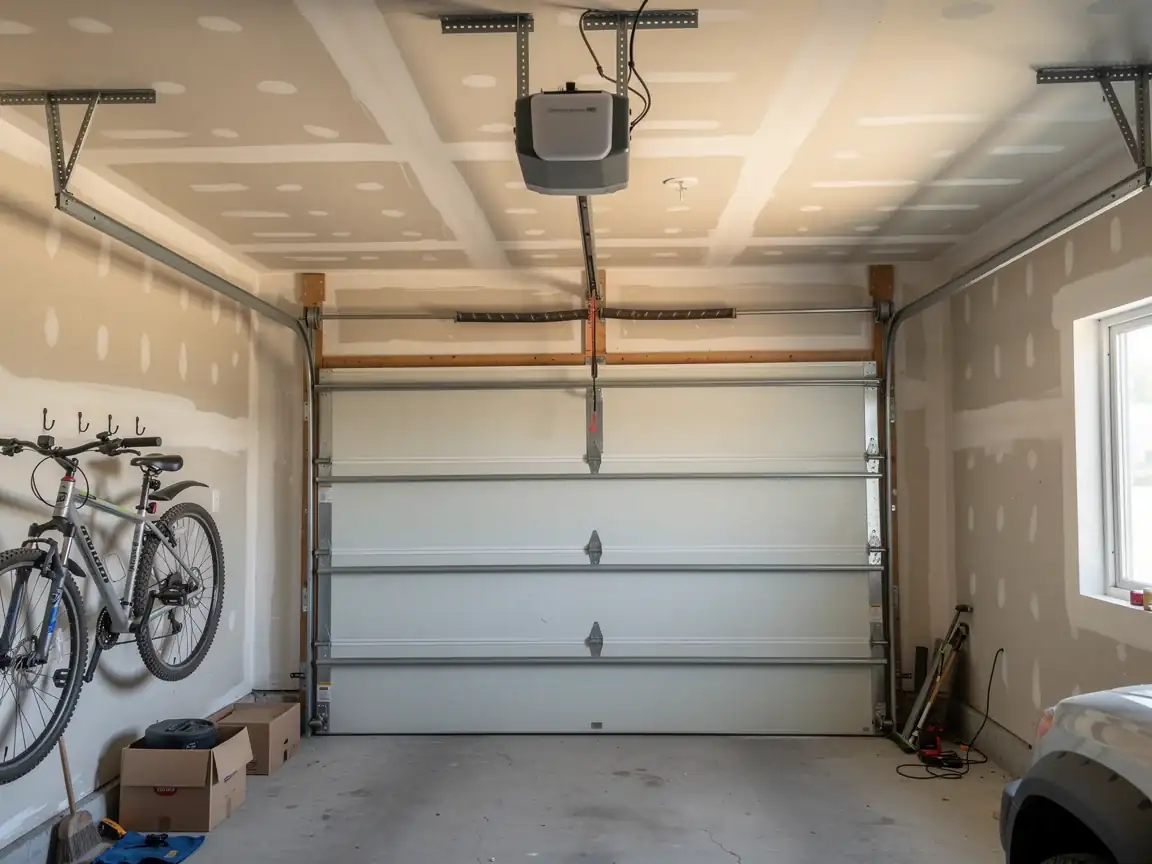
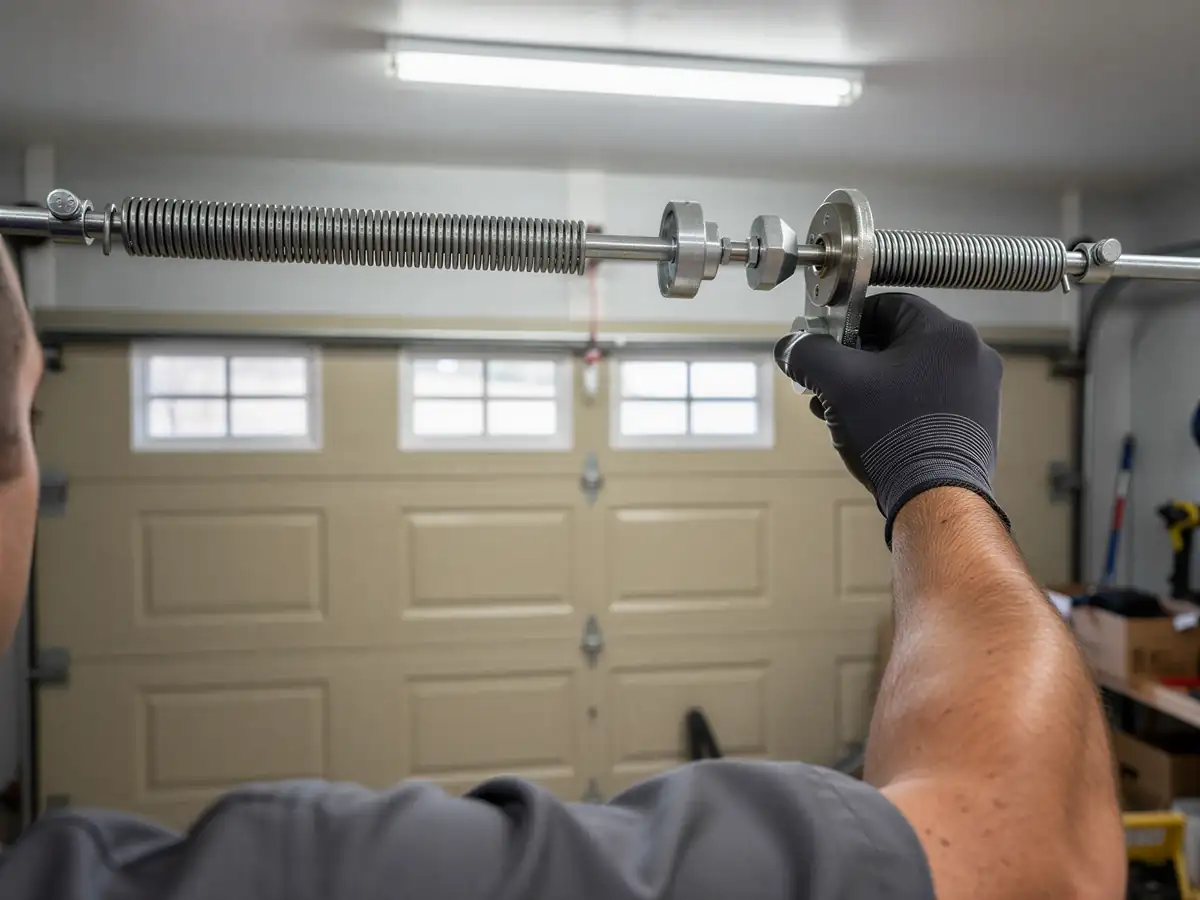
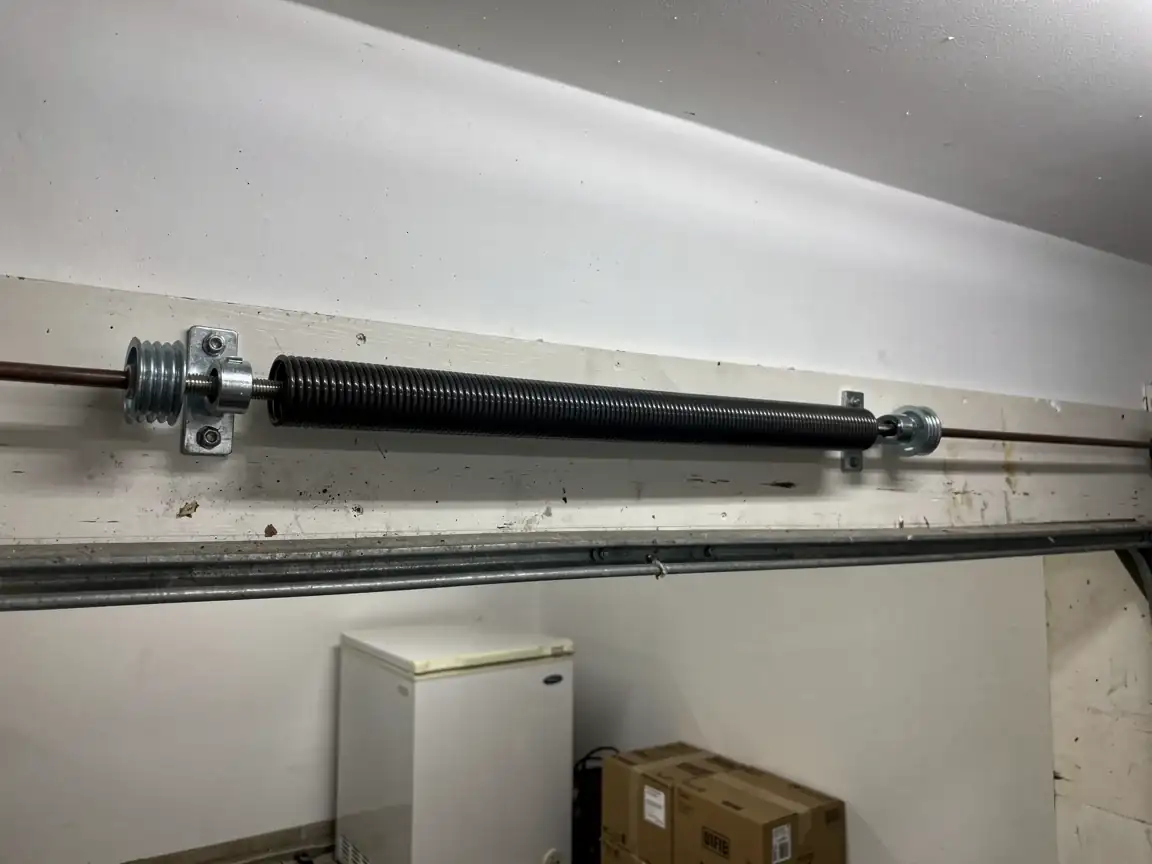
Needham's housing mostly went up between 1938 and 1985, with the median build year sitting around 1968. That puts a lot of doors in town on original torsion springs, steel tracks, and bracket hardware that's pushing fifty years old. None of that was built to last forever, and it wasn't built for what the climate here does to it either. Needham sits in a severe cold band, and that means real freeze-thaw cycling every winter - steel contracts, lubricant stiffens, and a spring that's already fatigued from thousands of cycles finally lets go on a January morning when you need the door most. This isn't a defect in any one door. It's what happens when 1960s-era torsion hardware meets fifty-plus winters of expansion and contraction. We see it street after street in the same few neighborhoods, usually on doors nobody's touched since the house was built. The track brackets loosen first, then the spring goes, and often both fail close together because they've been carrying the same stress for just as long.
Doing It Yourself
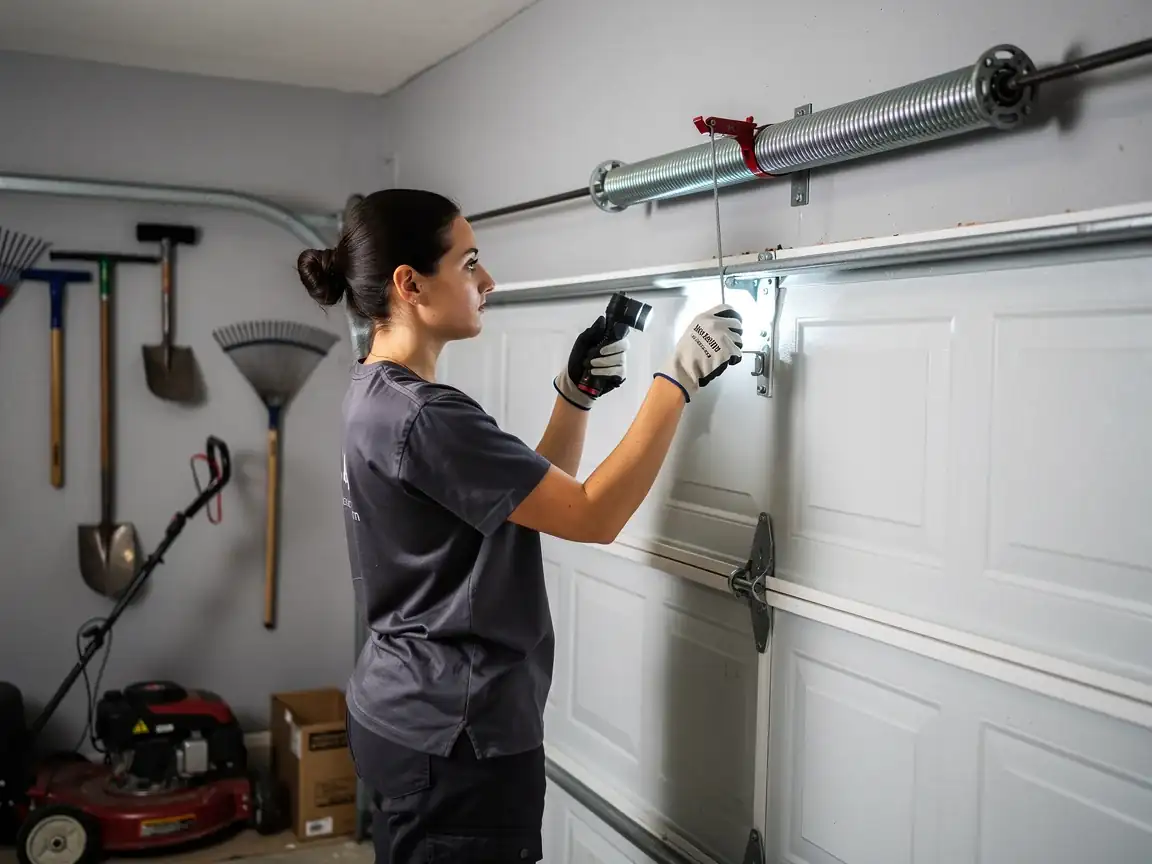
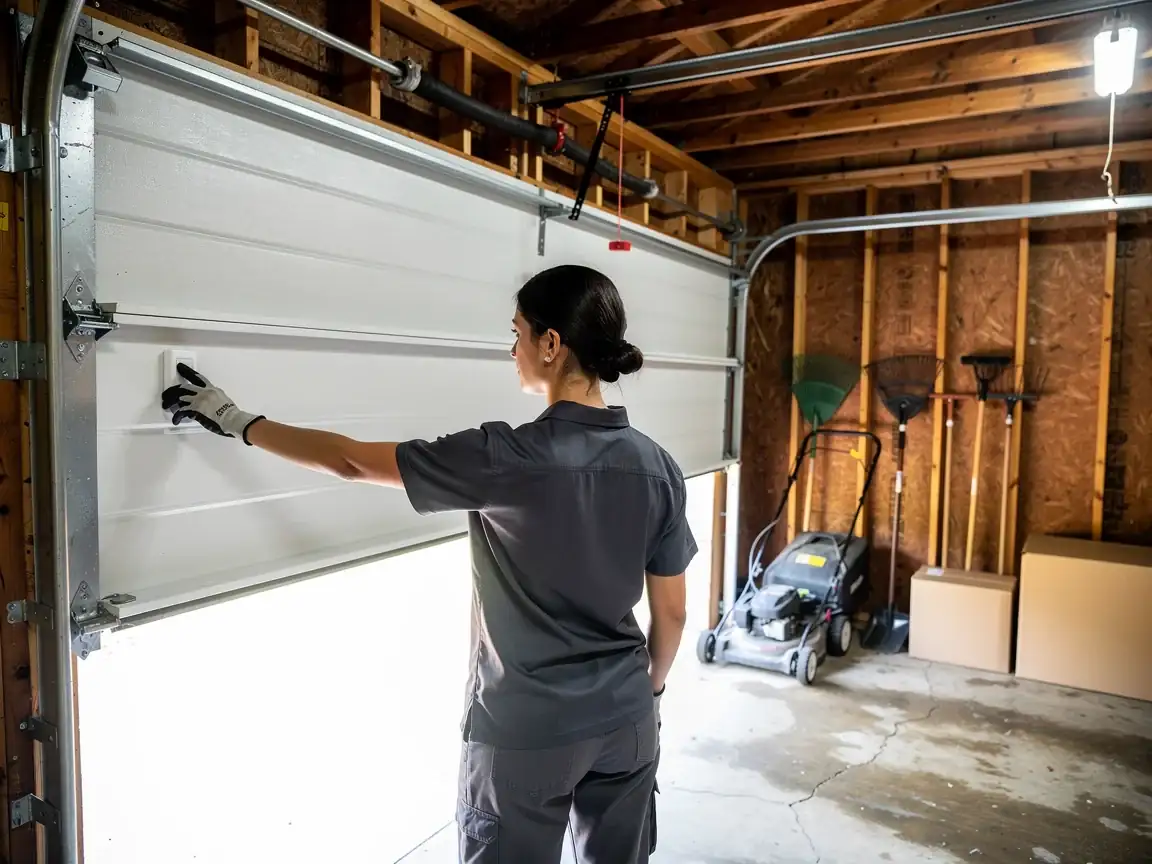
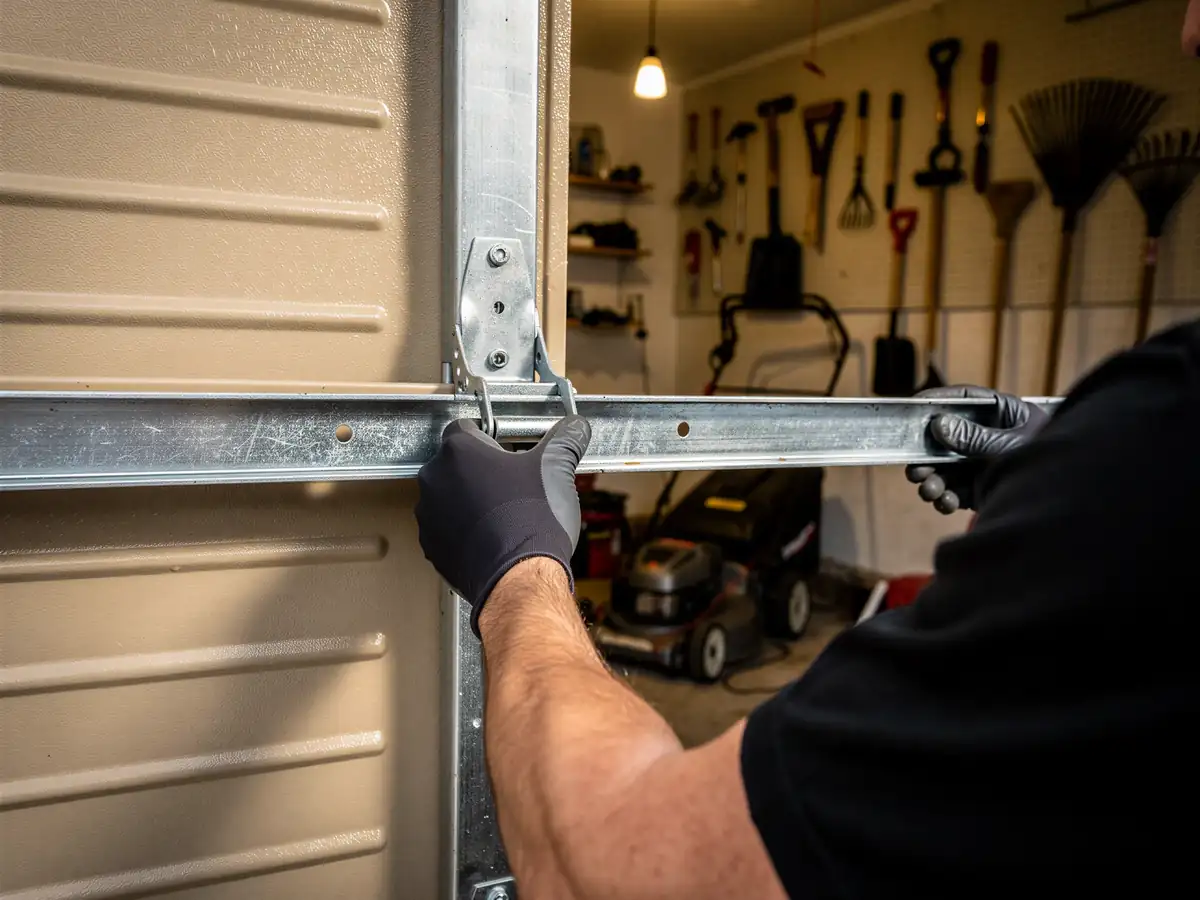
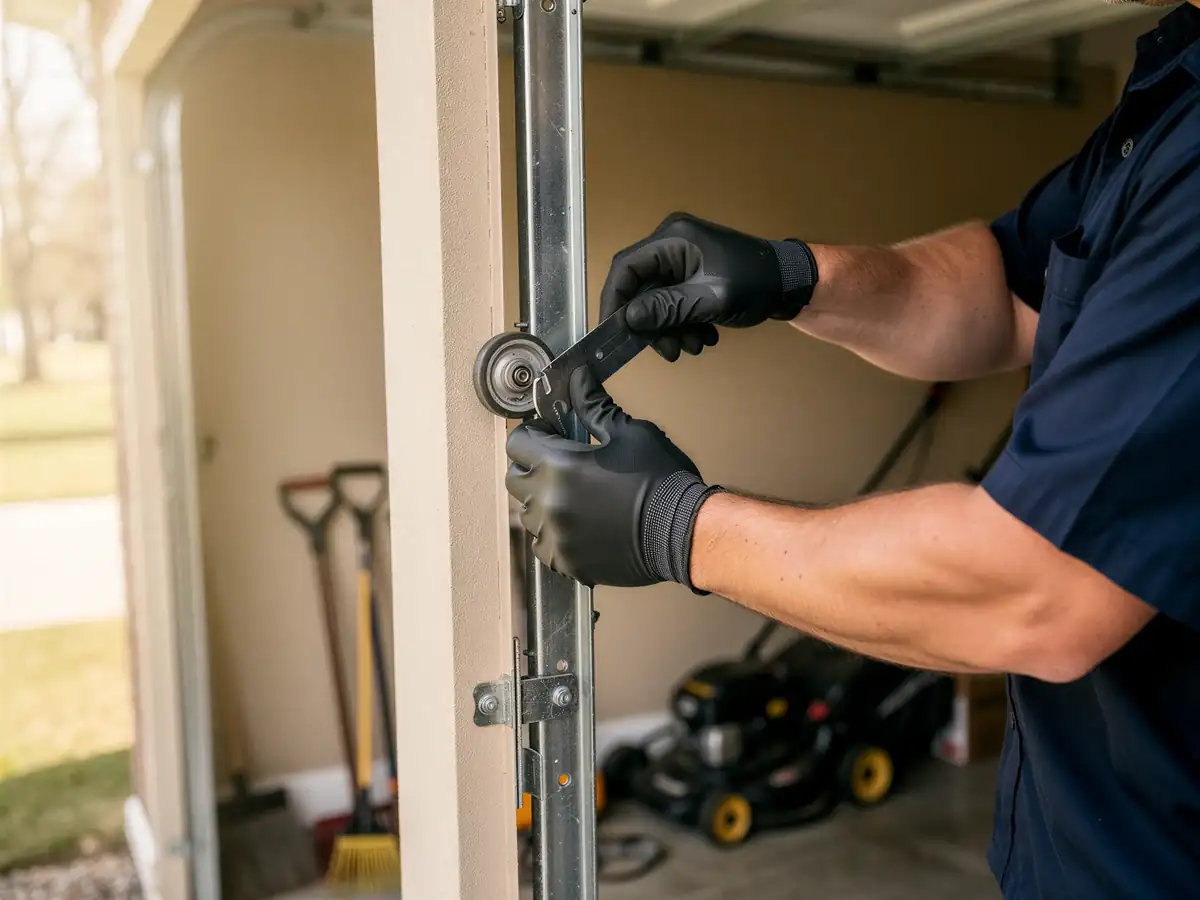
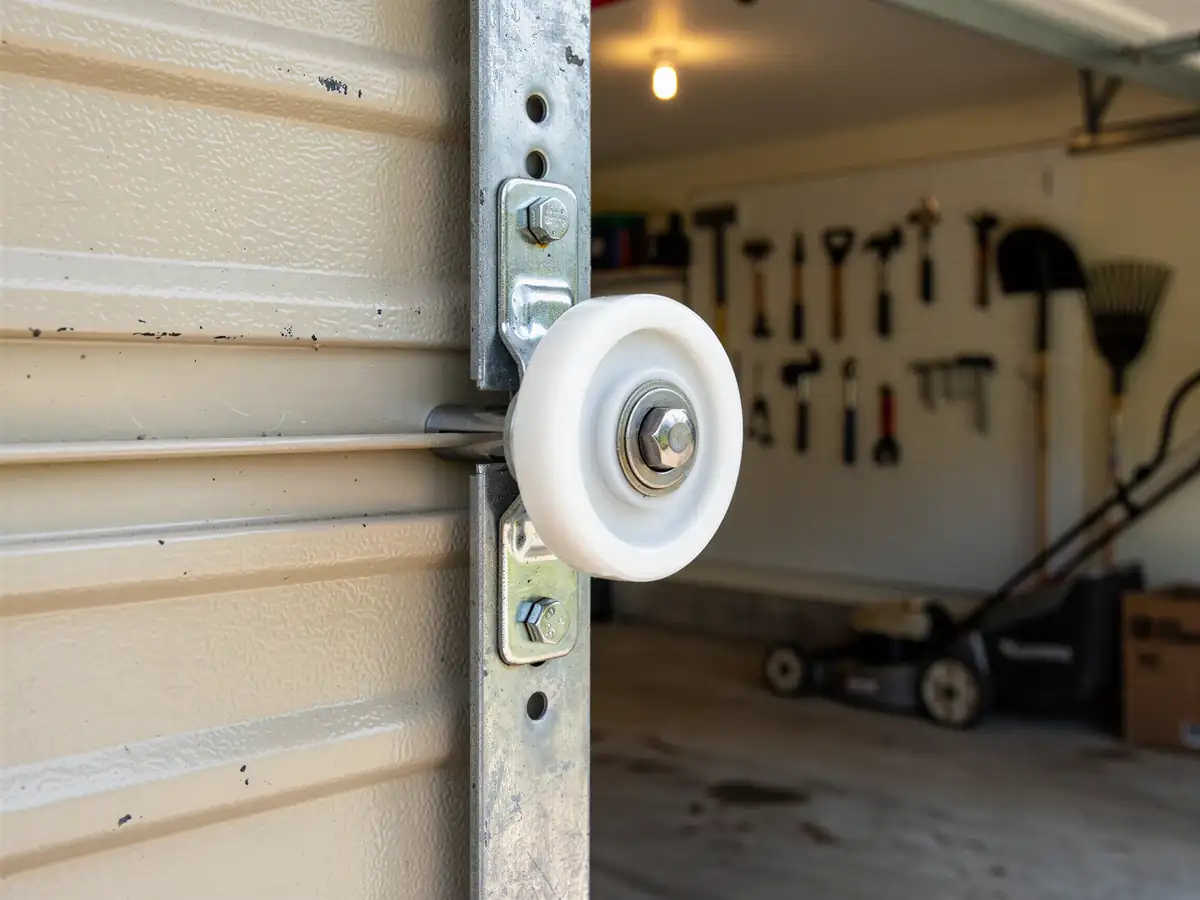
A torsion spring under tension can break a finger or worse, and most hardware stores don't carry the wind and wire gauge these older Needham doors actually use - you can order the wrong spring and not know it until it's already failing again in a year. We're straight about this: if your door is from that original 1960s or 70s build, a spring swap is not a Saturday project. What you can do yourself is simpler and safer - listen for grinding when the door opens, check if the door drifts when you disconnect the opener and lift it halfway by hand, and look at the bottom brackets for rust streaks or hairline cracks in the steel. Those are the early tells. One honest limitation: if the track itself is bent or the door panel is original steel that's rusted through at the bottom, we'll tell you replacement is the better call rather than patching a door that's going to keep failing. Repair makes sense right up until the point it doesn't, and we won't string you along past that point.
How We Fix It
We start by checking the wind and wire gauge against what the door actually weighs now, not what it weighed with its original panel - a lot of these 1960s and 70s doors have had an insulated replacement panel hung on original hardware sized for something lighter, which is its own quiet cause of early spring failure. From there it's usually a spring replacement sized correctly for the current door, track and bracket inspection since those take the same cold-cycle stress as the spring, and an opener gear check if it's been straining. With Needham's median household income near $154,011, most owners we work with choose to repair a working door rather than replace the whole unit, and on original hardware that's usually the right call - as long as the track and panel are sound. We work Needham along with the nearby towns in this same housing-era pocket, including Wellesley, Dedham, and Westwood, all within a few miles and built on the same timeline.