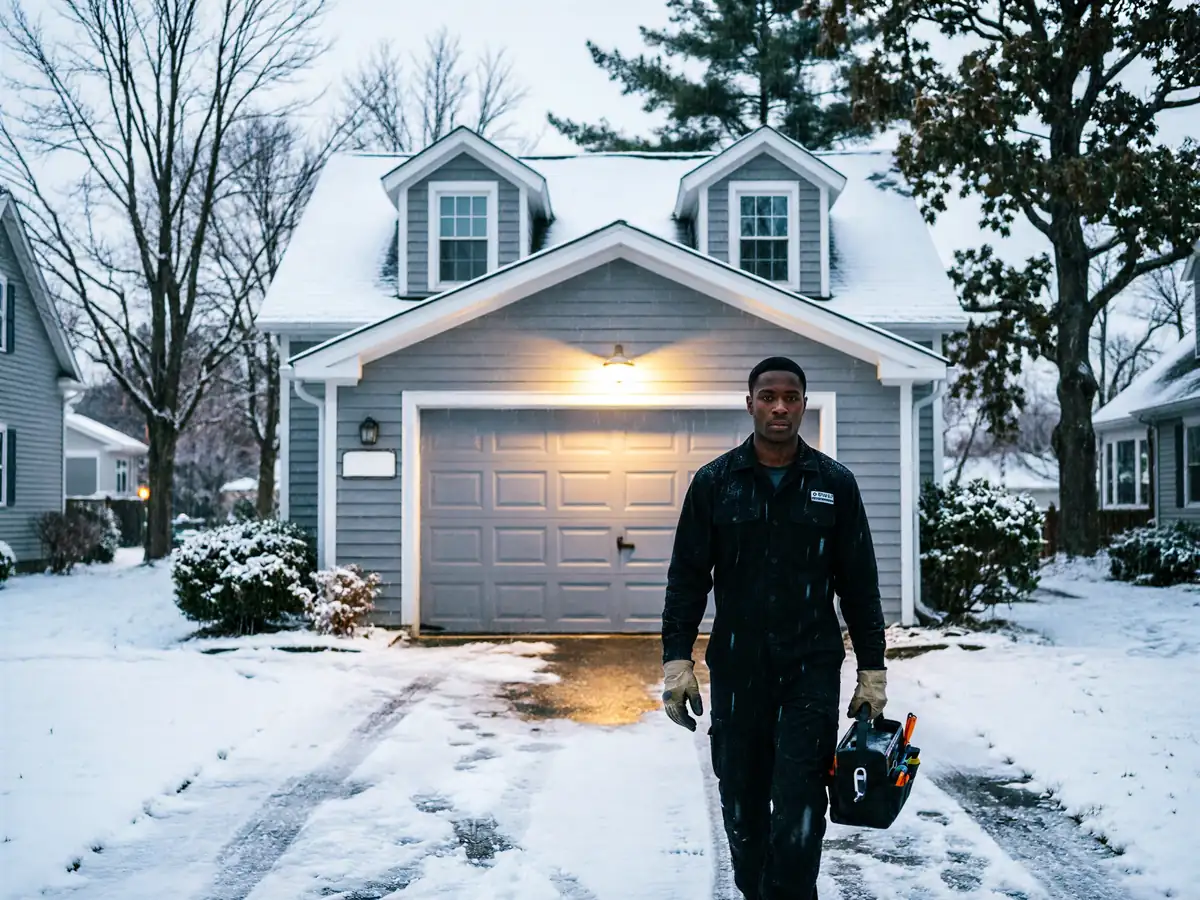
Why This Fails Locally
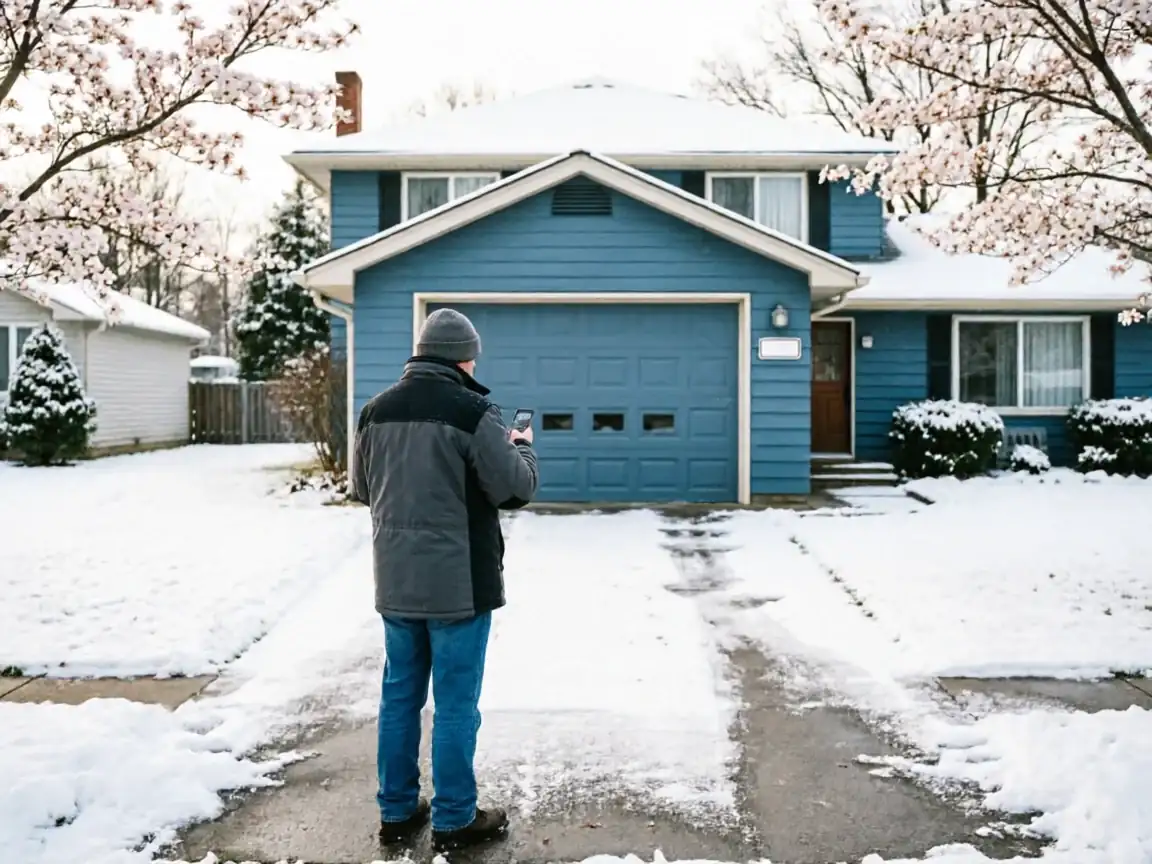
Most of the housing in this service area went up between 1938 and 1985, with the median build year sitting around 1968. That matters for a door that's walked off its track. A garage built in that window usually has steel tracks mounted with brackets that were never upgraded, lag bolts into framing that's shifted a little over fifty-plus years, and roller hardware that was adequate when it was installed but has long since worn loose. Across the roughly 58 named areas we cover, the stock is consistently 1960s-and-70s era, so the same failure pattern shows up house after house: a track bracket that's backed out a sixteenth of an inch at a time until the door finally jumps the rail.
The climate band here is classified cold and severe, which adds a second cause on top of the age of the hardware. Frost in the ground under a slab or footing can move a track's bottom bracket enough, over a winter, to throw the whole alignment off. A door that ran true in October can bind or jump by February, not because anything broke outright but because the track it rides on isn't sitting where it was installed. Put an aging bracket together with a winter freeze-thaw cycle and an off-track door stops being rare - it's close to routine in a neighborhood like this one.
Doing It Yourself
If the door is only slightly off at the bottom roller and the door isn't wedged or bent, some homeowners can walk it back onto the track themselves - disconnect the opener, support the door by hand, and guide the roller back into the channel. That's about where DIY should stop.
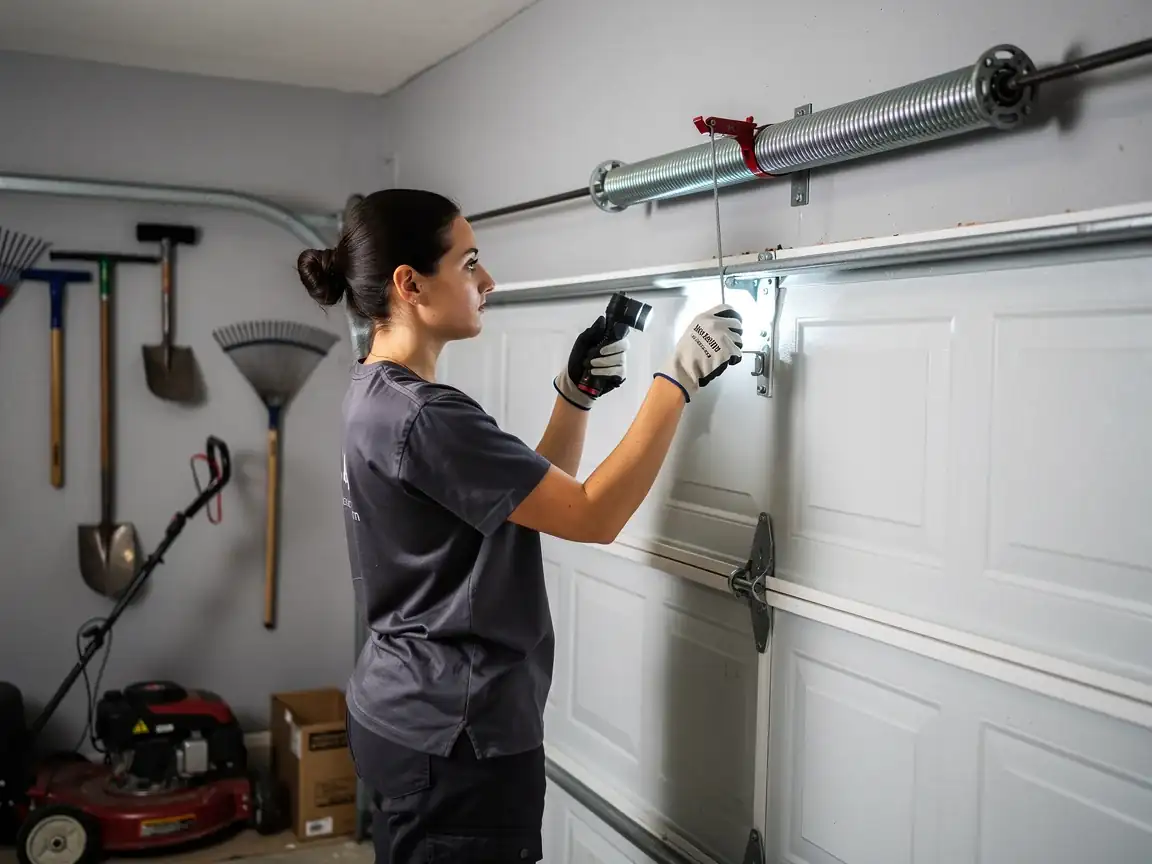
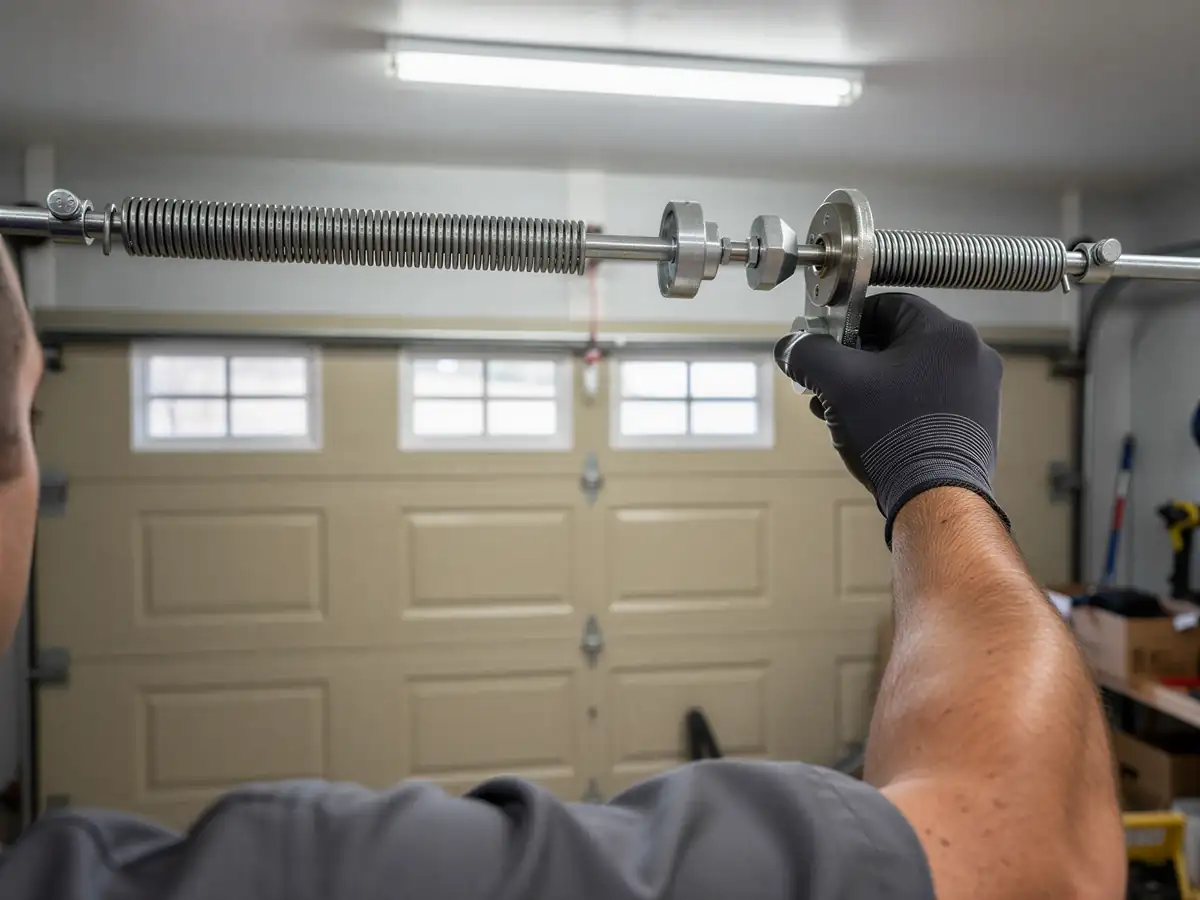
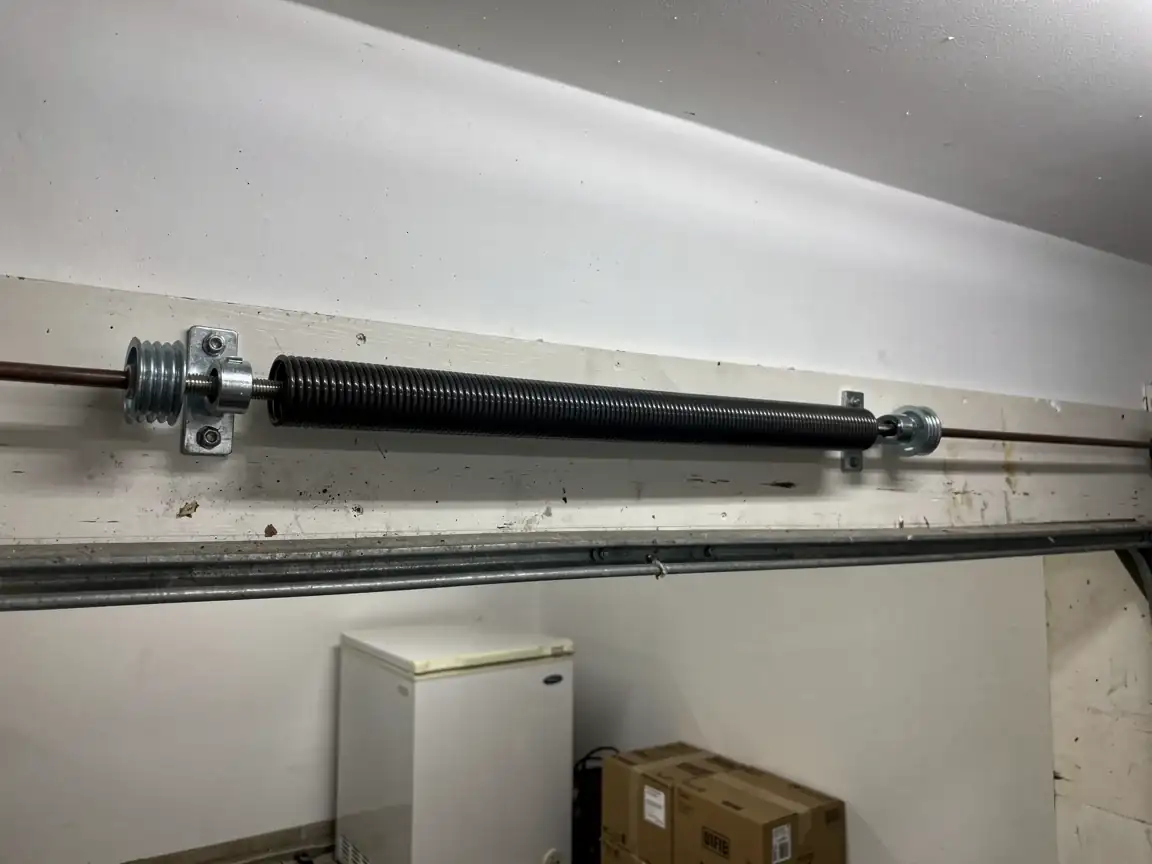
We won't pretend there's a safe way to do more than that without the right tools. A door under spring tension that's come off track at the top, or one where a track bracket has pulled loose from the framing, is carrying stored force that can snap a cable or drop a panel section if you push on it wrong. We don't recommend homeowners touch the torsion spring or try to re-bend a track back into plane themselves - that's a call, not a weekend project, and we say so plainly because a trip to the ER costs a lot more than the service call does.
How It Shows Up
The most common version
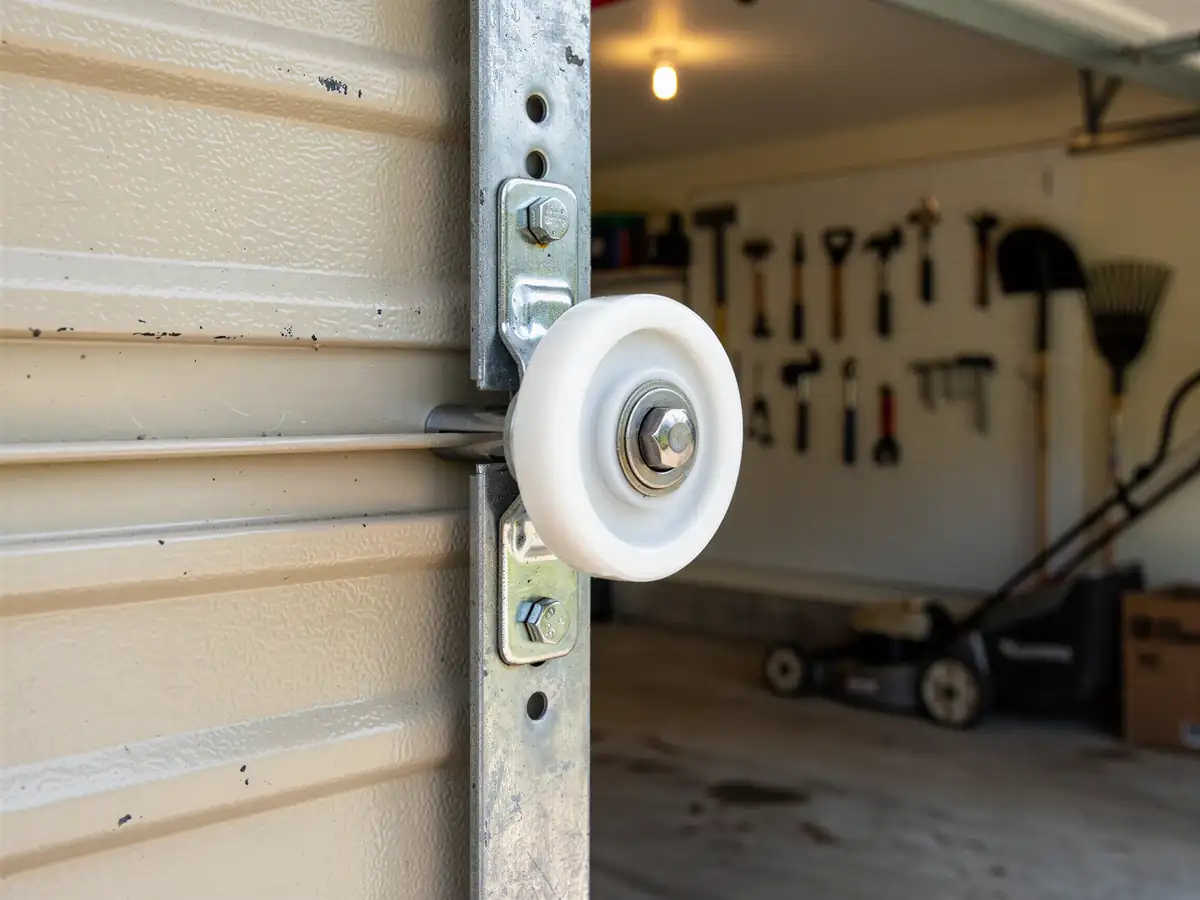
The door runs fine until it hits one spot, then grinds, jerks sideways, or stalls with the opener straining against it. Look at the bottom corner on the side that's binding and you'll often see the roller sitting outside the track rather than inside it.
A second version, more common in the older stock here
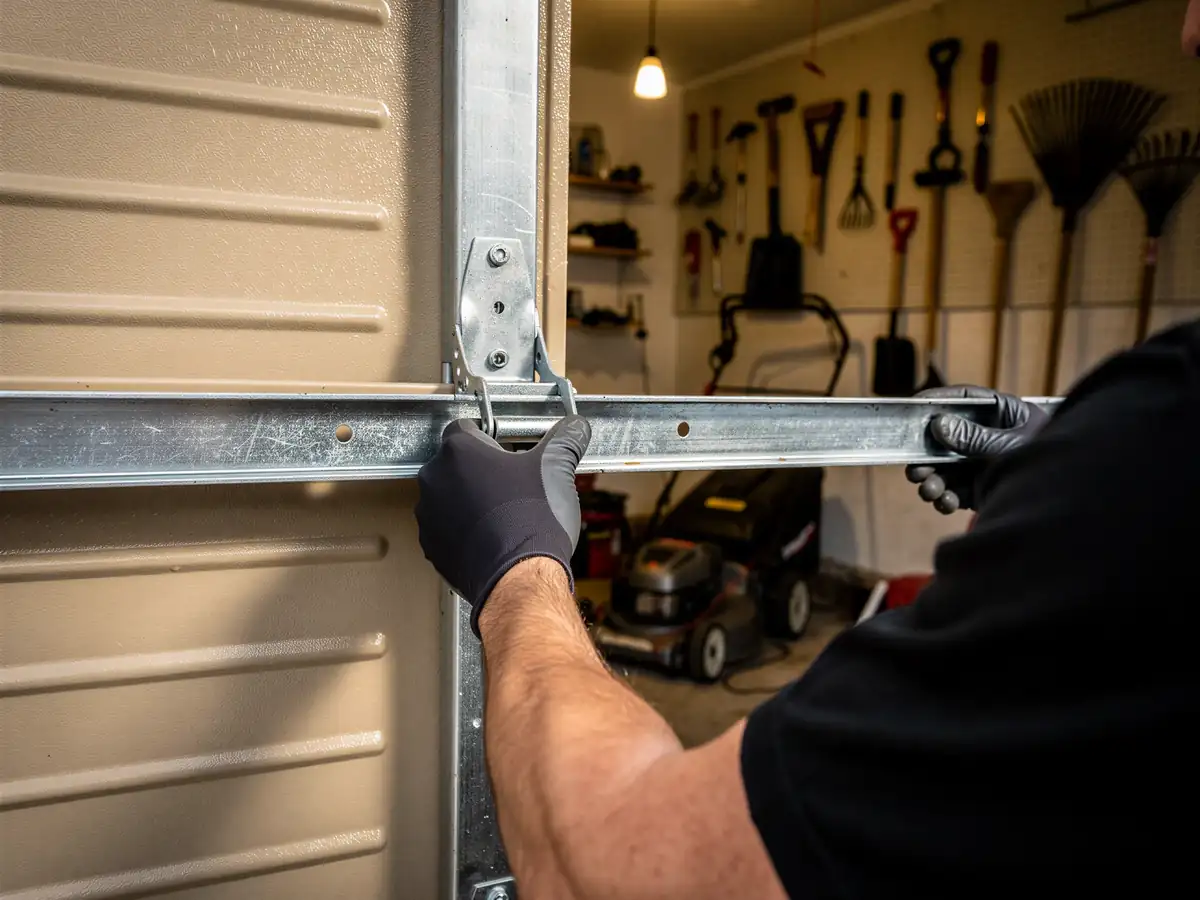
Is a track that's visibly pulled away from the wall stud on one side - sometimes just a quarter inch, sometimes enough that you can see daylight behind the bracket. That's the frost-heave and age combination at work: the wall anchor has worked loose over enough winters that the track is no longer running parallel to the door edge.
A third sign is a door that looks straight when closed but rattles or walks sideways while moving
Usually a sign that more than one roller has left its channel, not just one, and that the whole alignment needs resetting rather than a single bracket tightened.
How We Fix It
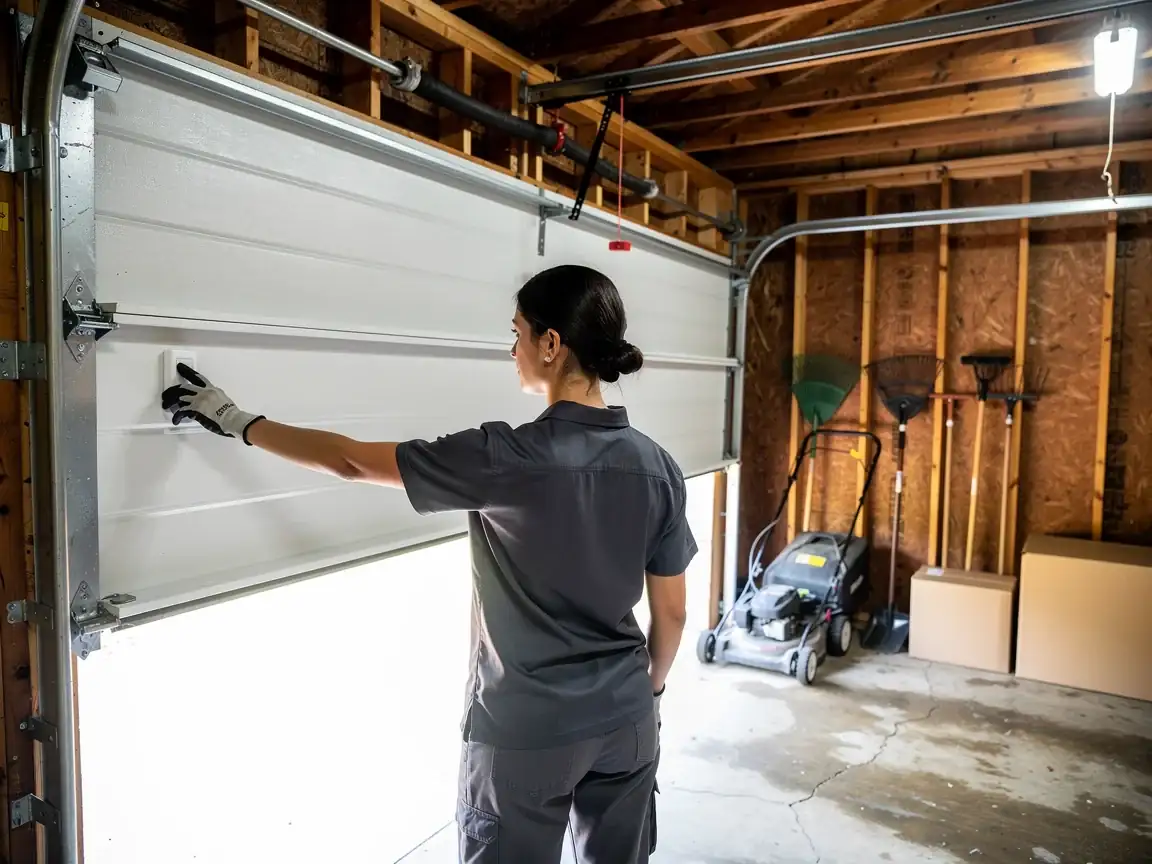
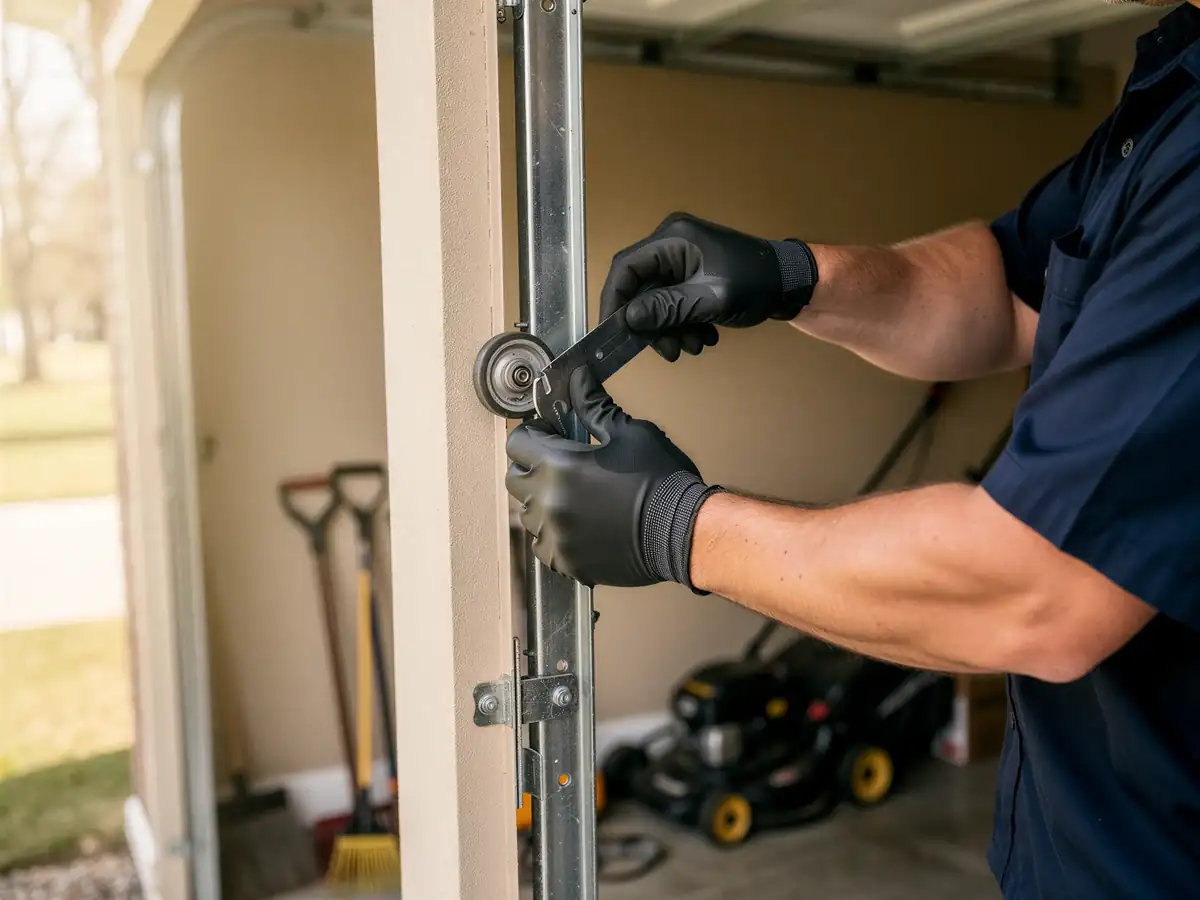
We start by checking whether the track itself is bent or just misaligned - that distinction decides the whole job. A track that's only pulled loose from its studs gets re-anchored, squared against the door edge, and checked with a level before we call it done. A track that's bent or dented from the door forcing against it gets replaced on that section rather than hammered back into shape, because a reshaped track will usually fail again at the same spot within a season or two, especially with another cold winter ahead.
We also check the rollers and the bottom brackets while we're in there, since a roller that caused the jump in the first place will just repeat the problem on a freshly aligned track. If the hardware is original to a house from the 1960s or 70s, we'll tell you plainly if it's worth replacing the roller set now rather than coming back for the same call next winter.
One limit worth stating: if the track damage is tied to a bent panel or a section that's been struck hard, realigning the track alone won't solve it - that's a panel conversation, not a track one, and we'll tell you which problem you actually have before any work starts.