What to Check
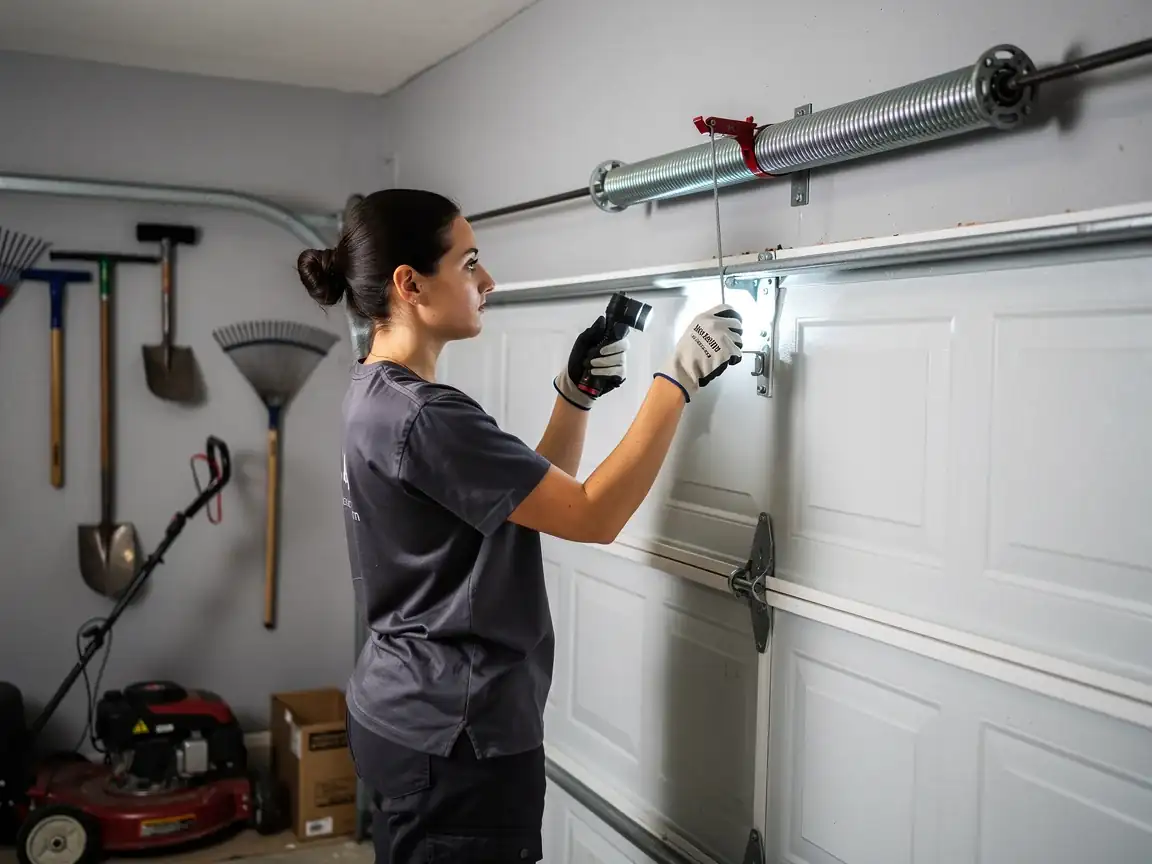
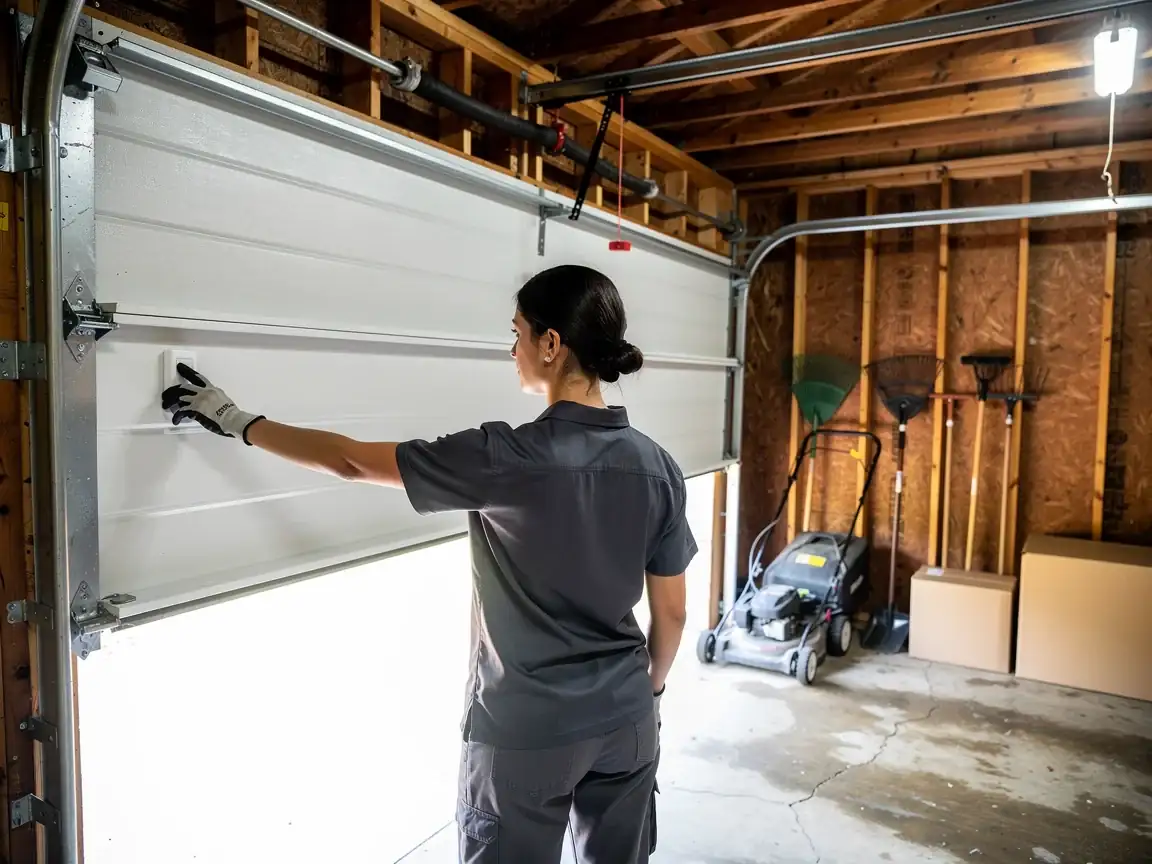
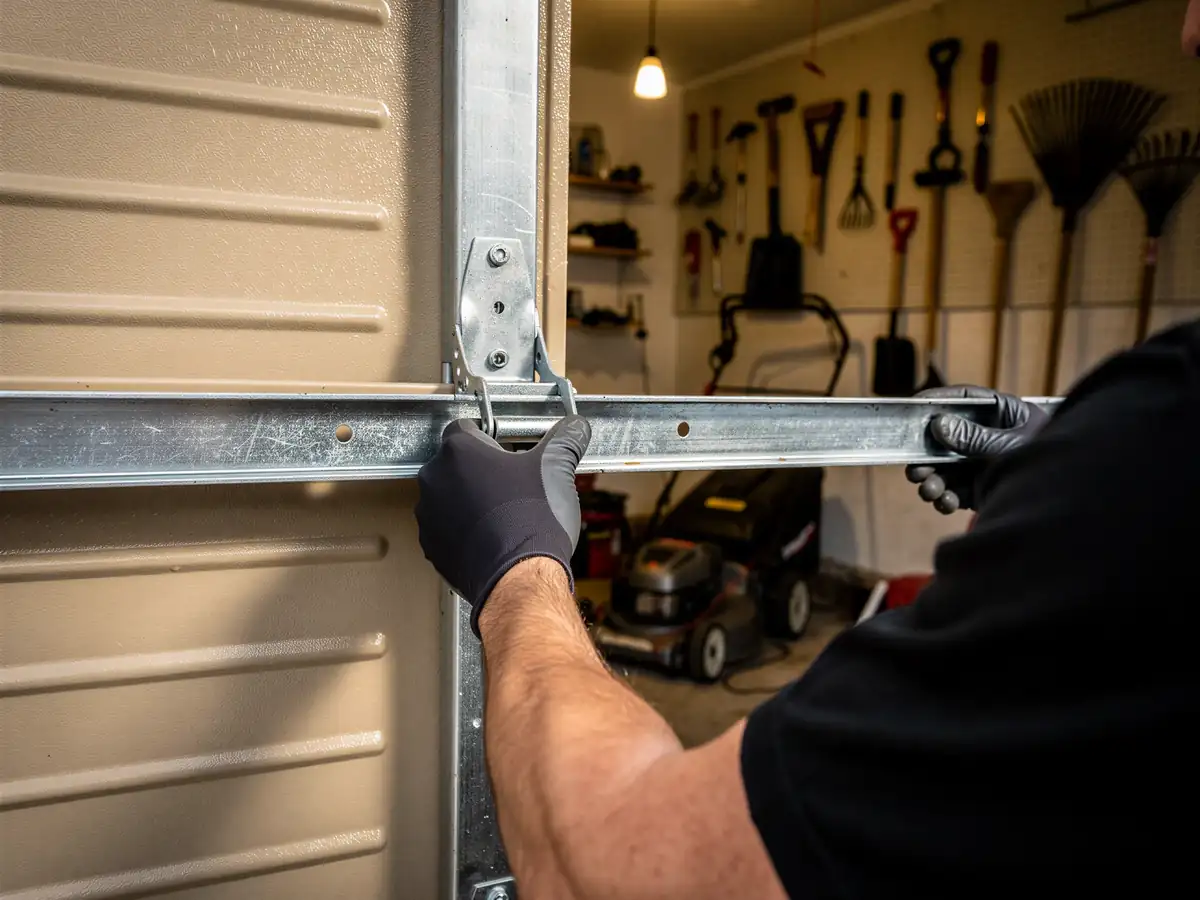
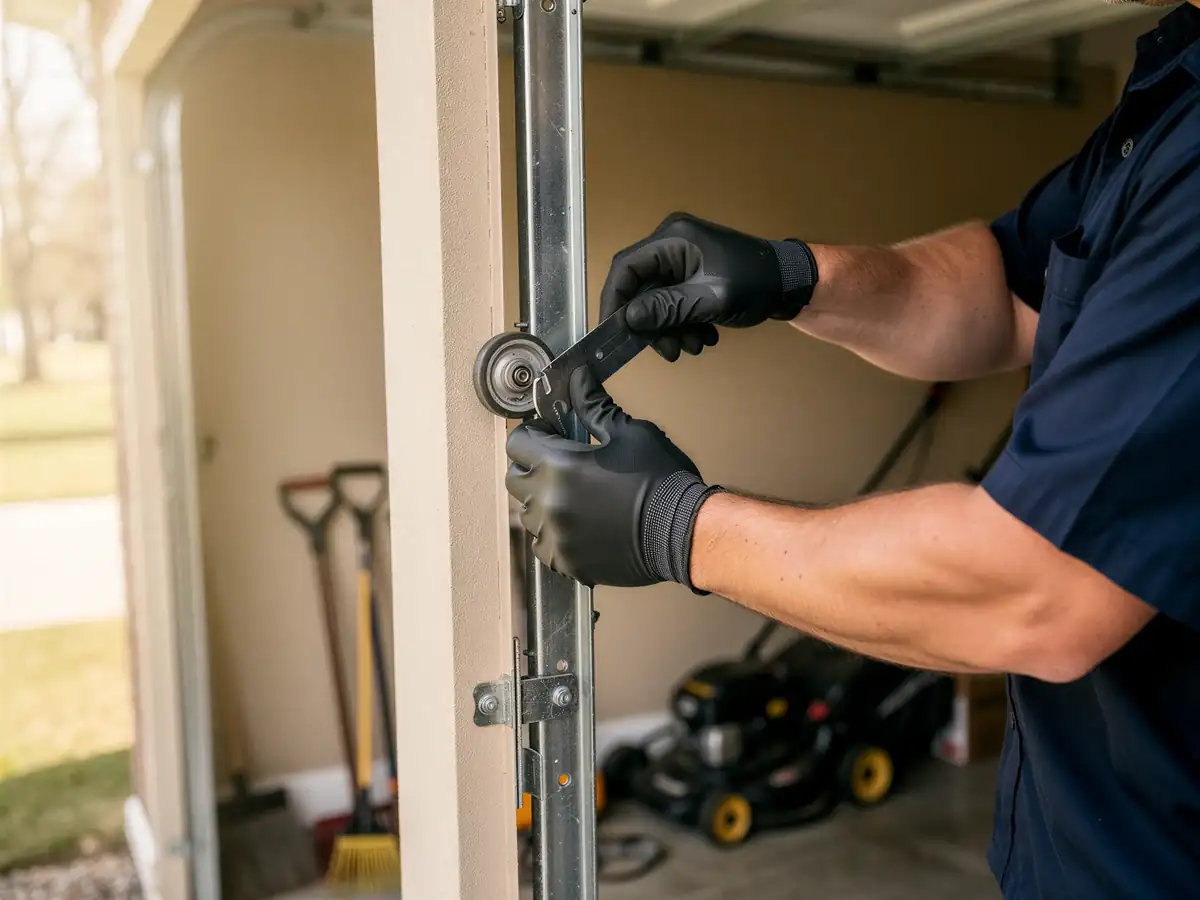
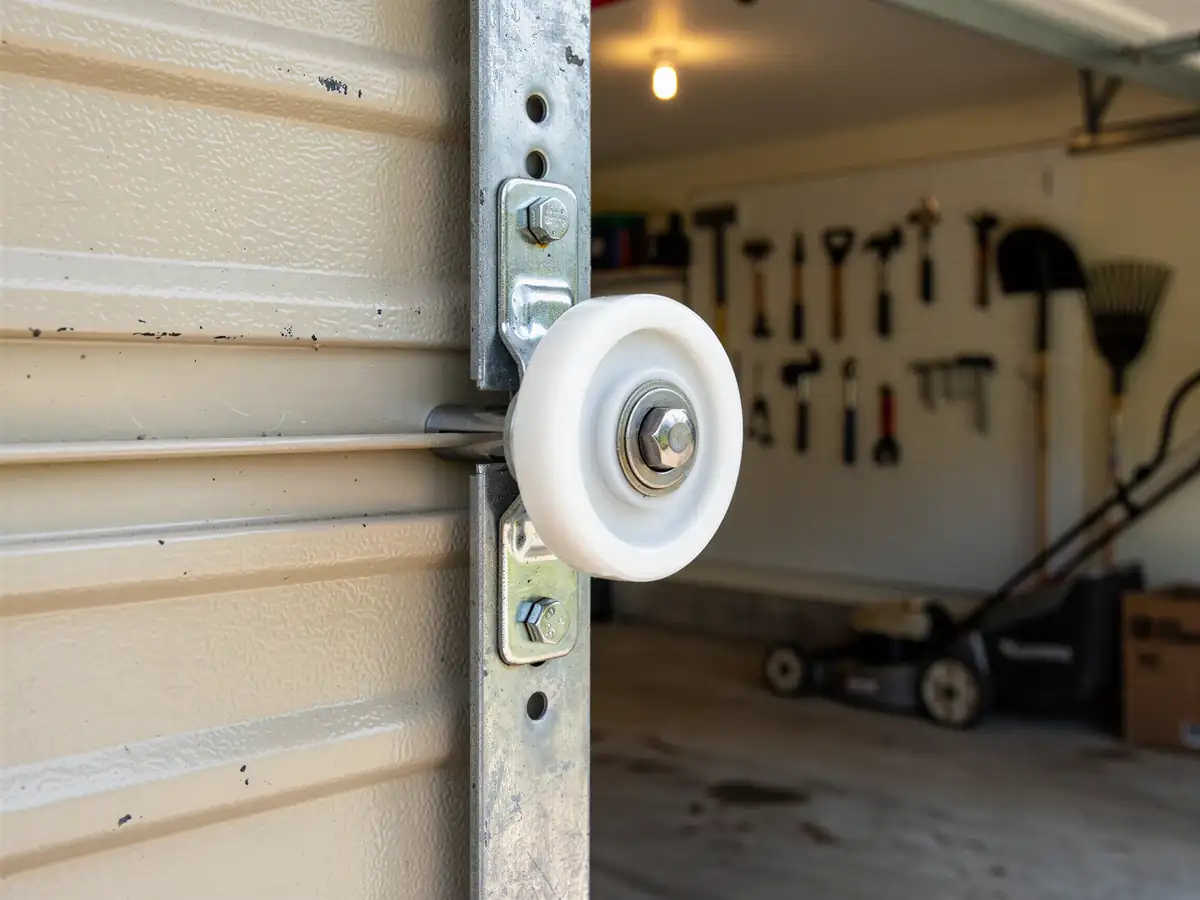
Start at the rollers. On a lot of Needham houses, the door and track are original to a build date somewhere between 1938 and 1985 - the median around here lands at 1968 - and that means steel rollers running in a track that's had fifty-plus winters of expansion and contraction. Look for a roller that's sitting outside the track rail instead of inside it, a bent section of rail (usually near the bottom bracket where a car bumper or a plow pile has clipped it), and loose carriage bolts on the track brackets bolted to the jamb. Check both sides - track misalignment is almost always worse on one side than the other, and that side is usually the one that gets more direct weather. If the door is binding partway up and then jumping, that's a track gap, not a spring problem, and it's worth knowing the difference before anyone starts loosening cables.
When to Get Help
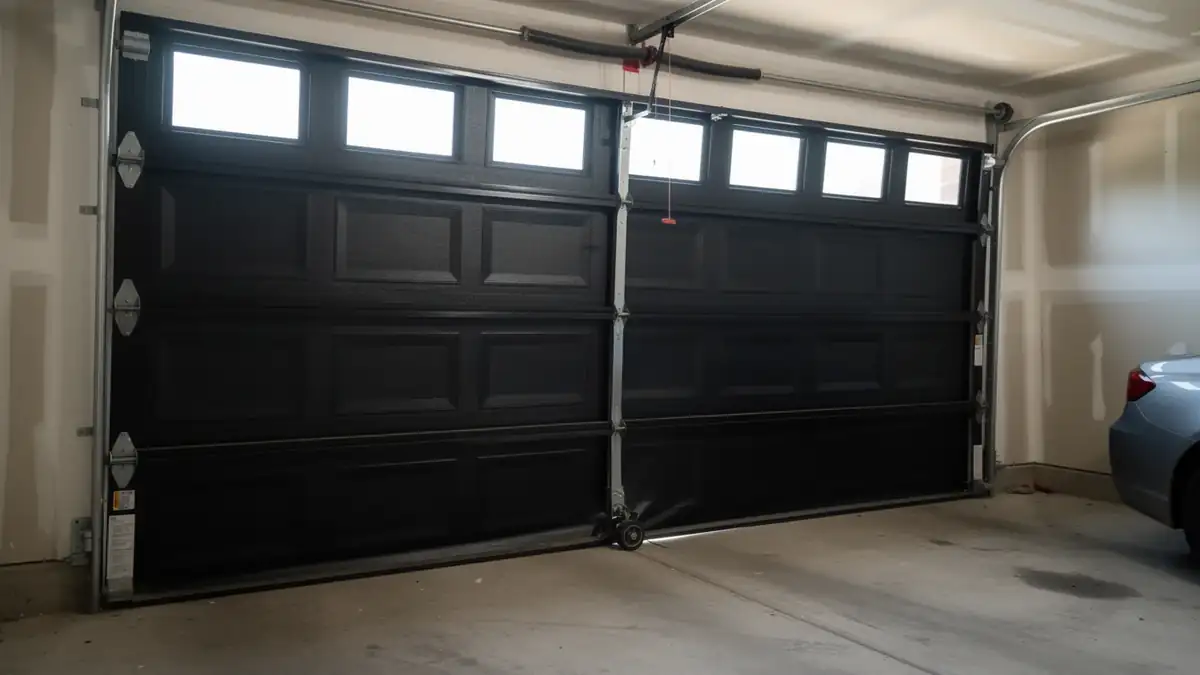
If a roller has already left the track, stop opening and closing the door with the opener. Running the motor against a door that's partly derailed bends the track further and can pull the bracket out of the jamb stud, which turns a $150 track repair into a full track-and-bracket replacement. Call if you see daylight between the roller and the rail, if the door is noticeably crooked in the opening, or if one cable looks loose while the other is taut - that's a sign the door has already shifted off true. A door that's merely noisy but tracking straight can usually wait for a scheduled visit rather than an emergency call.
The Problem
The actual failure is almost always one of three things: a bent track rail from an impact, a loose or pulled-out wall bracket, or a roller that's worn enough (plastic ones especially) that it no longer rides square in the rail. On the original hardware still found in a lot of Needham's older stock, it's usually the bracket - the lag screws into aging door-jamb lumber just don't hold the way they did when the house was new. We can straighten a mildly bent rail and re-set brackets on a service call, but a track that's kinked at a weld point or a jamb that's rotted behind the bracket isn't something we patch - at that point the fix is a new track section or, if the opening itself has shifted, a conversation about whether repair is worth it versus replacing the door assembly outright.