How Long It Takes
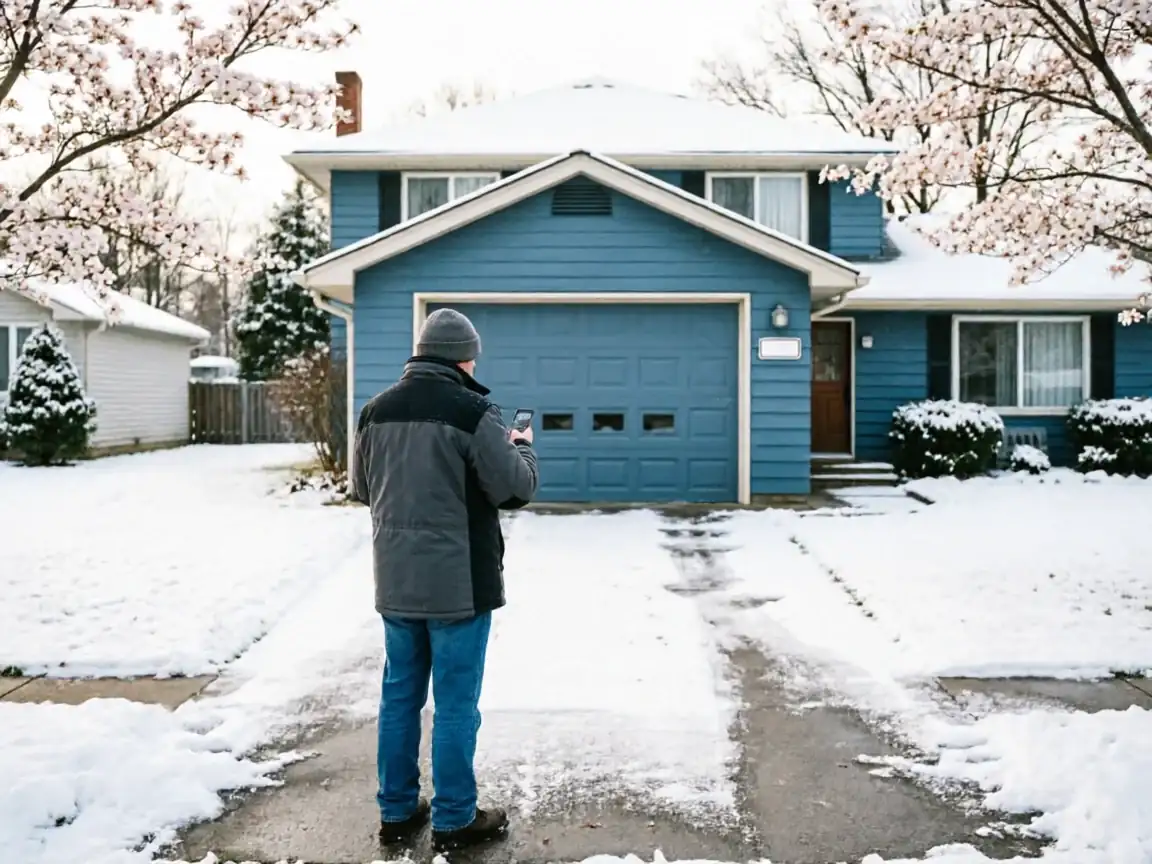
A door that's jumped the track in a Dedham house built around 1955 is usually a different job than the same complaint in a house from the 1970s. Mid-1950s construction often came with lighter gauge track and shorter horizontal runs than what became standard later, and over sixty-plus years those brackets loosen at different points than newer stock does. On a straightforward off-track call - door hasn't come apart, cables are still on the drums, rollers are just out of the channel - we're usually done within the hour once the truck is on site, which means the 4 miles from our Needham location. If a roller has punched through the track wall or a bent section needs replacing outright, plan on it running longer, since that's not a job you finish by muscling the door back into the channel.
The variable that actually matters is whether the track itself bent or just the door walked out of it. A door that's merely off-track reseats cleanly. A door that bent the track on its way out needs that section straightened or swapped before it'll run true again, and that's where an hour turns into an afternoon.
Doing It Yourself
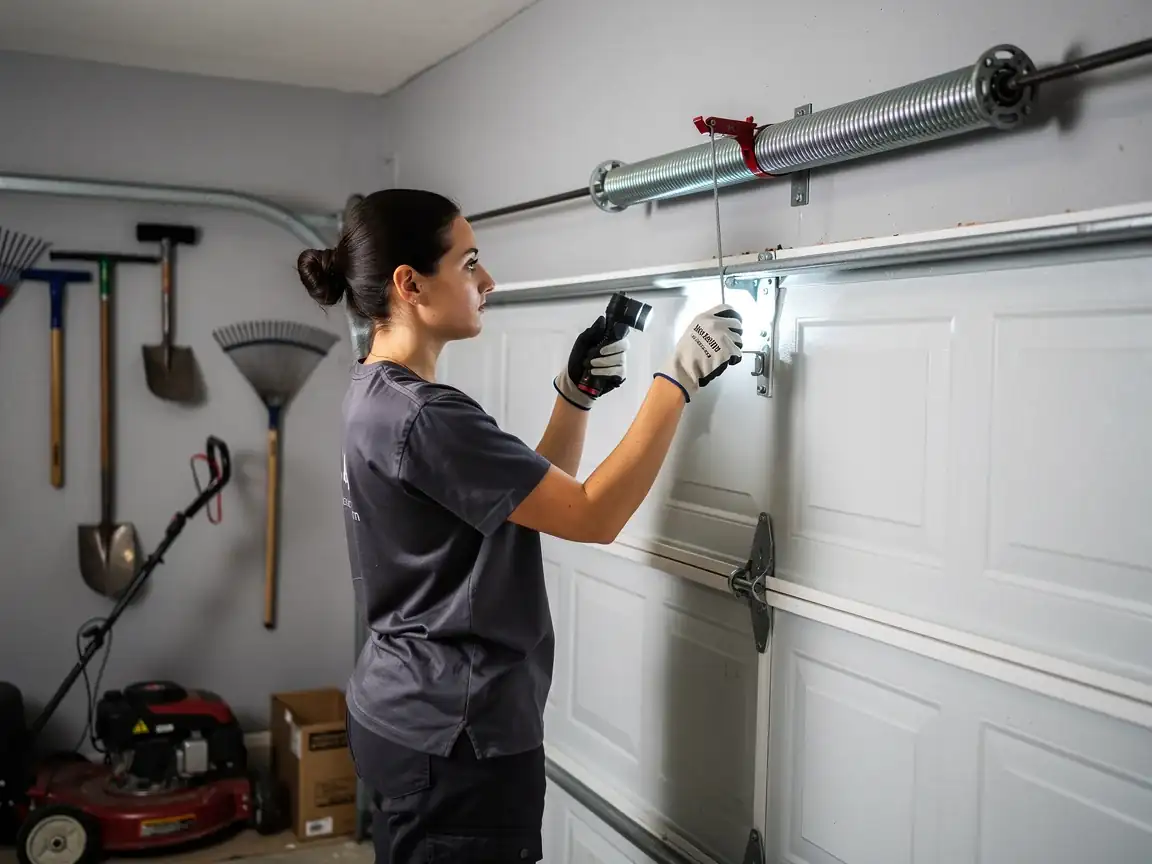
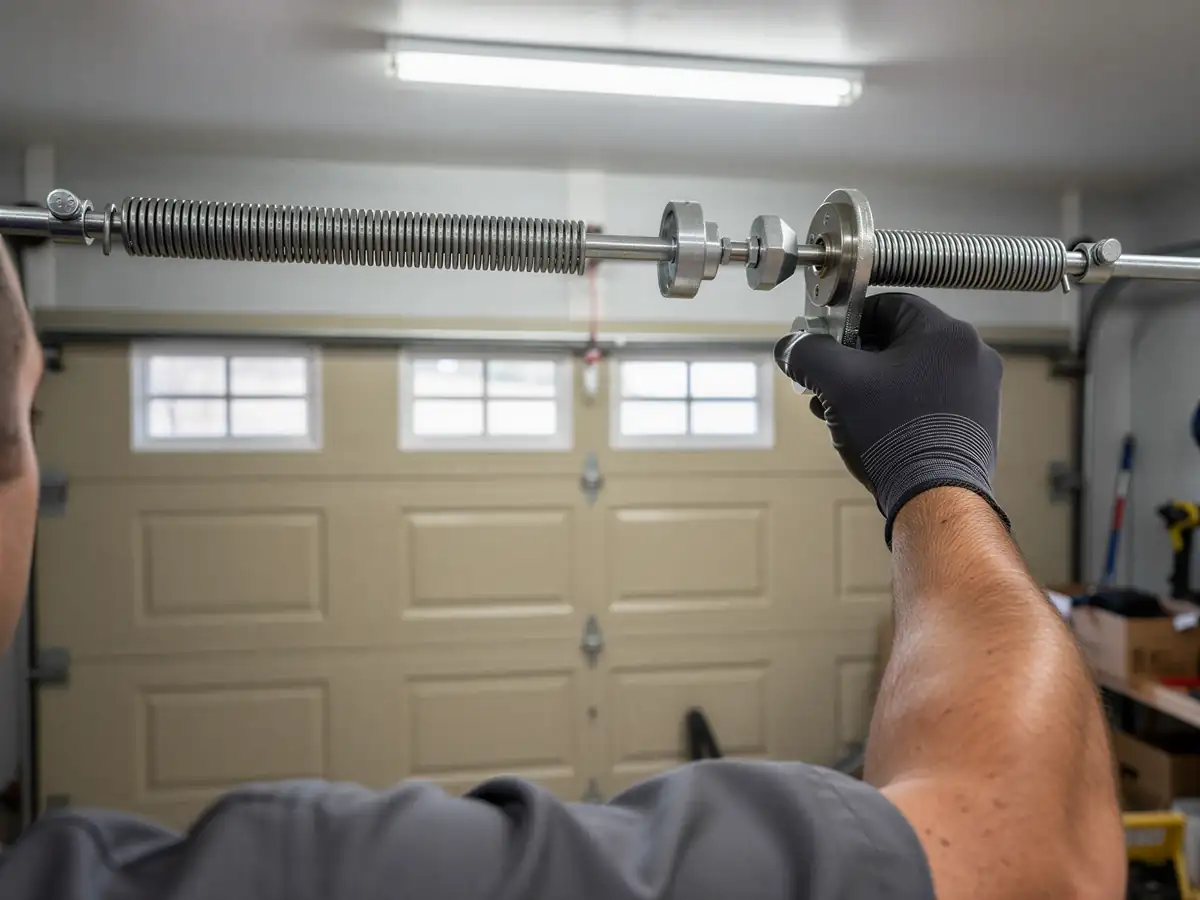
If the door is off track but the panels are still square and the opener isn't straining against it, you can sometimes walk the bottom roller back into the channel by hand with the door manually released from the opener. That's about where DIY should stop. Dedham's housing stock from the mid-1950s era commonly runs torsion springs under real tension, and a door that looks like it's just sitting crooked can still have a spring loaded behind it. We're not going to tell you exactly how to release that tension yourself, because the honest answer is that it's the single most dangerous part of this repair and it's not worth the money you'd save.
The other reason to stop and call is the track itself. If a section is visibly bent - not just the door sitting at an angle, but the metal channel showing a kink - pulling on it to force the door back usually makes the bend worse and can crack the weld points holding the bracket to the framing. At that point you're looking at a track replacement instead of a reset, and that's a cost difference worth avoiding.
The Complications
This area sits in a climate zone that swings into severe cold for a real stretch of the year
And cold metal behaves differently than metal in July. Track brackets that have a quarter inch of play in warm weather can bind up tight once temperatures drop, which changes how a door comes off track in winter versus summer - in cold months it's more often a sudden jump than a slow walk. On houses from the 1955 era, track mounting is also frequently tied into framing that's been through seventy years of settling, so the bracket spacing isn't always what the original install called for.
The other complication specific to older stock
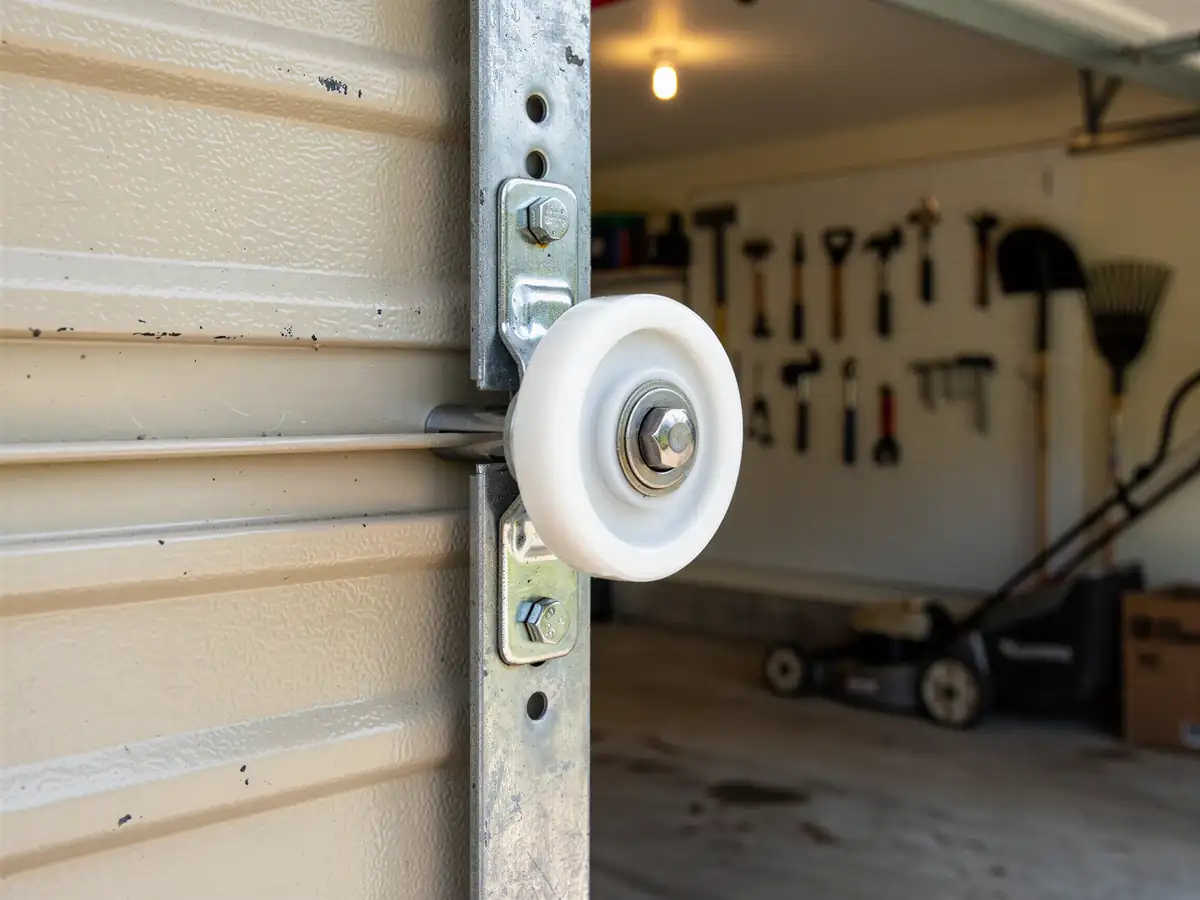
If the door came off because a roller cracked or a hinge pulled loose, a straight realignment doesn't fix the underlying reason it happened. We've seen doors go back off track within weeks because the actual cause - a worn roller stem, a stripped hinge screw hole into softened wood - never got addressed, just the symptom.
How We Fix It
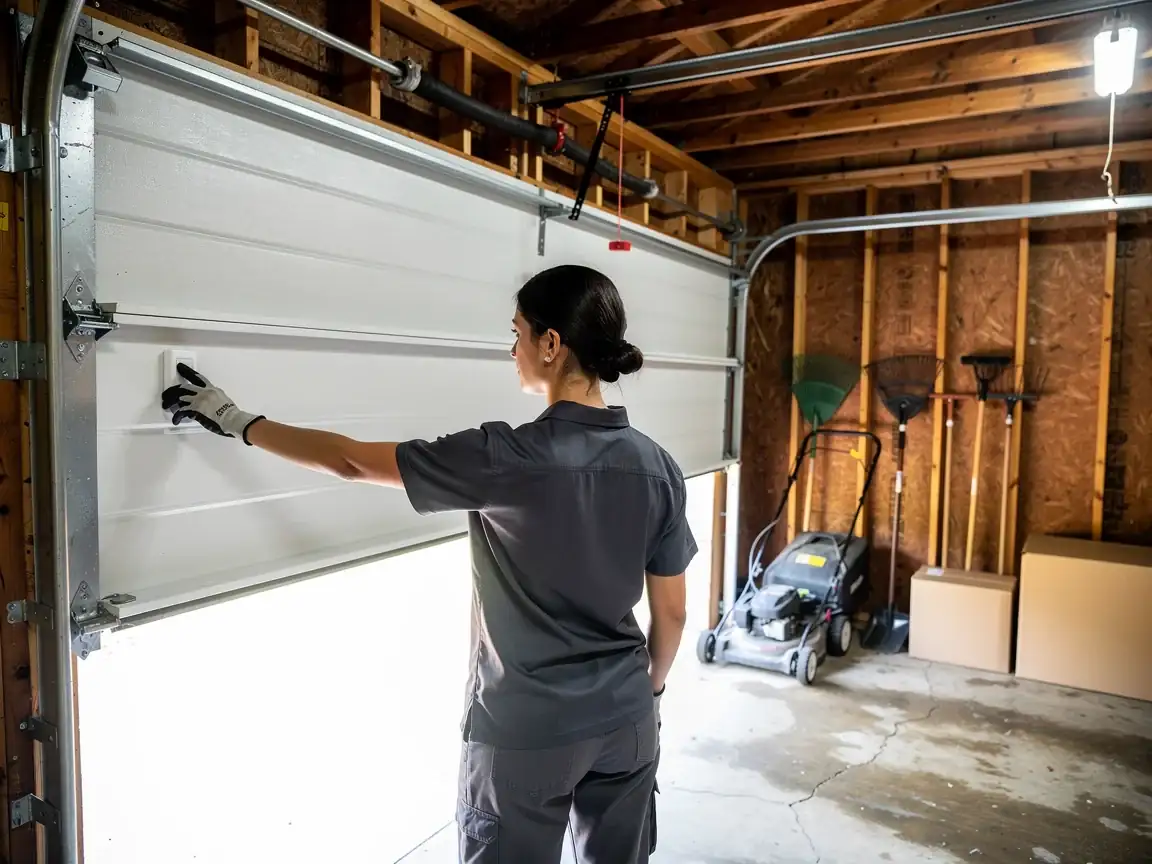
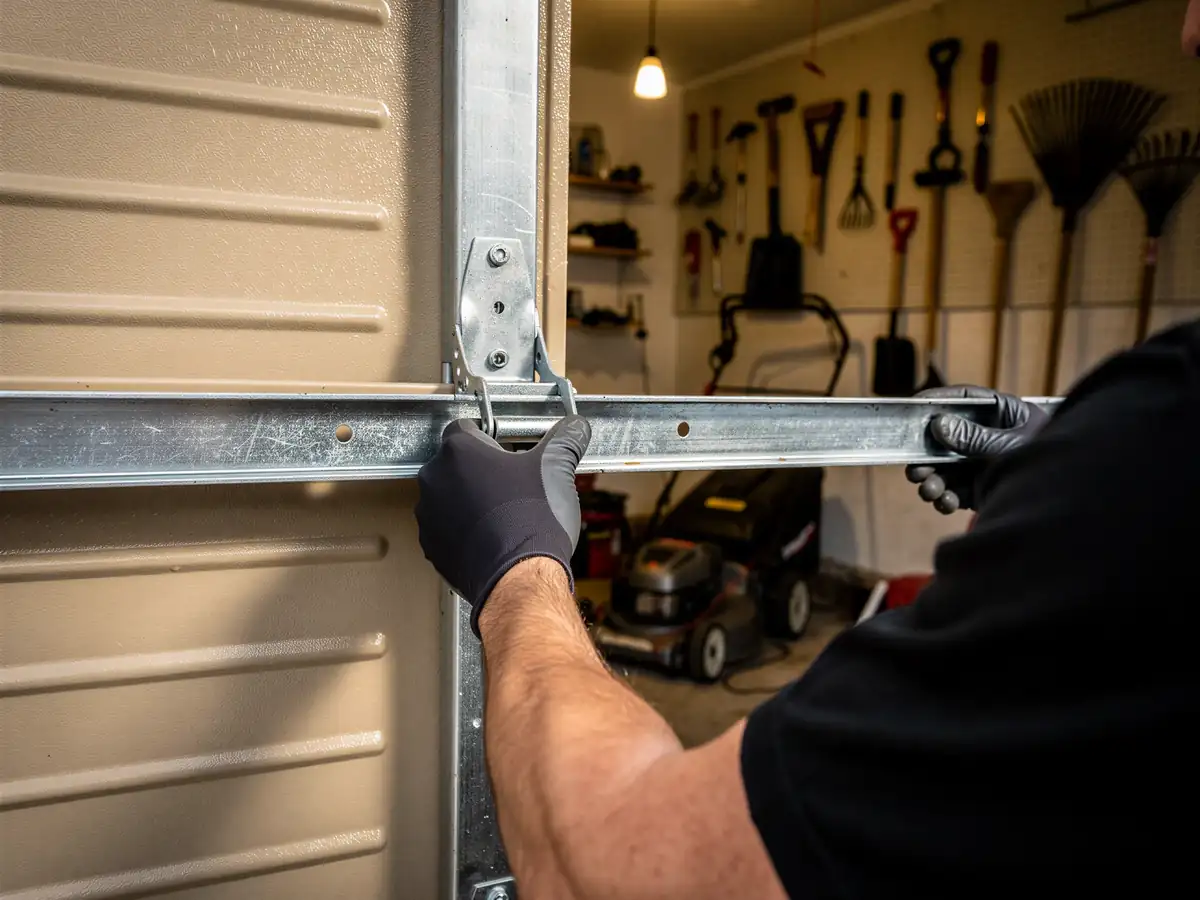
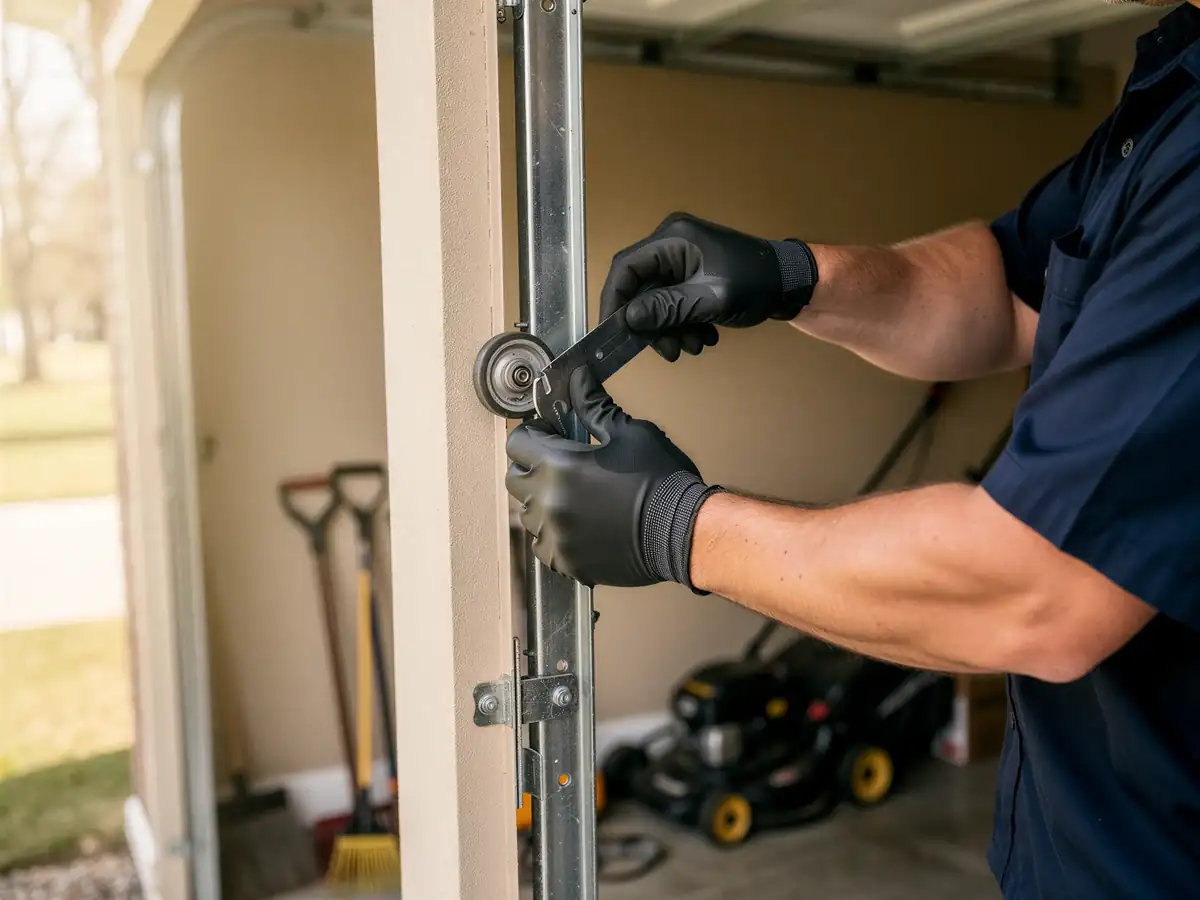
First call is whether the track bent or just the door left it. If the channel's straight, we release any spring tension safely, walk the door back into the rail, check that both sides are parallel and plumb, and tighten every bracket along the run - on a house built in the mid-1950s that's usually where the actual looseness lives, not just at the point the door jumped. If a section is bent, we replace that run rather than trying to hammer it back true, since a straightened track rarely holds as well as new rail.
We also check the rollers and hinges that let go in the first place. A cracked roller or a stripped hinge hole is often the real reason the door came off, and resetting the track without replacing that part just buys you a repeat call. One thing we won't do is push a full track replacement on you if a bracket tightening and a hinge swap will hold - that's not the upsell, that's the job.