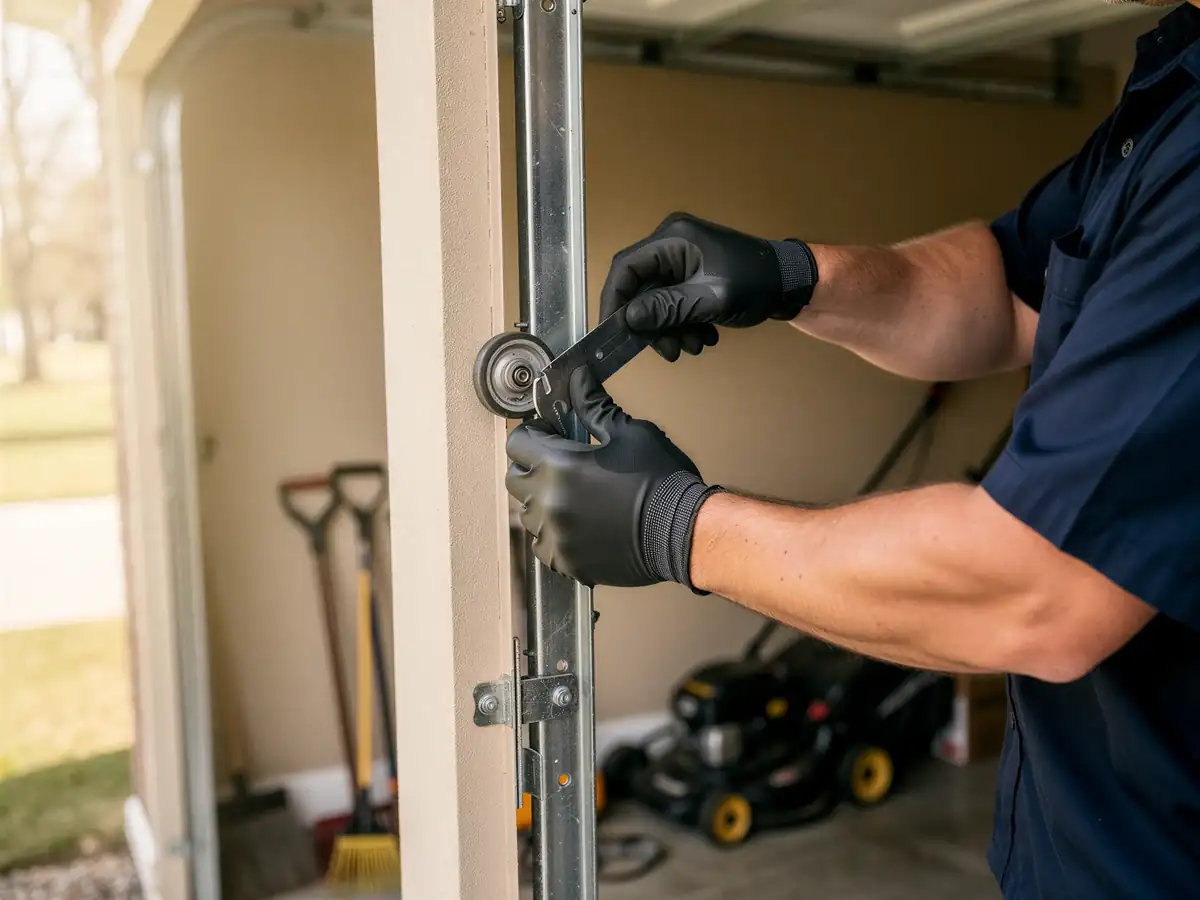
The Complications
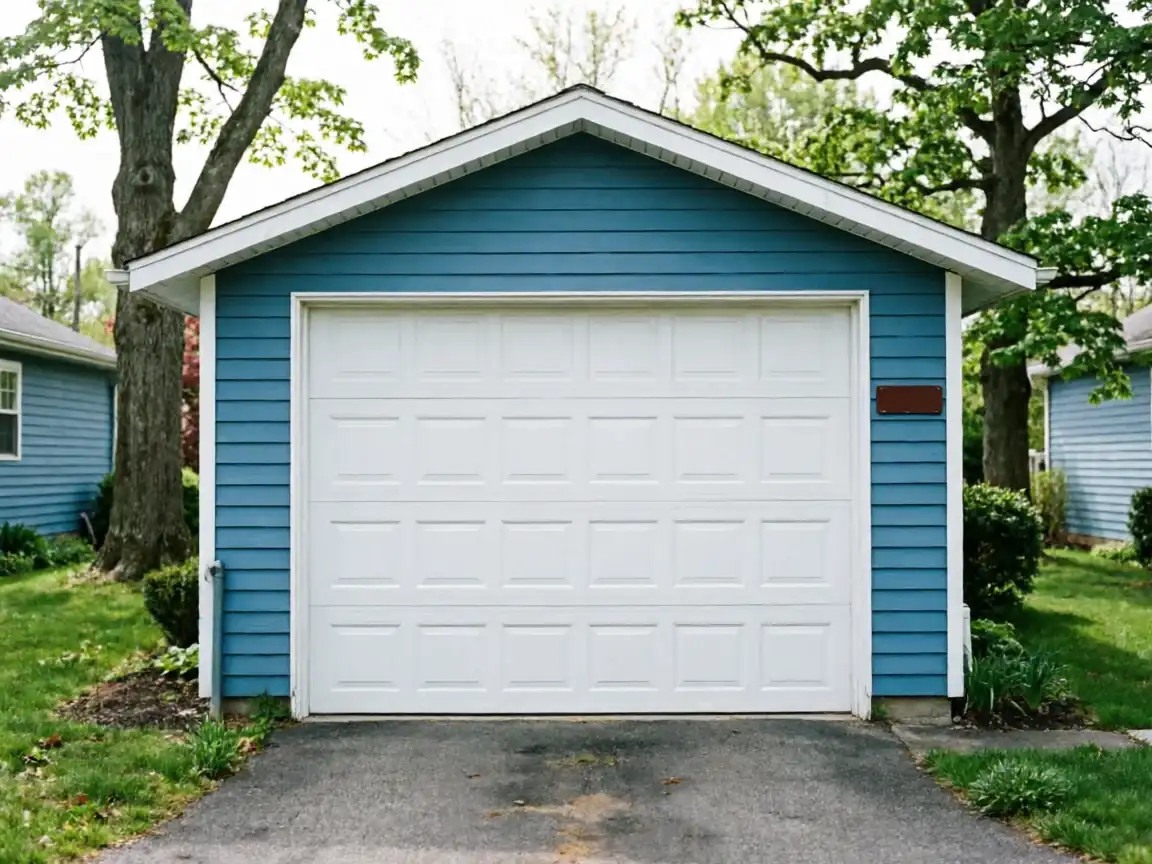
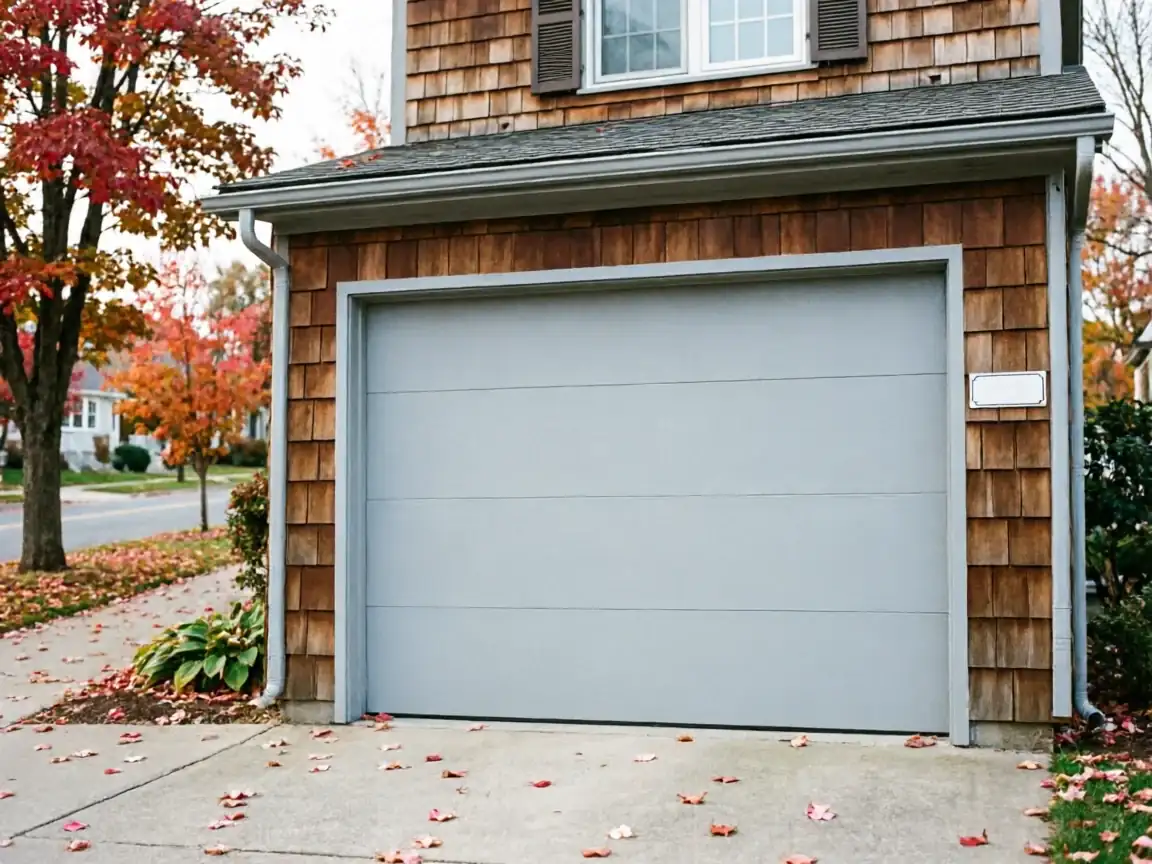
Most garages in Reading went up around 1960, which puts them square in the era of single-layer steel doors on narrow, lightweight track - nothing like the thicker rail and heavier rollers you'd find on a door built in the last fifteen years. These were sized for standard two-car openings and hung with track meant to carry a door maybe half as heavy as what's sold today, so if a previous owner ever swapped in a heavier insulated replacement without upgrading the hardware, the original rail is already working harder than it was built for.
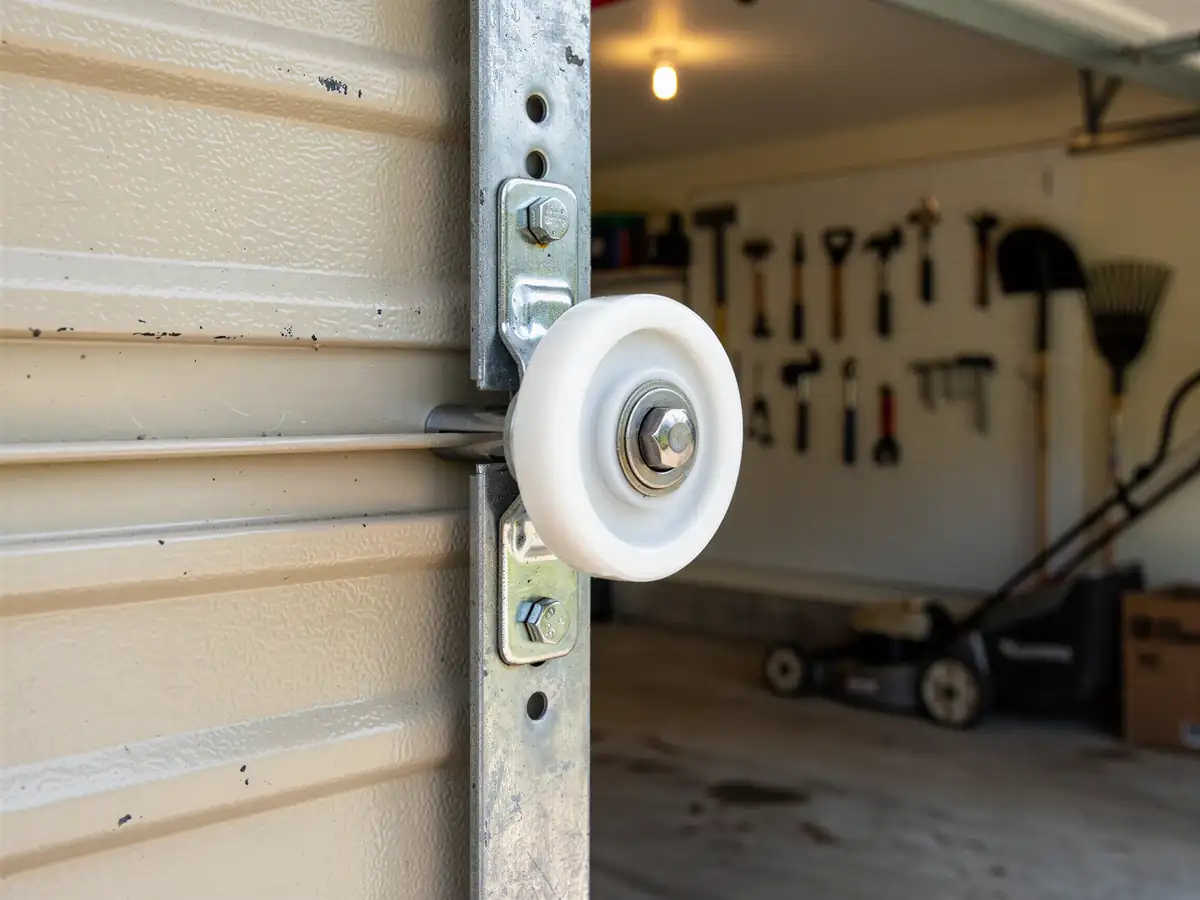
That matters for off-track failures specifically. A narrower rail has less margin before a bent section turns into a derailed roller, and the hinges and roller brackets from that period weren't galvanized the way current parts are, so sixty-plus years of New England winters leave them pitted and more likely to bind or snap under stress. Add a severe cold climate that puts real ice load on a door sitting flush to an unheated slab, and you get rail flanges that spread a little more each winter. Once a flange opens up even an eighth of an inch, a roller that used to ride smooth starts walking out of the track on the next cold-morning open.
How Long It Takes
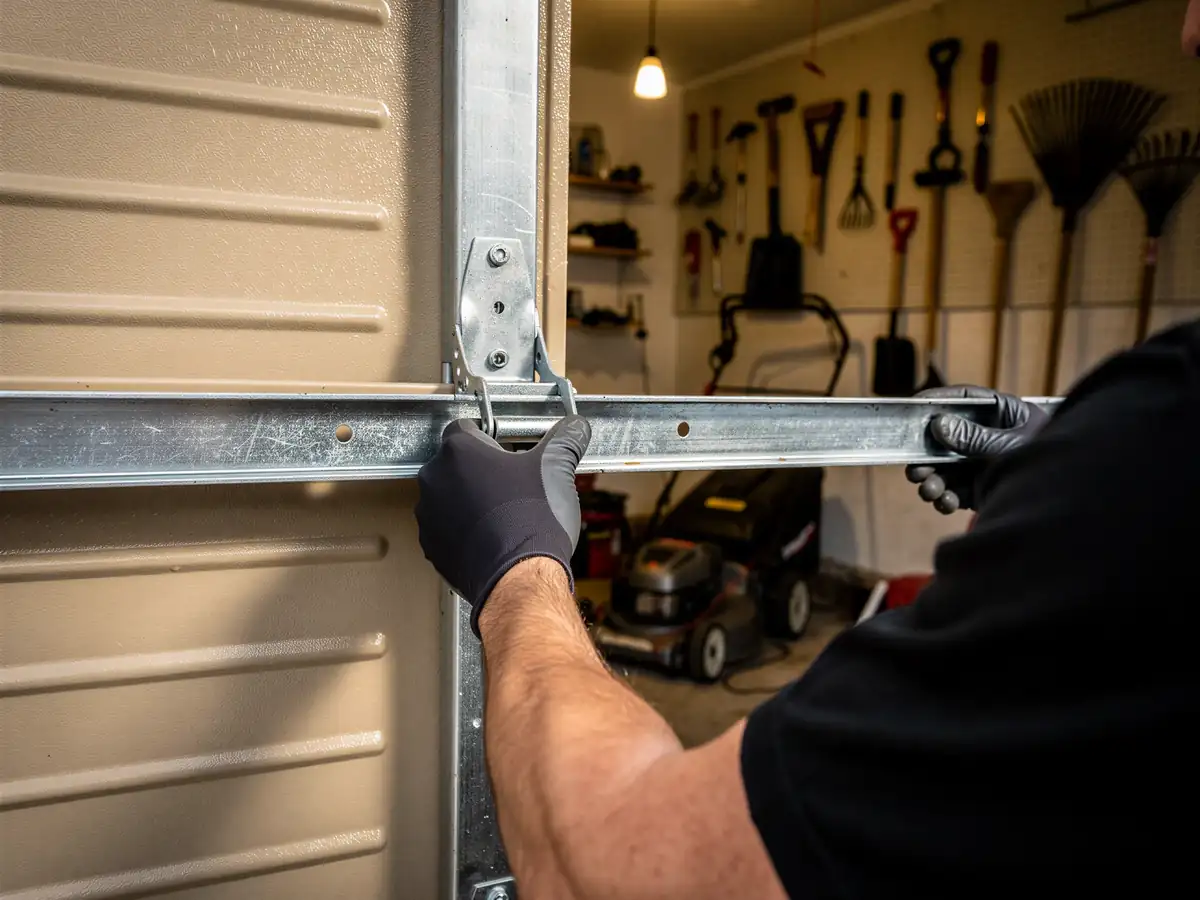
A door that's hopped the track on one side, with the rail itself still straight, is usually a same-visit fix - we reseat the rollers, square the track, and check the brackets that let go in the first place. Where the 1960-era track has bent at the point of failure, the repair takes longer because that rail doesn't match anything on the shelf; we're either straightening the section in place or swapping a run of it, not snapping in a universal part.
We can't give you a number here we haven't verified, and we won't guess at a timeframe that depends on what's actually bent until we've got eyes on it. What we can tell you is that the original hinges and roller brackets on a house this age are usually the weak point, not the door panel itself, so most of these jobs are hardware work rather than a full door replacement.
Booking a Visit
We cover Reading from our base in Needham, about 19 miles out
So a visit here isn't a same-block callout - plan for us to confirm a window rather than show up unannounced. When you call, tell us whether the door is hanging at an angle, whether one side has come off the track entirely, or whether it's just binding partway up; that tells us whether to bring rail stock or just hardware.
- 19 miles
If you're not sure which you've got, don't force the opener again
Running the motor against a jammed roller is how a bent track turns into a cracked panel, and that's a different repair.
How It Shows Up
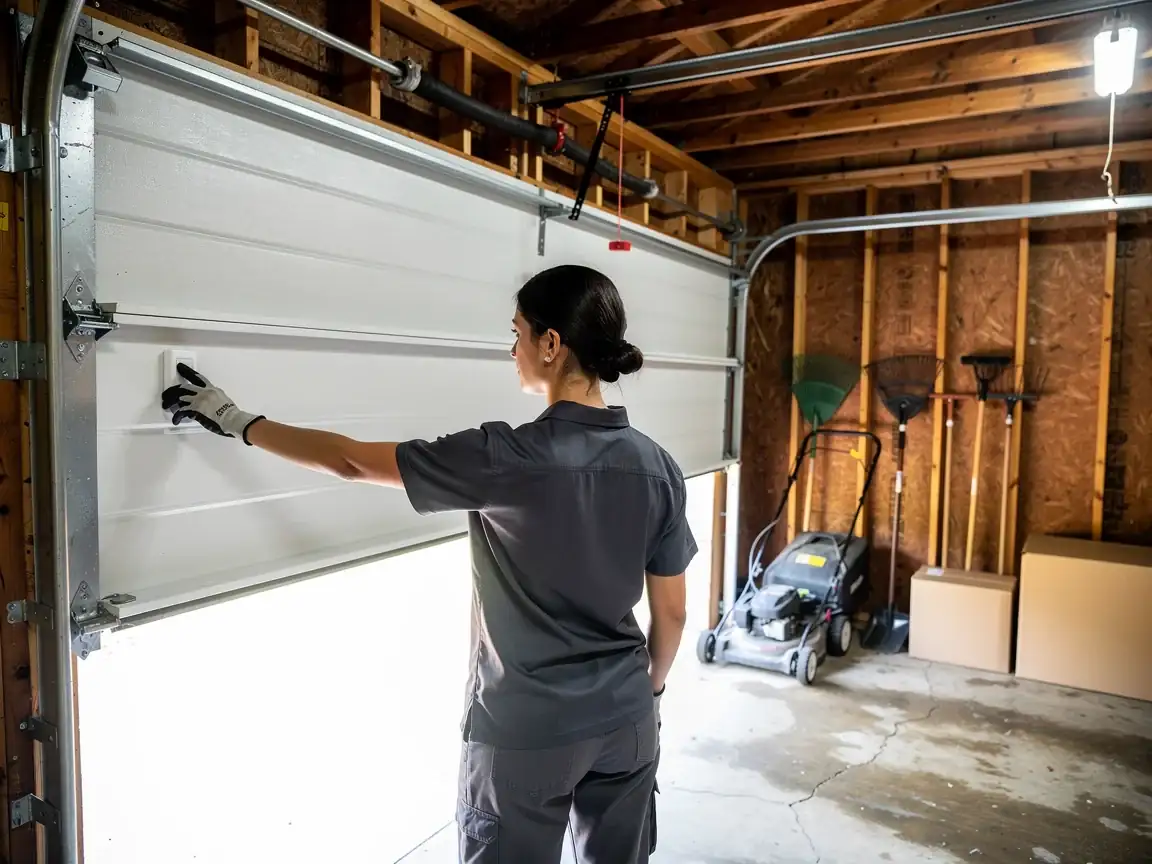
On a door this old, off-track usually announces itself as a grinding or scraping sound right where the roller has left the rail, often followed by the door stopping partway and refusing to close square. Some owners notice it first as a gap of daylight along one edge of the panel where it used to sit flush - that's the track pulling away from true, not the door warping.
In Reading's older garages, cold is the usual trigger: a rail that's been slowly spreading for years finally lets a roller slip free on the first hard freeze of the season, when the steel contracts and the slab underneath is at its most uneven. If you hear a single loud pop rather than a gradual grind, that's more often a cable or spring letting go than the track - worth mentioning when you call, since it changes what we bring. For the fuller rundown on everything that can go wrong with these doors, see our <a href="/reading-garage-door-repair/">Reading garage door repair page</a>; for how we handle this same fault closer to home, there's the <a href="/garage-door-off-track-needham-ma">Needham off-track page</a>.